Quick Answer
- Green iguanas are cold-blooded tropical lizards. When South Florida temperatures fall to around 40°F or below, they become cold-stunned: stiff, immobile and unable to grip branches, so they fall.
- A stunned iguana is usually not dead. Many recover as they warm up, though long or very cold spells kill large numbers.
- Do not bring a cold-stunned iguana indoors or into your car. It can wake up, panic, bite, scratch and whip its tail.
- Green iguanas are an invasive, prohibited species in Florida. Homeowners may humanely kill them on their own property, or call a nuisance wildlife professional.
Why Iguanas Fall Out of Trees
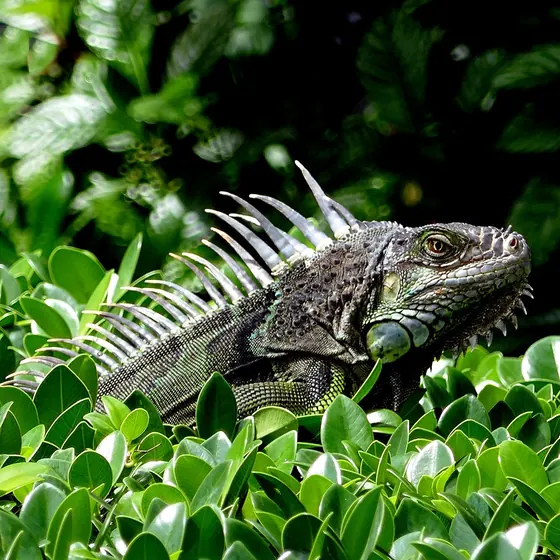
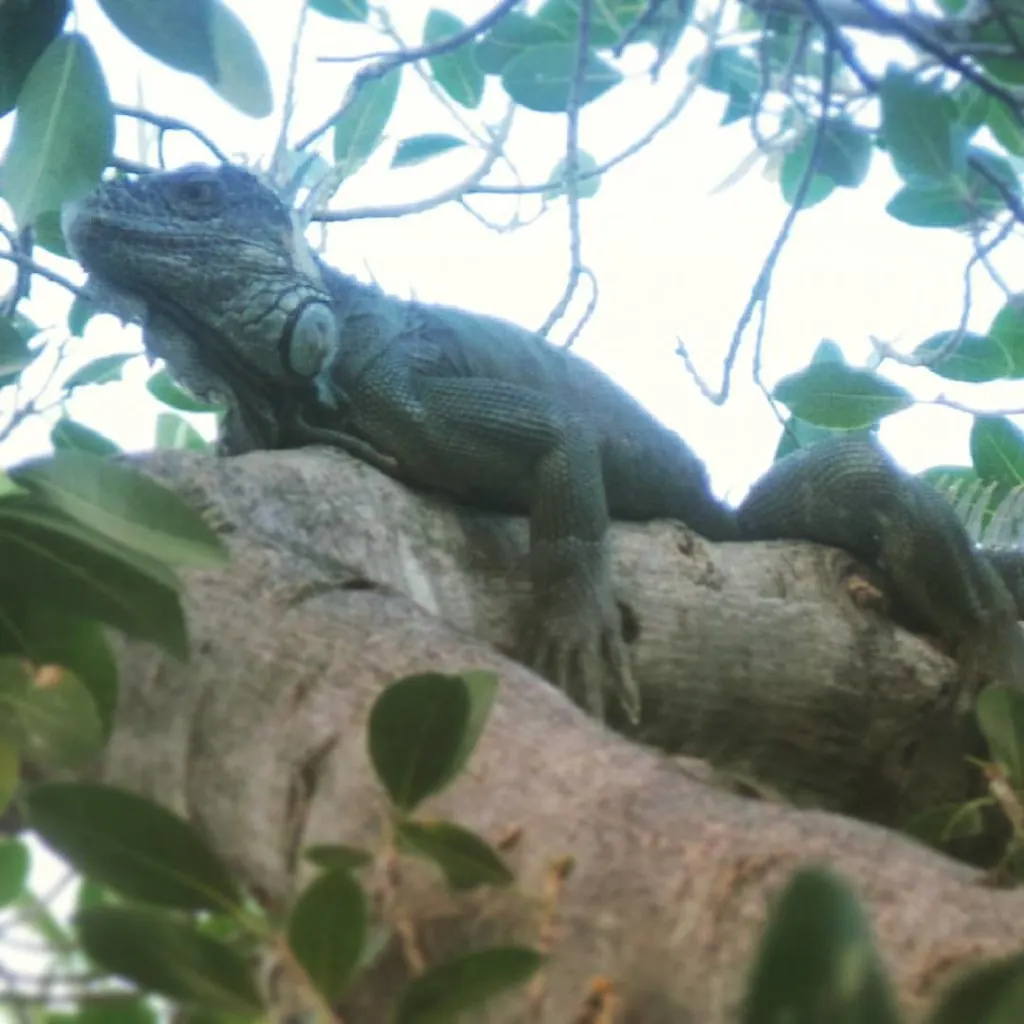
Green iguanas are ectotherms. They cannot generate their own body heat, so their body temperature follows the air around them. In South Florida they spend much of their time high in trees, often over water, where they bask and sleep.
When a cold front pushes temperatures down overnight, an iguana's body slows. Breathing and heart rate drop, muscles stiffen and the iguana loses the ability to hold onto its perch. It then simply drops to the ground, onto sidewalks, cars, pool decks or into canals. The National Weather Service in Miami has even issued tongue-in-cheek alerts telling residents to watch for falling iguanas during cold snaps.
How Cold Is Too Cold for an Iguana?
There is no single exact cutoff, because size, wind, how long the cold lasts and whether the iguana can shelter all matter. Reports and experts commonly describe this pattern:
| Temperature | What happens to wild green iguanas |
|---|---|
| Around 50°F (10°C) | Iguanas become sluggish and slow to move |
| Around 40°F (4°C) and below | Iguanas commonly become cold-stunned: immobile, stiff and liable to fall |
| 30s °F (around 0–3°C), especially with wind or for several nights | Many iguanas die |
For comparison, a pet green iguana is normally kept at 70°F or warmer even at night. Our iguana temperature guide covers safe ranges for pets.
Are Falling Iguanas Dead?
Usually not at first. A cold-stunned iguana looks lifeless, but it is often still alive, with slowed breathing and some awareness. As the sun comes out and temperatures rise, many iguanas thaw, move again and climb back into the trees within hours.
Survival depends on how cold it gets and for how long. A Palm Beach Zoo spokesperson told reporters in 2020 that only about half of iguanas survive cold spells. A trapper interviewed during Florida's February 2026 freeze estimated a similar 50-50 split between stunned and dead iguanas his team collected. Falls themselves can also injure iguanas.
Florida's Biggest Iguana Freezes
Cold-stunned iguanas make headlines whenever South Florida has a serious cold snap, including well-publicized events in January 2018 and January 2020.
In early February 2026, a record-breaking cold snap stunned iguanas across South Florida. The Florida Fish and Wildlife Conservation Commission (FWC) issued a two-day temporary executive order allowing people to move live, cold-stunned iguanas to drop-off sites, something that normally requires a permit because green iguanas are a prohibited species. FWC reported that more than 5,195 iguanas were turned in. It said it would transfer live iguanas to permit holders where possible and humanely kill the rest. One private removal company reported catching almost 3,000 iguanas in two days.
Wildlife experts point out that even large freezes do not solve the problem, because surviving iguanas keep breeding. Each female can lay dozens of eggs a year, as our Florida iguana guide explains.
What to Do If You Find a Frozen Iguana
- Leave it where it is unless it is in a dangerous spot, such as a road.
- Do not bring it inside your home, garage or car to "warm it up." When it recovers, it may be frightened and defensive, and an adult iguana can bite, scratch and whip its tail hard. The FWC advises against bringing cold-stunned iguanas into homes.
- Keep children and pets away. Iguanas can carry Salmonella bacteria, so wash your hands after any contact.
- Watch overhead during cold mornings, especially under trees near water.
- If you want it removed, contact a licensed nuisance wildlife trapper. Moving live iguanas normally requires an FWC permit.
Green iguanas are protected in Florida only by anti-cruelty law. The FWC allows homeowners, or others with the landowner's permission, to humanely kill them on private property year-round. Any killing must be humane and comply with local ordinances, including rules on firearms. See how to get rid of iguanas for legal options.
Can You Keep or Eat a Cold-Stunned Iguana?
You cannot take one home as a pet. Green iguanas were added to Florida's prohibited species list effective April 29, 2021, and only people who already owned them before then can keep them, with a permit. Captured iguanas also cannot be released elsewhere in Florida.
Some people do collect cold-stunned iguanas for meat, which is legal to eat in Florida according to the FWC. If you consider it, the iguana must be humanely killed and the meat handled and cooked safely. Our guide on eating iguana covers what to know.
Why Florida Has So Many Iguanas
Green iguanas are native to Central America, tropical South America and some Caribbean islands. In Florida, they descend from escaped and released pets and were first reported in Miami-Dade County in the 1960s. They are now established along the southeast coast from Martin County to the Keys and on the southwest coast in Lee and Collier counties. Because they are not cold-hardy, cold snaps are one of the few natural limits on how far north they spread.
Frequently Asked Questions
At What Temperature Do Iguanas Fall from Trees?
Iguanas usually become sluggish around 50°F and are commonly stunned and fall at around 40°F or below. Wind and the length of the cold spell also matter.
Do Iguanas Die When They Freeze?
Many survive and recover as temperatures rise, but long or very cold spells, especially in the 30s °F, kill large numbers. Experts have estimated that roughly half survive a serious cold snap.
Should I Help a Frozen Iguana?
Leave it alone and do not bring it indoors. It can wake up and become defensive. If you want it removed, contact a nuisance wildlife professional.
Why Are There Iguanas in Florida?
Green iguanas are not native to Florida. Populations come from escaped and released pets and have been established in South Florida since the 1960s.
Sources: Florida Fish and Wildlife Conservation Commission, Green Iguana; WLRN, Over 5,000 Cold-Stunned Iguanas Turned In (February 4, 2026); WPTV, Cold-Stunned Iguanas Expected to Fall (January 2020).