Quick Answer
- Iguanas are mostly silent. They do not call, chirp or croak.
- The main sound an iguana makes is a hiss, a forceful exhale used as a warning.
- Iguanas also sneeze regularly to clear salt from their nasal glands, which is normal.
- Wheezing, clicking or gurgling breathing can signal a respiratory infection.
- Most iguana "noise" around homes comes from movement: rustling, scratching, thumps and splashes.
Do Iguanas Make Noise?
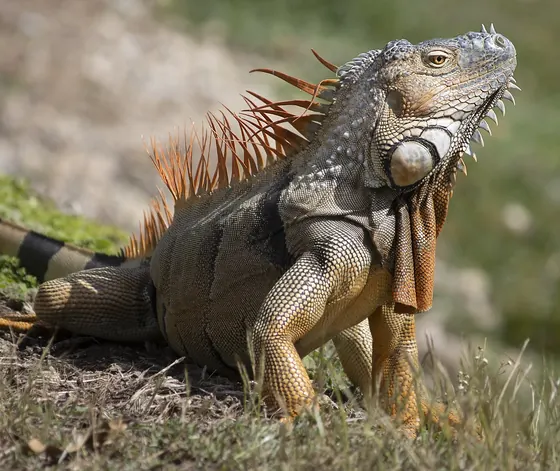
Unlike geckos, which can chirp and bark, iguanas do not have true vocal calls. They communicate mainly with body language, such as head bobbing, dewlap displays and color changes. See iguana body language. The sounds they do make come from breathing, sneezing and moving around.
Iguana Sounds and What They Mean
| Sound | What it is | What it means |
|---|---|---|
| Hiss | A sharp, forceful exhale, often with an open mouth | A warning: the iguana feels threatened. Give it space. |
| Sneeze | A quick puff that sprays fine, salty droplets | Normal salt removal from nasal glands |
| Wheezing or whistling breath | Noisy breathing | Possible respiratory infection or blocked nostrils |
| Clicking or gurgling | Wet or crackly breathing sounds | Possible respiratory infection; see a vet |
| Puffing | Inflating the body with air | Trying to look bigger; defensive |
| Scratching | Claws on glass, wood or walls | Climbing, digging, restlessness or trying to escape |
| Tail thumps | Tail hitting surfaces | Tail whipping in defense |
The Iguana Hiss
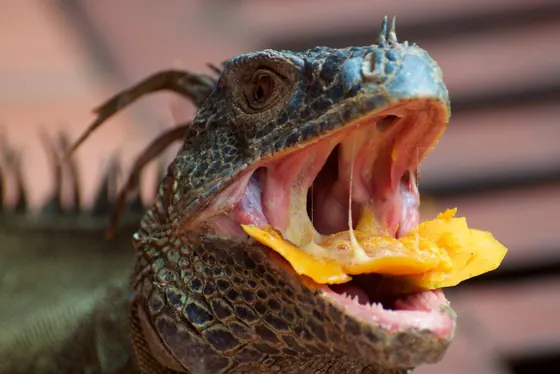
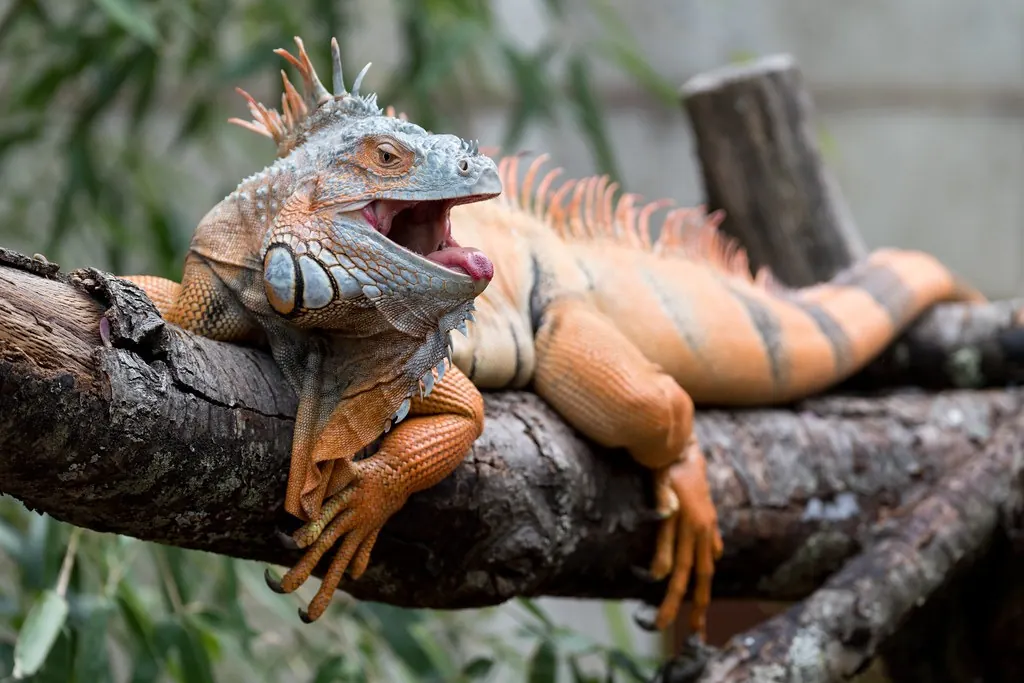
An iguana's hiss is usually part of a defensive display. Before hissing, it may puff up its body, extend its dewlap, turn sideways, bob its head aggressively and open its mouth. A hiss is a clear signal to back off before the iguana bites or whips its tail. Pet iguanas often hiss when they are new, frightened, shedding or in breeding season. See do iguanas bite? and breeding season.
Why Iguanas Sneeze
Iguanas have salt glands in their nasal passages that remove excess salt from the body. They sneeze to expel it, often many times a day, especially after eating. You may notice a white crust around the nostrils or fine white spots on the enclosure walls. This is healthy and normal. Sneezing becomes a concern only if it comes with bubbles, thick discharge, wheezing or labored breathing.
Breathing Sounds That Need a Vet
A healthy iguana breathes quietly. Respiratory infections in iguanas are often linked to enclosure temperatures that are too low. Contact a reptile veterinarian if you hear:
- Wheezing, whistling or squeaking breaths
- Clicking, crackling or gurgling sounds
- Open-mouth breathing while resting
- Breathing with bubbles or mucus at the nose or mouth
See signs of a sick iguana and temperature and humidity.
Wild Iguana Noises Around Your Home
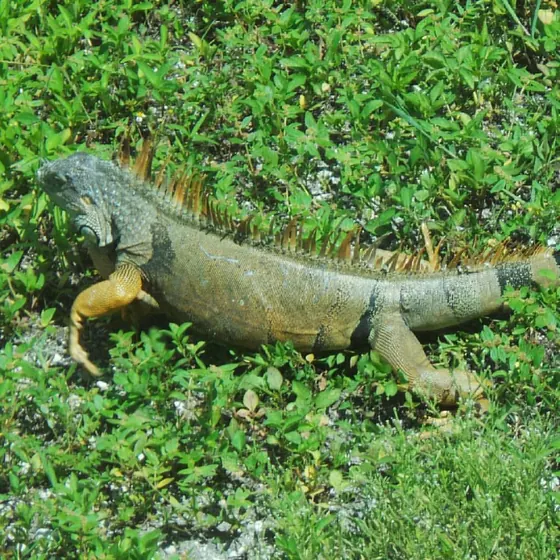
In South Florida and Puerto Rico, people often hear iguanas before they see them. Common sounds include:
- Rustling and crashing in trees and shrubs as large iguanas climb, feed or jump
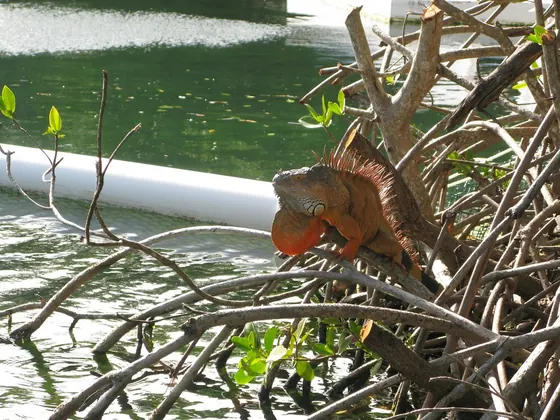
- Splashes as iguanas drop into canals or pools. See can iguanas swim?
- Thumps on roofs, patios and cars, especially during cold snaps when iguanas fall. See falling iguanas.
- Scratching and digging under slabs, seawalls and sheds where iguanas burrow
Iguanas are active by day, so sounds at night are more likely to come from other animals, such as rats, raccoons or opossums. If you hear digging or scratching near foundations or seawalls during the day, look for burrows. See how to get rid of iguanas.
Iguana Sounds vs. Other Lizards
| Lizard | Typical sounds |
|---|---|
| Iguanas | Hissing and sneezing; no true calls |
| Geckos | Many species chirp, click or bark, the most vocal lizards |
| Bearded dragons | Occasional hissing; otherwise quiet |
| Monitor lizards and tegus | Loud hissing, sometimes with body inflation |
If you hear chirping or clicking from walls or lights at night in Florida, it is far more likely to be a gecko than an iguana.
Can Iguanas Hear?
Yes. Iguanas have no external ear flaps, but they have an eardrum, called the tympanum, visible as a smooth patch behind each eye. They can hear sounds and many pet iguanas react to familiar noises, such as a food container opening. Their hearing is thought to be less important to them than their excellent eyesight. See iguana anatomy.
Calming a Hissing Pet Iguana
- Move slowly and avoid approaching from above, which mimics a predator.
- Let the iguana see your hand before touching it.
- Give a frightened iguana time and a place to hide rather than forcing handling.
- Keep handling sessions short and consistent. See how to tame an iguana.
Frequently Asked Questions
Do Iguanas Make Any Noise?
They are mostly silent. The main sounds are hissing as a warning and sneezing to clear salt.
Why Does My Iguana Hiss at Me?
It feels threatened. Slow down, approach from the side and give it space. Hissing is common in new, stressed or breeding-season iguanas.
Is It Normal for My Iguana to Sneeze?
Yes. Iguanas sneeze to remove excess salt. See a vet if sneezing comes with bubbles, discharge or wheezing.
Do Iguanas Make Noise at Night?
Rarely. Iguanas are active by day and sleep at night, so nighttime noises usually come from other animals.
Sources: Critter Control, What Does an Iguana Sound Like?; Biology Insights, What Does an Iguana Sound Like?; VCA Animal Hospitals, Iguanas: Diseases.