Quick Answer
- Yes, iguanas can bite, usually only when grabbed, cornered or provoked. Adult bites can cause painful cuts.
- Iguanas have rows of small, sharp, serrated teeth that are replaced throughout their lives.
- They are not dangerous venomous animals. The bigger risks are cuts, infection and Salmonella bacteria.
- Tail whips and claw scratches are more common than bites.
- Clean any bite well with soap and water and see a doctor for deep wounds or signs of infection.
Do Iguanas Bite Humans?
Iguanas can and occasionally do bite people, but biting is usually a last resort. Wild iguanas almost always run, climb or jump into water rather than confront a person. Pet iguanas bite mainly when they feel threatened, are handled roughly, mistake a finger for food, or during the breeding season when males can become territorial.
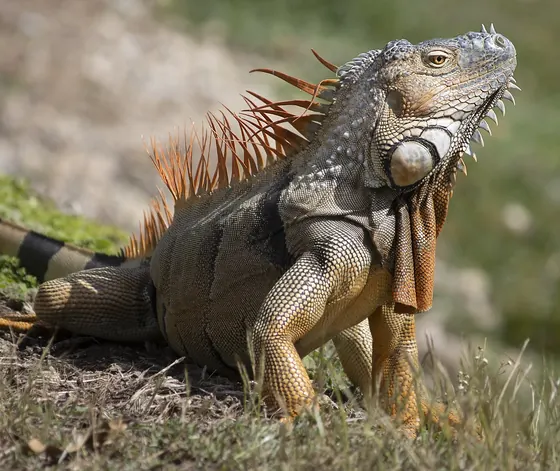
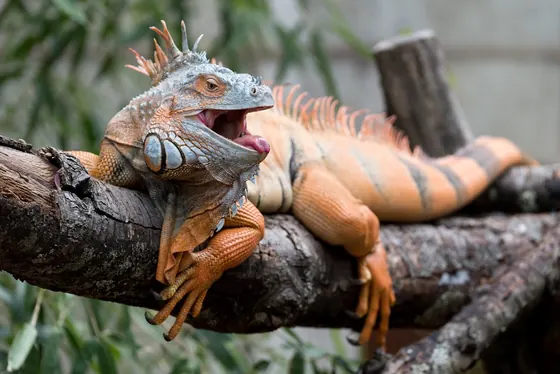
Before biting, an iguana usually gives warning signals: puffing up, extending its dewlap, bobbing its head, turning sideways, hissing, opening its mouth or lashing its tail. Learning these signs, explained in our iguana body language guide, is the best way to avoid bites.
Iguana Teeth
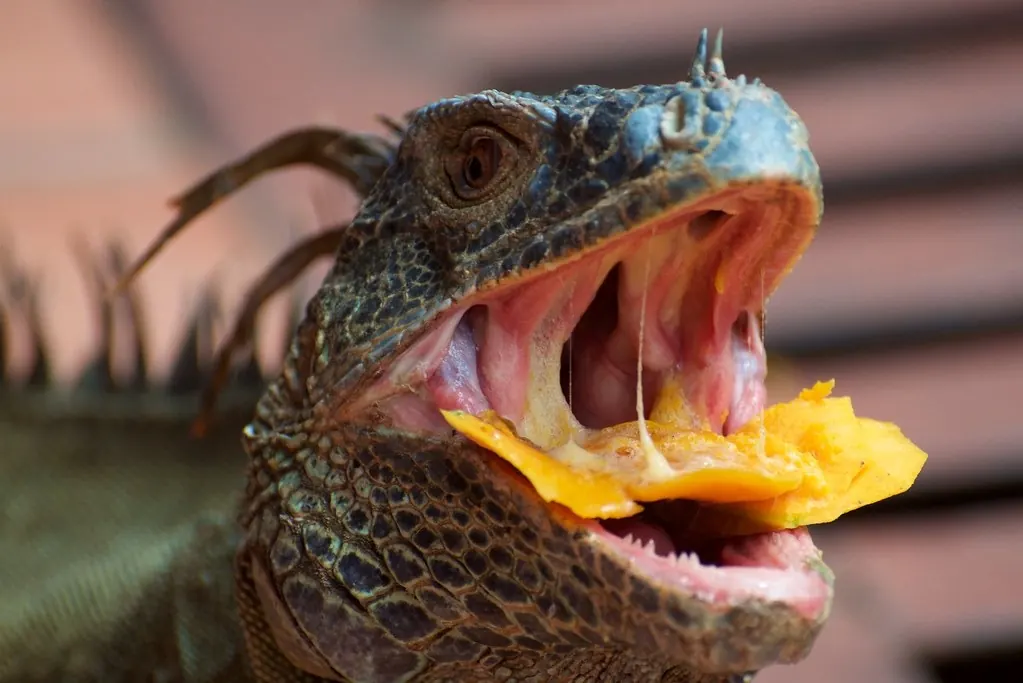
Iguanas have rows of small, sharp, serrated teeth, commonly around 80 to 120 in adult green iguanas, which are replaced throughout life. They are built for shredding plants but cut skin easily, so a bite from a large adult can cause deep cuts. Learn more in our guide to iguana teeth.
How Bad Does an Iguana Bite Hurt?
| Iguana size | Typical bite effect |
|---|---|
| Hatchling or small juvenile | A pinch or small scratch |
| Subadult | Painful nip; possible shallow cuts |
| Large adult | Painful bite with possible deep cuts; may hold on |
Large iguanas sometimes clamp down and hold on. If that happens, stay calm, avoid yanking away, and support the iguana's body. Many will let go once they feel less threatened.
Are Iguanas Venomous?
Iguanas are not considered venomous in any meaningful way for people. Research has found that iguanas and many other lizards have small oral glands that produce weak secretions, but these are not known to cause harm to humans. The real concerns with a bite are the cut itself and the bacteria that can enter the wound.
Are Iguanas Dangerous?
For most people, iguanas pose a low risk. The main dangers are:
| Risk | What to know |
|---|---|
| Bites | Can cause painful cuts; usually only when handled or cornered |
| Tail whips | A large iguana's tail can sting and leave welts; it can injure eyes |
| Claws | Sharp claws scratch easily, especially when climbing on people |
| Salmonella | Reptiles commonly carry Salmonella; infection risk is higher for young children, older adults and people with weak immune systems |
| Property damage | Wild iguanas burrow and damage seawalls, sidewalks and gardens |
Read our guide to iguanas and Salmonella for hygiene tips.
Are Iguanas Dangerous to Dogs and Cats?
A cornered iguana can bite or whip a pet, and pets that catch or eat iguanas risk Salmonella and, with dead iguanas, botulism, which killed a Florida dog in 2026. See iguanas and dogs for warning signs and prevention.
Why Iguanas Bite
- Fear: being grabbed from above, chased or restrained
- Breeding season: males can become aggressive for several weeks; see iguana breeding season
- Territory: defending a basking spot or enclosure
- Feeding mistakes: a hand that smells like food or moves near the food bowl
- Pain or illness: a sick or injured iguana may be more defensive
- Shedding: itchy skin can make an iguana grumpy
How to Avoid Iguana Bites
- Leave wild iguanas alone and never corner them.
- Approach pet iguanas slowly from the side, not from above.
- Watch for warning signs and stop if the iguana puffs up, bobs aggressively or opens its mouth.
- Use tongs or a dish for feeding instead of fingers if your iguana confuses hands with food.
- Handle less during breeding season and shedding.
- Build trust with patient, consistent taming. See how to tame an iguana.
What to Do If an Iguana Bites You
- Stay calm. If the iguana holds on, support its body and wait for it to release.
- Wash the wound thoroughly with soap and running water.
- Apply pressure to stop bleeding and cover with a clean bandage.
- Seek medical care for deep or gaping cuts, bites on the face or hands, heavy bleeding, or if you are unsure about your tetanus vaccination.
- Watch for infection: increasing redness, swelling, warmth, pus, fever or red streaks. See a doctor promptly if they appear.
This is general first-aid information, not medical advice. Contact a healthcare provider about any bite you are concerned about.
Iguana Bites and Children
Children are more likely to grab or chase an iguana and less likely to read its warning signs, which raises the risk of bites, scratches and tail whips. They are also at higher risk from Salmonella. The CDC advises that children under 5 should not handle reptiles. Older children should handle iguanas only with adult supervision and wash their hands afterward.
Frequently Asked Questions
Do Iguana Bites Hurt?
Yes. Small iguanas give a pinch, but large adults have sharp, serrated teeth that can cause painful, deep cuts.
Do Iguanas Have Teeth?
Yes. Iguanas have rows of small, sharp, serrated teeth that are replaced throughout their lives.
Are Iguanas Poisonous?
No. Iguanas are not dangerous to people through venom. Bites can cause cuts and infections, and iguanas can carry Salmonella.
Will a Wild Iguana Attack Me?
Very unlikely. Wild iguanas almost always flee. Bites happen mostly when people try to catch or corner them.
Sources: A-Z Animals, Do Iguanas Bite?; PangoVet, Are Iguanas Dangerous?; CDC guidance on reptiles and Salmonella.