Quick Answer
- Iguanas are not venomous, but they can still harm dogs through bites, scratches and tail whips, and by carrying Salmonella.
- Dead iguanas are the biggest danger. In February 2026, a Palm Beach County dog died and another was partially paralyzed after eating a dead iguana; veterinarians believe the dogs contracted botulism.
- A Florida veterinarian told local news that botulism cases rise during cold snaps, when iguanas freeze, fall and die.
- If your dog eats or bites an iguana, contact your veterinarian, especially if it shows weakness, vomiting or diarrhea.
Are Iguanas Dangerous to Dogs?
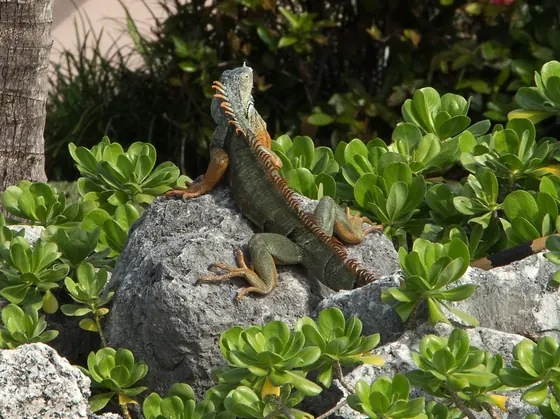
In places like South Florida and Puerto Rico, dogs regularly encounter wild green iguanas in yards, on docks and along canals. Most iguanas run or jump into water when a dog approaches. Problems usually start when a dog catches, corners, bites or eats an iguana.
| Risk | How it happens | How serious |
|---|---|---|
| Bites and scratches | A cornered iguana bites with sharp, serrated teeth or scratches with its claws | Usually minor to moderate cuts; can become infected |
| Tail whips | An iguana lashes its tail at a dog's face | Can injure eyes |
| Salmonella | Mouthing, eating iguanas or their droppings | Can cause vomiting, diarrhea and fever; dogs can also spread it to people |
| Botulism | Eating a dead, decomposing iguana | Can be fatal |
| Poison exposure | Eating an iguana that was poisoned or exposed to chemicals | Depends on the toxin |
| Water hazards | Chasing iguanas into canals, pools or lakes | Drowning or, in Florida, alligator encounters |
Botulism from Dead Iguanas
In February 2026, WFLX reported that a Palm Beach County woman's two hounds ate parts of a dead iguana found in her yard. One dog died, and the other was left partially paralyzed. Veterinarians at an emergency and referral center believe the dogs contracted botulism from the iguana. Dr. Evan Kadish of Lantana-Atlantis Animal Hospital explained that during cold snaps, iguanas can freeze, fall from trees and die; once they decompose, bacteria build up, and dogs that eat them are at risk. He said botulism cases rise during cold snaps.
The incident followed Florida's record cold snap in early February 2026, when thousands of cold-stunned iguanas were collected across South Florida. See falling iguanas.
Signs of Botulism in Dogs
- Weakness that often starts in the hind legs and moves forward
- Difficulty standing or walking, or sliding around
- Trouble swallowing, drooling or a weak bark
- Breathing difficulty in severe cases
Botulism is an emergency. If your dog may have eaten a dead iguana and shows any weakness, contact a veterinarian or emergency animal hospital immediately.
What to Do If Your Dog Eats or Bites an Iguana
- Remove the iguana or remains from your dog, wearing gloves.
- Note what happened: whether the iguana was alive or dead, how much was eaten and when.
- Call your veterinarian, especially if the iguana was dead, or if your dog ate a large amount, has mouth injuries or seems unwell. Do not induce vomiting unless a vet tells you to.
- Watch your dog closely for several days for vomiting, diarrhea, fever, lethargy, weakness or trouble walking or swallowing.
- Practice hygiene: wash your hands after handling your dog's mouth, toys and bowls, since dogs can pass Salmonella to people.
What If an Iguana Bites Your Dog?
Clean small wounds gently with mild soap and water and watch for swelling, redness or pus. Contact your vet for deep cuts, bites near the eyes or face, heavy bleeding or any sign of infection. Iguanas are not venomous, but their bites can introduce bacteria. See iguana teeth.
How to Keep Your Dog Safe Around Iguanas
- Check your yard regularly, especially under trees and after cold snaps, and remove dead iguanas with gloves before your dog finds them.
- Supervise outdoor time in areas with many iguanas, particularly near canals, docks and pools.
- Teach "leave it" and reliable recall.
- Keep dogs on leash near water in alligator country.
- Pick up iguana droppings from patios and pool decks. See iguana poop.
- Never use poison to control iguanas; poisoned iguanas can poison pets. See how to get rid of iguanas.
Pet Iguanas and Dogs Under One Roof
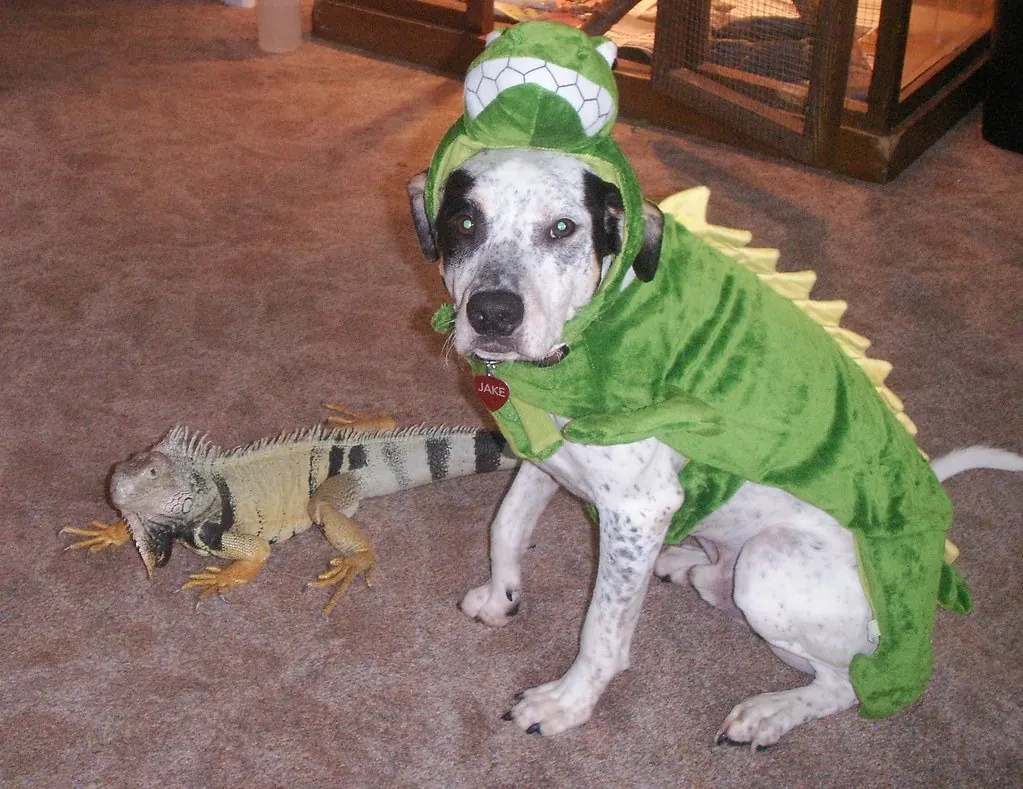
Some households keep both. Dogs may see an iguana as prey, and a frightened iguana can injure a dog's eyes or face. Keep the iguana's enclosure secure and out of reach, never leave the two together unsupervised, and keep the dog away during iguana free time and bathing. Wash hands and keep dog bowls away from iguana supplies to limit Salmonella spread. See iguanas and Salmonella.
Iguanas and Cats
Cats sometimes hunt young iguanas, especially hatchlings. The same risks apply: bites and scratches from larger iguanas, Salmonella, and danger from eating dead iguanas. Keep cats away from iguana carcasses and contact a vet if your cat eats part of one.
Frequently Asked Questions
Are Iguanas Poisonous to Dogs?
Iguanas are not venomous, but eating one can expose a dog to Salmonella and, if the iguana is dead and decomposing, botulism, which can be fatal.
My Dog Ate an Iguana. What Should I Do?
Call your veterinarian, especially if the iguana was dead. Watch for vomiting, diarrhea, fever, weakness or trouble walking or swallowing.
Can an Iguana Hurt My Dog?
A cornered iguana can bite, scratch and tail-whip, sometimes injuring a dog's face or eyes. Most iguanas flee instead.
Why Are Dead Iguanas Dangerous to Dogs?
As iguanas decompose, bacteria build up. Veterinarians linked a 2026 Florida case of fatal botulism in a dog to eating a dead iguana.
Sources: WFLX, Woman Warns Pet Owners After Her 2 Dogs Contract Botulism From Dead Iguana (February 19, 2026); Local 10, Grieving Dog Owner Issues Safety Alert; CDC guidance on reptiles and Salmonella. This page is general information, not veterinary advice.