Quick Answer
- Reptiles, including iguanas, commonly carry Salmonella bacteria in their gut and shed it in their droppings, even when they look healthy.
- People get sick by touching iguanas, their droppings, enclosures, water or anything they have touched, then touching their mouths.
- Young children, adults over 65 and people with weakened immune systems are most at risk. The CDC advises that children under 5 should not handle reptiles.
- Wash your hands with soap and water after handling an iguana or cleaning up after it.
Do Iguanas Carry Salmonella?
Yes. Like other reptiles, iguanas often carry Salmonella bacteria as part of their normal gut flora. They usually show no signs of illness, and a negative test does not guarantee an iguana is free of it, because bacteria may be shed only some of the time. That is why the CDC recommends treating all reptiles as potential Salmonella carriers. Antibiotics are not used to "clear" Salmonella from healthy reptiles.
How Salmonella Spreads from Iguanas
- Touching an iguana, its droppings or its skin
- Touching the enclosure, decor, food dishes or bath water
- Cleaning tanks or tubs in kitchen sinks or food areas
- Letting iguanas roam on kitchen counters or dining tables
- Kissing or snuggling reptiles
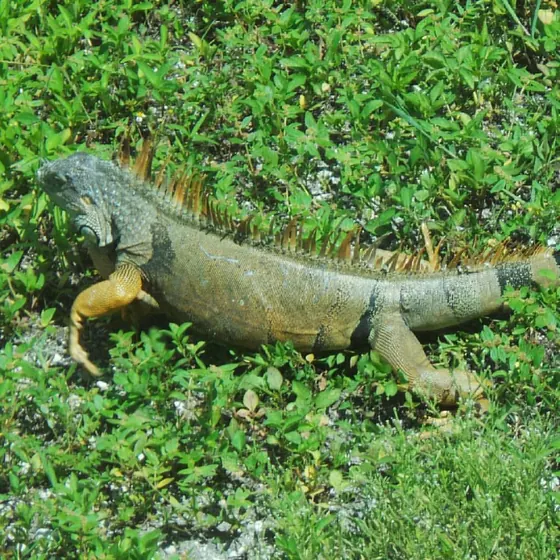
- Contact with wild iguana droppings on docks, decks, pools and patios
Symptoms of Salmonella in People
According to the CDC, most people with Salmonella infection develop diarrhea, fever and stomach cramps, usually starting 6 hours to 6 days after exposure. Most recover in 4 to 7 days without specific treatment, but some cases are severe and need hospital care. Contact a doctor if symptoms are severe, if the person is in a high-risk group, or if there is bloody diarrhea, high fever or signs of dehydration, and mention contact with a reptile.
Who Is Most at Risk?
| Group | Why |
|---|---|
| Children under 5 | More likely to put hands in mouths and more likely to become seriously ill |
| Adults 65 and older | Higher risk of severe illness |
| People with weakened immune systems | Higher risk of severe or invasive infection |
| Pregnant people | Often advised to take extra precautions; ask a healthcare provider |
Households with young children or high-risk members should think carefully before keeping reptiles. See are iguanas good pets?
Hygiene Rules for Iguana Owners
- Wash hands with soap and water right after handling an iguana, its food or anything in its enclosure. Use hand sanitizer only if soap is unavailable, then wash when you can.
- Do not kiss or snuggle your iguana, and do not eat or drink while handling it.
- Keep iguanas and their supplies out of kitchens and food areas.
- Clean enclosures, dishes and tubs outside or in a dedicated tub, never in a kitchen sink. Disinfect a bathtub thoroughly if you use one. See how to bathe an iguana.
- Supervise older children with reptiles and make sure they wash their hands.
- Do not let iguanas roam freely through the house.
Cleaning Up Iguana Droppings
Iguana droppings, from a pet enclosure or from wild iguanas on docks, patios and in pools, can carry Salmonella. Wear disposable gloves, remove droppings, clean and disinfect the surface and wash your hands afterward. For identification, pool cleanup and what pet droppings reveal about health, see our full guide to iguana poop.
Frequently Asked Questions
Can You Get Sick from an Iguana?
Yes. Iguanas can carry Salmonella, which can make people sick. Washing hands and keeping iguanas away from food areas greatly reduces the risk.
Can I Test My Iguana for Salmonella?
Testing is possible, but a negative result does not guarantee an iguana is free of Salmonella, because shedding can be intermittent. Treat all reptiles as potential carriers.
Is Iguana Poop Dangerous?
It can carry Salmonella and other germs. Clean it up with gloves, disinfect the area and wash your hands.
Should Children Touch Iguanas?
The CDC advises that children under 5 should not handle reptiles. Older children should be supervised and wash their hands afterward.
Sources: Centers for Disease Control and Prevention guidance on reptiles, amphibians and Salmonella; Cornell Chronicle, Salmonellosis and Iguanas; Iguana Den, Salmonella. This page is general information, not medical advice.