Quick Answer
- Baby green iguanas are usually under a foot long, but they grow quickly and need an adult-sized enclosure within a few years.
- Start with a secure enclosure about 4 feet long, 2 feet deep and 3 feet tall, with UVB, a basking spot of about 95–100°F and humidity around 70 percent or more.
- Feed finely chopped greens and vegetables every day, with a calcium supplement on your vet's schedule.
- Give a new baby a week or two to settle in before regular handling.
- Book a check-up with a reptile veterinarian soon after you bring it home.
What to Expect from a Baby Iguana
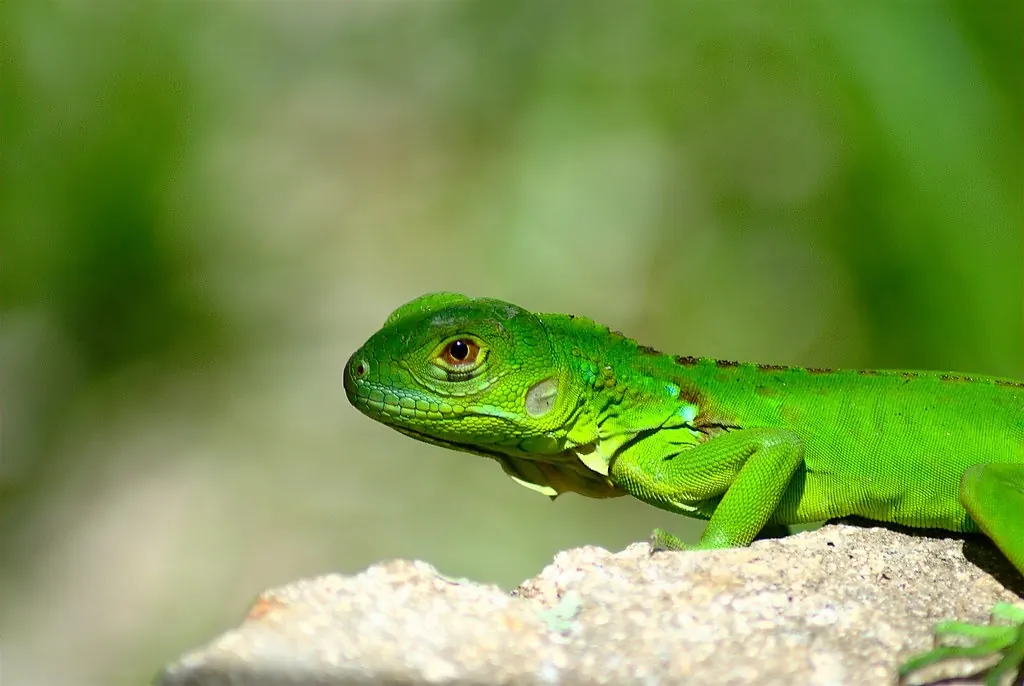
Most pet iguanas are bought as hatchlings or young juveniles. At this stage they are small, bright green and often nervous. To a baby iguana, a large hand coming from above looks like a predator, so tail whipping, running and hiding are normal reactions, not signs of a bad temperament.
The first year shapes the iguana's whole life. Good lighting and diet build strong bones, and calm, consistent handling builds trust. Baby iguanas also grow fast. A healthy green iguana can reach 4 to 6 feet including its tail as an adult, so plan for its adult size before you buy. See our guide to how big iguanas get.
How to Choose a Healthy Baby Iguana
If you are still choosing, look for these signs of good health:
| Look for | Be cautious of |
|---|---|
| Alert, bright eyes that follow movement | Sunken, closed or crusty eyes |
| Rounded body and a thick tail base | Visible hip bones, ribs or a thin tail |
| Straight limbs and a firm jaw | Swollen limbs, a soft or rubbery jaw, or a crooked spine |
| Clean vent with no smeared droppings | Dirty vent or runny droppings |
| Strong grip and active movement | Limpness, trembling or dragging legs |
| Clear nose and normal breathing | Bubbles, discharge or open-mouth breathing |
Ask the seller what the iguana has been eating, how long it has been there and whether it was captive-bred. A captive-bred hatchling is often easier to settle than a wild-caught one. Also check the law where you live, because some places restrict keeping green iguanas, including Florida, as explained in our Florida iguana guide.
Setting Up a Baby Iguana Enclosure
Have the enclosure running for a few days before the iguana arrives so you can confirm temperatures and humidity.
Enclosure Size
A secure, front-opening enclosure around 4 feet long, 2 feet deep and 3 feet tall works for a young baby. A very large, open space can make a small iguana feel exposed and harder to monitor, so fill it with climbing branches, leaves and hides. Upgrade as it grows, following the size rules in our iguana enclosure guide.
Heat and Humidity
| Setting | Target |
|---|---|
| Basking spot | About 95–100°F (35–38°C) |
| Cool side | About 75–80°F (24–27°C) |
| Night | About 70–80°F (21–27°C) |
| Humidity | About 70% or higher |
Small enclosures heat up fast, so use a thermostat and check temperatures in several spots. Details are in our temperature and humidity guide.
UVB Lighting
Growing iguanas build bone quickly and depend on UVB to make vitamin D3. Use a linear UVB tube across most of the enclosure, positioned at the manufacturer's recommended distance, with no glass or plastic in between. Our lighting guide explains the options.
Furnishings
- Branches slightly wider than the iguana's body, at several heights
- A basking shelf under the heat and UVB lamps
- At least two hides, one warm and one cool
- Plenty of artificial or safe live plants for cover
- A shallow water dish it can climb out of easily
- Paper towels or another easy-clean floor, so food and droppings are easy to see
What to Feed a Baby Iguana
Baby iguanas eat the same plant-based diet as adults: mostly calcium-rich leafy greens such as collard, turnip, mustard and dandelion greens, plus other vegetables and very little fruit. The differences are size and frequency.
- Chop very finely. Pieces should be smaller than the iguana's head. Shred or grate everything.
- Feed every day. Offer fresh food each morning after the iguana has warmed up.
- Make food easy to reach. Place the dish near the basking area, at a height where the baby feels safe. Some babies eat better from a dish raised on a shelf.
- Use calcium. Veterinarians commonly recommend lightly dusting a growing iguana's food with phosphorus-free calcium several times a week, plus a reptile multivitamin about twice weekly. Ask your vet for a plan.
Avoid insects, meat and pet foods. For a full list of safe foods, see our iguana food list, and for proportions see what iguanas eat.
If Your Baby Iguana Will Not Eat
It is common for a new iguana to eat little for the first few days. Check the basics first: is the basking spot hot enough, is UVB in place and does the iguana have places to hide? Try offering brightly colored foods such as squash or a few flower petals on top of the greens, and leave it alone to eat. If a baby still refuses food after about a week, or is losing weight, see a reptile veterinarian.
Handling and Taming a Baby Iguana
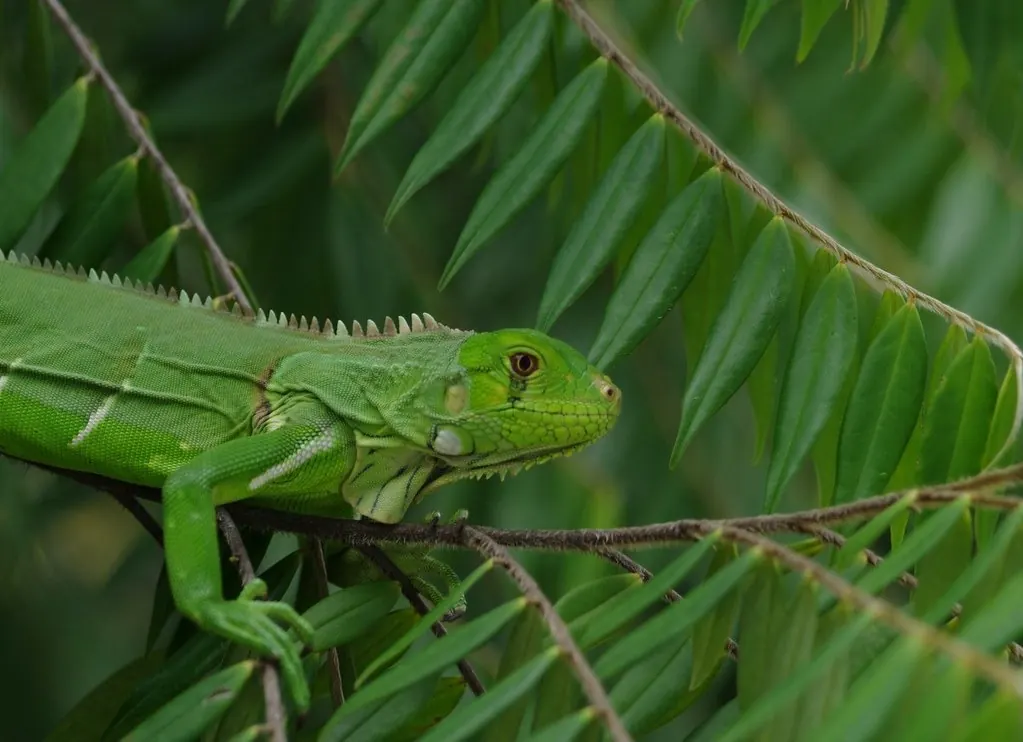
Let the iguana settle for one to two weeks with minimal handling. Then start slowly:
- Spend time near the enclosure so it gets used to you.
- Approach from the side or below, not from above.
- Offer food by hand or with tongs to build a positive association.
- Scoop it up gently, supporting the body and legs. Never grab it by the tail, which can break off.
- Keep sessions short and handle it daily if possible.
Consistency matters more than session length. Our guide on how to tame an iguana covers the process in detail.
Health Checks and Warning Signs
Book a check-up with a veterinarian experienced with reptiles soon after you bring a new iguana home. They can check for parasites, assess body condition and give a diet and supplement plan. Contact a vet promptly if you notice:
- No eating for more than about a week, or weight loss
- Swollen limbs, a soft jaw, trembling or difficulty climbing, which can signal metabolic bone disease
- Lethargy or staying dark and inactive under proper heat
- Runny droppings or no droppings for an extended period
- Bubbles or discharge from the nose or mouth
Wash your hands after handling your iguana or cleaning its enclosure. Reptiles commonly carry Salmonella, and young children are at higher risk.
Common Baby Iguana Mistakes
- Keeping it in a small tank with no plan to upgrade
- Skipping UVB or using a weak compact bulb
- Feeding mostly lettuce, fruit or insects
- Handling it too much in the first days
- Housing two babies together, which often leads to one dominating the other
First Week Checklist
| When | What to do |
|---|---|
| Before arrival | Set up and run the enclosure for several days; confirm temperatures, humidity and the light timer |
| Day 1 | Place the iguana in the enclosure, offer food and water, then leave it alone in a quiet room |
| Days 2–7 | Offer fresh food each morning, check temperatures, spot clean and watch from a distance; avoid handling |
| First week or two | Book a check-up with a reptile veterinarian, including a fecal test |
| After 1–2 weeks | Begin short, gentle taming sessions if the iguana is eating well |
Growth and Enclosure Upgrades
Track your iguana's growth by measuring its snout-to-tail length every month or two and weighing it on a kitchen scale. A steady increase is a good sign. A young iguana that stops growing or loses weight should see a vet.
Use the length to decide when to upgrade. A common rule of thumb is that the enclosure should be at least one and a half to two times the iguana's total length, and at least as tall as it is long. Many owners go through one or two intermediate enclosures before the iguana is ready for its adult setup. If you have room, building the adult enclosure early and filling it with extra cover and branches can save money later.
Frequently Asked Questions
How Often Should I Feed a Baby Iguana?
Every day. Offer a finely chopped salad of leafy greens and vegetables each morning after it has warmed up, and remove leftovers later in the day.
How Big Is a Baby Iguana?
Hatchling green iguanas are usually well under a foot long including the tail. They grow quickly and can reach adult length within a few years with good care.
Can a Baby Iguana Live in a 20-Gallon Tank?
Only very briefly. A 20-gallon tank is too small for more than a few weeks. Start with an enclosure about 4 feet long and 3 feet tall, and upgrade as the iguana grows.
Why Is My Baby Iguana Not Eating?
New iguanas often eat little while settling in. Check the basking temperature, UVB and hiding places. If it still refuses food after about a week or loses weight, see a reptile vet.
Can I Hold My Baby Iguana Right Away?
It is better to wait one to two weeks so it can settle in, then start short, gentle handling sessions.
Sources: Bird and Exotics Veterinary Hospital, Iguana Care Tips; VCA Animal Hospitals, Iguanas: Feeding; PetMD, Green Iguana Care Sheet.