Quick Answer
- An adult green iguana usually needs a custom enclosure roughly 6 to 12 feet long and at least 6 feet tall. A widely used rule of thumb sizes the enclosure from the iguana's total length (snout to tail tip).
- Hatchlings can start in a smaller enclosure, but they grow quickly, so plan the adult setup from day one.
- Height matters because iguanas are tree-dwellers that want to bask high up on wide, flat shelves.
- Glass aquariums work only for babies. Most adults end up in PVC, wood-and-mesh or room-sized enclosures.
- Avoid loose substrates that can be swallowed. Paper, tile or other easy-clean surfaces are the safe default.
Why the Enclosure Comes First
The enclosure is the biggest purchase and the hardest thing to change later. It also controls almost everything else in your iguana's life: how well it can warm up and cool down, how much UVB reaches it, how much it moves and how stressed it feels. Many common iguana health problems, including metabolic bone disease, poor appetite, stress behaviors and, in females, egg-binding, are linked to housing that is too small, too cool or poorly lit.
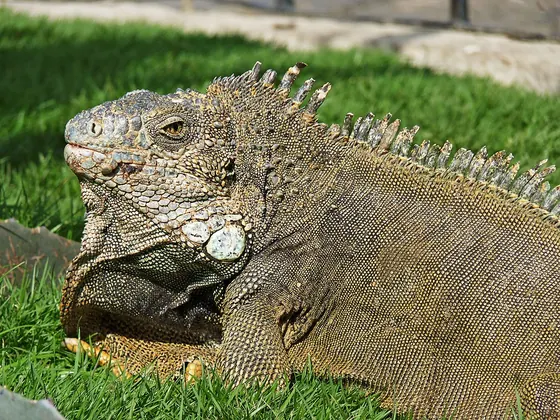
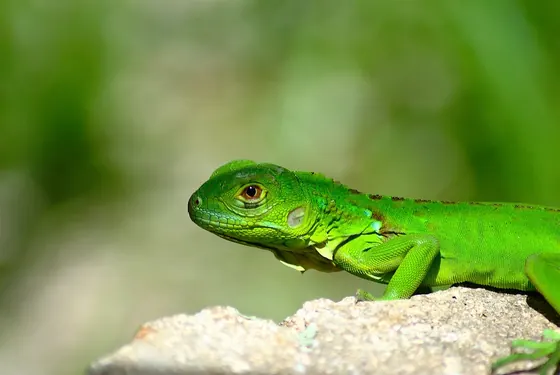
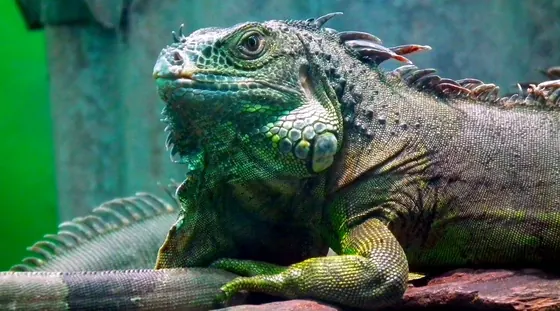
The challenge is that a pet-store hatchling is only a few inches long, while a healthy adult green iguana commonly reaches 4 to 6 feet including the tail. Iguanas can reach adult length within the first few years, so the cute starter tank is a very short-term solution. This guide covers how to size the enclosure at each stage, which enclosure types work, what to put inside and the mistakes to avoid.
How Big Should an Iguana Enclosure Be?
There is no official standard, and published recommendations vary. The most useful approach, popularized by long-time reptile educator Melissa Kaplan on anapsid.org, is to size the enclosure from the iguana's snout-to-tail length (STL):
- Length (side to side): at least 1.5 to 2 times the iguana's STL
- Height: at least 1 to 1.5 times the STL
- Depth (front to back): at least 0.5 to 1 times the STL
The reasoning is simple. An iguana should be able to stretch out fully on a basking shelf and still keep most of its body and tail in the temperature zone it needs, while having room to climb and turn around.
Enclosure Size by Iguana Length
| Iguana total length | Minimum length | Minimum height | Minimum depth |
|---|---|---|---|
| 1.5 ft (young juvenile) | 2.25–3 ft | 1.5–2.25 ft | 0.75–1.5 ft |
| 3 ft (subadult) | 4.5–6 ft | 3–4.5 ft | 1.5–3 ft |
| 4 ft (small adult) | 6–8 ft | 4–6 ft | 2–4 ft |
| 5 ft (typical adult) | 7.5–10 ft | 5–7.5 ft | 2.5–5 ft |
| 6 ft (large adult) | 9–12 ft | 6–9 ft | 3–6 ft |
These figures are minimums calculated from the rule of thumb above, not targets. Other care guides quote figures such as 6 feet long by 3 to 4 feet deep by 6 feet tall for an adult. That is a reasonable floor for a smaller adult but tight for a large male. If you can give more space, do.
Hatchlings and Juveniles
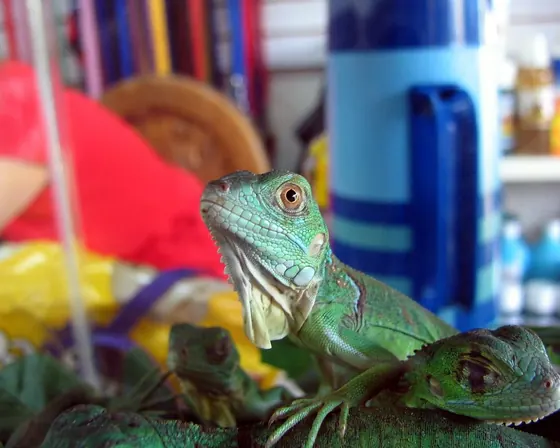
A hatchling under about 12 inches can live temporarily in an enclosure around 4 feet long, 2 feet deep and 3 feet tall. A tall glass or front-opening terrarium of roughly this size makes it easier to hold heat and humidity for a small animal. Avoid giving a tiny iguana a huge, open space right away. Very young iguanas often feel exposed and stop eating if they cannot find cover and food easily. Upgrade as soon as the iguana outgrows the length and height guidelines, often within the first year. See our baby iguana care guide for more on the first months.
Adults
Once an iguana passes about 3 to 4 feet, almost no off-the-shelf enclosure is big enough. Most keepers of adult iguanas build a custom enclosure or convert part of a room or a closet into an iguana space. Large males are the biggest challenge, so check our guide to how big iguanas get before you buy, and budget for the adult setup, which is usually the largest single cost of ownership. Our iguana cost guide breaks that down.
Housing More Than One Iguana
Iguanas are generally kept alone. Adult males are territorial and can injure each other, and even mixed pairs may fight or breed when you do not want them to. If you plan to keep more than one, each animal needs its own basking spot and far more space than the single-iguana minimums above. Never house iguanas with other reptile species.
Why Height Matters More Than You Think
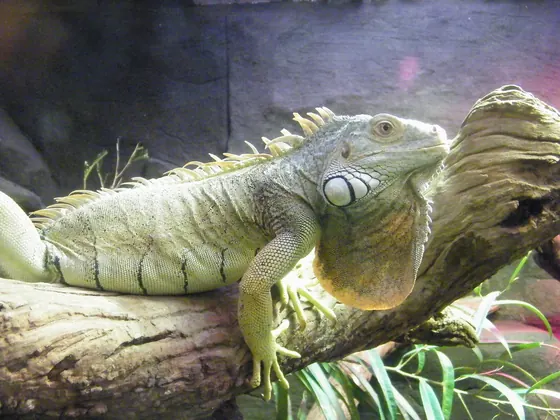
Green iguanas are arboreal. In the wild they spend most of their time in trees, often near water, basking on high branches. Height gives a captive iguana a sense of security and lets you create a proper temperature gradient from a hot, bright top to a cooler, shaded bottom.
The shape matters as well as the volume. Kaplan warns against two common designs:
- The "telephone booth": tall but narrow, such as 6 feet high by 3 feet wide. The iguana can climb but cannot lie flat across a basking shelf or move along a heat gradient.
- The "coffin": long but low, such as 6 feet long by 3 feet tall. The iguana can stretch out but cannot climb or bask high up.
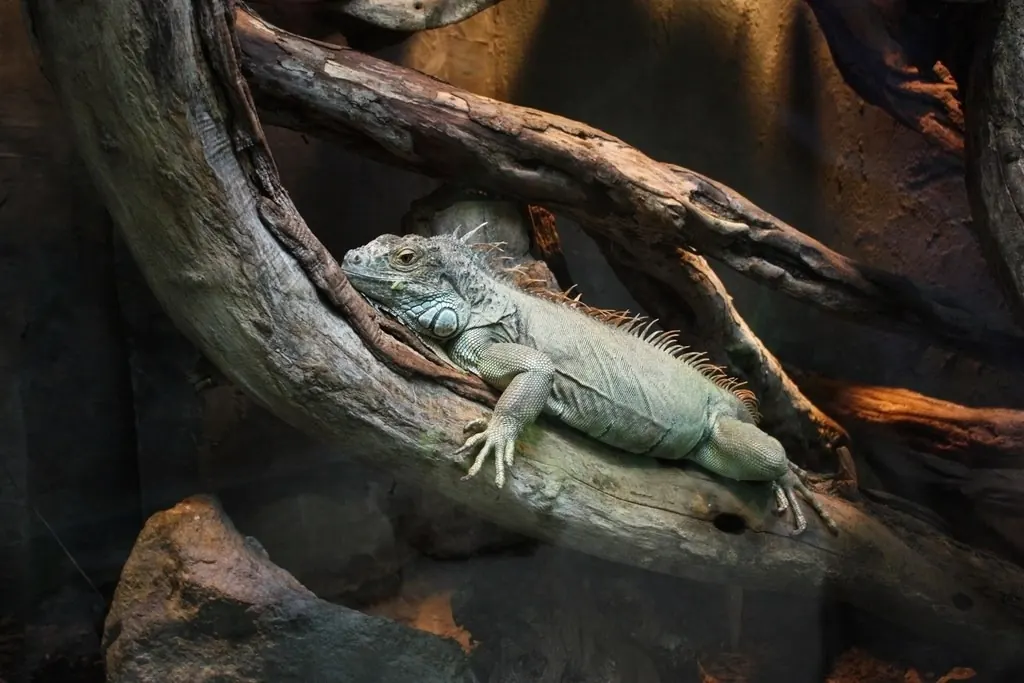
Iguanas prefer to rest on wide horizontal surfaces rather than cling to narrow vertical ones, so build in shelves and thick horizontal branches at several heights, with the main basking shelf near the top.
Types of Iguana Enclosures
| Type | Best for | Pros | Cons |
|---|---|---|---|
| Glass terrarium | Hatchlings only | Holds heat and humidity, easy to find | Outgrown fast; heavy; glass blocks UVB, so lights must be inside or over mesh |
| PVC enclosure | Juveniles to small adults | Light, waterproof, holds heat well, easy to clean | Large sizes are costly; few are tall enough for big adults |
| Wood, melamine or mesh custom build | Adults | Built to the size you need; cheaper per foot | Wood must be sealed against moisture; mesh-only cages lose heat and humidity |
| Room or closet conversion | Large adults | The most space and climbing room | Must be iguana-proofed; harder to heat and keep humid |
| Outdoor enclosure | Warm-climate extra time | Natural sunlight and exercise | Only safe in suitable weather; needs shade, security and supervision |
Glass Tanks
A front-opening glass terrarium is fine for a hatchling, but even large aquariums are too short and narrow for juveniles within months. Ordinary glass and most plastics block much of the UVB your iguana needs, so the UVB lamp must shine directly into the enclosure, not through the glass. Mesh lids also reduce UVB output, which is explained in our iguana lighting guide.
PVC and Wood Enclosures
PVC enclosures are popular with reptile keepers because they resist humidity and are easy to disinfect. Custom wood or melamine builds are the most common route for adult iguanas. Seal all wood surfaces with a non-toxic, waterproof finish and let it cure fully before the iguana moves in. Front doors should open wide enough that you can reach every corner for cleaning.
Room-Sized Enclosures
Many experienced keepers dedicate a spare room, part of a room or a walk-in closet to an adult iguana, often with a mesh or glass partition. This gives the most climbing space, but the room still needs a controlled basking area, UVB lighting close enough to the iguana and humidity management. Remove or cover anything the iguana could chew, swallow, knock over or get stuck behind, including cords, cleaning products and toxic houseplants.
Outdoor Enclosures
Where daytime temperatures are warm enough, a secure outdoor enclosure can give an iguana unfiltered sunlight and extra exercise. Provide shade, water and a hiding spot, protect against predators and escape, and bring the iguana indoors whenever temperatures drop. Rules on keeping green iguanas vary by location, and in Florida they are tightly restricted, as our Florida iguana guide explains.
What to Put in an Iguana Enclosure
A Wide Basking Shelf
The basking shelf is the most important piece of furniture. Place it near the top of the enclosure under the heat source and UVB lamp, and make it long and wide enough for the iguana to lie fully stretched out. Wood shelves covered in an easy-clean surface work well.
Branches and Climbing Areas
Add thick, sturdy branches at several heights, mostly horizontal or gently sloping, so the iguana can move between warm and cool zones. Branches should be at least as wide as the iguana's body. Secure them firmly so nothing shifts when a heavy adult climbs.
Hiding Spots
Iguanas need somewhere to retreat when they feel stressed, especially young ones and newly acquired animals. Large cork bark pieces, artificial plants and covered shelves all work. Offer at least one hide in the warmer area and one in the cooler area.
Water
Provide a sturdy, shallow water dish that is easy to clean and refill daily. Many iguanas also soak in a larger tub, which helps with hydration and shedding. Iguanas often defecate in water, so expect to clean it often.
Plants and Decor
Artificial plants are the low-maintenance option. Live plants raise humidity and add cover but must be non-toxic, because iguanas eat plants. Rinse anything new before adding it and avoid small decorations that could be swallowed.
Best Substrate for Iguanas
Substrate is the material on the enclosure floor. Iguanas sometimes swallow loose material while eating, and ingesting particles can contribute to impaction, a blockage in the digestive tract. Safe, practical choices include:
- Newspaper or plain paper: cheap, safe and easy to replace daily.
- Ceramic or stone tile: easy to disinfect and holds some warmth.
- Washable liners or outdoor carpet: reusable, but must be washed and fully dried often and checked for loose threads that can catch toes and claws.
- Linoleum or vinyl flooring: a good wipe-clean base for large custom builds.
Most care guides advise against sand, gravel, corn cob, walnut shell and small bark chips for iguanas because of the swallowing risk and because they hide waste. Some keepers run naturalistic or bioactive setups with soil-based substrates. These need more experience and close attention to cleanliness and humidity, and they are not the best place for a beginner to start.
Heat, Light and Humidity Inside the Enclosure
The enclosure only works if the environment inside it is right. In short:
- UVB lighting across a large part of the enclosure, positioned at the distance the manufacturer recommends from the basking shelf. Without UVB, iguanas cannot make enough vitamin D3 to use calcium. See our lighting guide.
- A temperature gradient with a hot basking spot near the top, warm ambient air and a cooler zone lower down, controlled by thermostats and checked with thermometers. See our temperature and humidity guide.
- High humidity, commonly around 70 percent or more for green iguanas, which helps with hydration and shedding.
- A day-night cycle of roughly 12 hours of light, with lights off at night.
Use guards or cages around heat lamps that the iguana can reach. Burns from unguarded bulbs and heat rocks are a common injury in pet iguanas, and heat rocks are best avoided entirely.
Free-Roaming Iguanas: Is It a Good Idea?
Some owners let their iguana roam the house. It can give a lot of exercise, but a typical home is too cool and dry, has no UVB and is full of hazards such as electrical cords, other pets, toxic plants and small objects. Free roaming also spreads iguana droppings around the house, which matters because reptiles commonly carry Salmonella.
A safer compromise is a properly equipped enclosure where the iguana spends most of its time, plus supervised time out in an iguana-proofed room. The iguana still needs regular basking time under heat and UVB.
Cleaning and Maintaining the Enclosure
A clean enclosure reduces bacteria, odor and mites. A simple routine:
| How often | Task |
|---|---|
| Daily | Remove droppings, uneaten food and soiled paper; wash and refill the water dish |
| Weekly | Wipe and disinfect shelves, dishes and the floor; check that thermometers, hygrometers and thermostats read correctly |
| Monthly | Deep clean all surfaces and decor with a reptile-safe disinfectant; rinse thoroughly and let everything dry |
| As recommended | Replace UVB lamps on the schedule the manufacturer gives, even if they still light up |
Move the iguana to a secure, warm temporary space during deep cleaning. Wash your hands after cleaning and keep reptile equipment away from kitchen sinks and food areas. Our guide to iguanas and Salmonella covers hygiene in more detail.
Common Iguana Enclosure Mistakes
- Buying for the baby, not the adult. Plan and budget for the full-size setup before you bring an iguana home.
- Too short or too narrow. Telephone-booth and coffin shapes prevent normal climbing or basking.
- UVB through glass or a thick mesh. The lamp may look bright while delivering little useful UVB.
- No thermostat. Heat lamps and heat emitters can overheat an enclosure quickly.
- Loose, swallowable substrate. Sand, gravel and small chips increase impaction risk.
- Unguarded heat sources. Iguanas can be burned by bulbs, heat emitters and heat rocks.
- No hiding places. A constantly exposed iguana stays stressed and may stop eating.
- Housing iguanas together without enough space. Fighting and stress are common.
Frequently Asked Questions
How Big of an Enclosure Does an Adult Iguana Need?
Using the snout-to-tail-length rule, a 5-foot adult needs an enclosure roughly 7.5 to 10 feet long, 5 to 7.5 feet tall and 2.5 to 5 feet deep. Some care guides quote 6 by 3 by 6 feet as a minimum, which is tight for a large adult. Bigger is better.
Can an Iguana Live in a Fish Tank?
Only as a hatchling, and only briefly. Aquariums are too small and short for growing iguanas, and glass blocks UVB, so lights must shine directly into the tank.
What Is the Best Bedding for an Iguana?
Newspaper, paper towels, tile, vinyl flooring or washable liners are the safest easy-clean options. Avoid sand, gravel, corn cob, walnut shell and small bark chips that iguanas may swallow.
Can Iguanas Live Outside?
Only where the climate is warm enough, in a secure enclosure with shade, water and protection from predators, and only where local rules allow it. Indoor housing is still needed when temperatures drop.
How Often Should I Clean My Iguana's Enclosure?
Spot clean daily by removing droppings and uneaten food and changing the water, disinfect surfaces weekly and deep clean the whole enclosure about once a month.
Sources: Melissa Kaplan, Iguana Cage Design; PetMD, Green Iguana Care Sheet.