Quick Answer
- Iguanas have a parietal eye, often called the "third eye," on the top of the head between and behind the two main eyes.
- It looks like a small, pale, shiny scale and contains a simple lens and light-sensitive cells.
- It cannot form images, but it senses light, dark and shadows.
- It likely helps iguanas detect predators from above and regulate daily and seasonal rhythms, including body temperature behavior.
Where Is the Iguana's Third Eye?
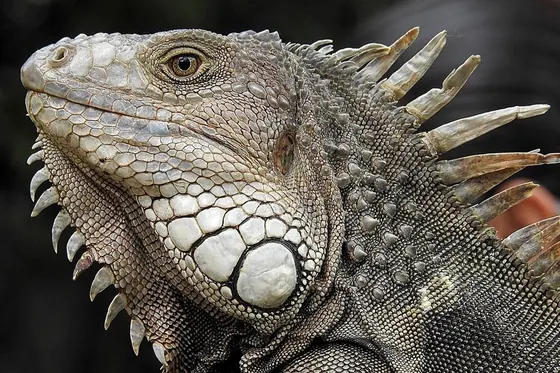
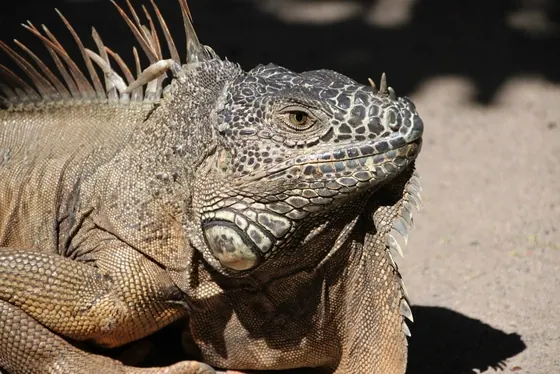
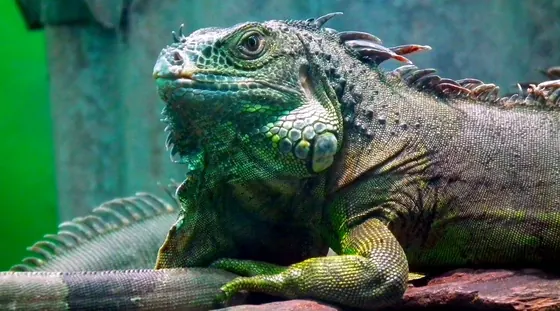
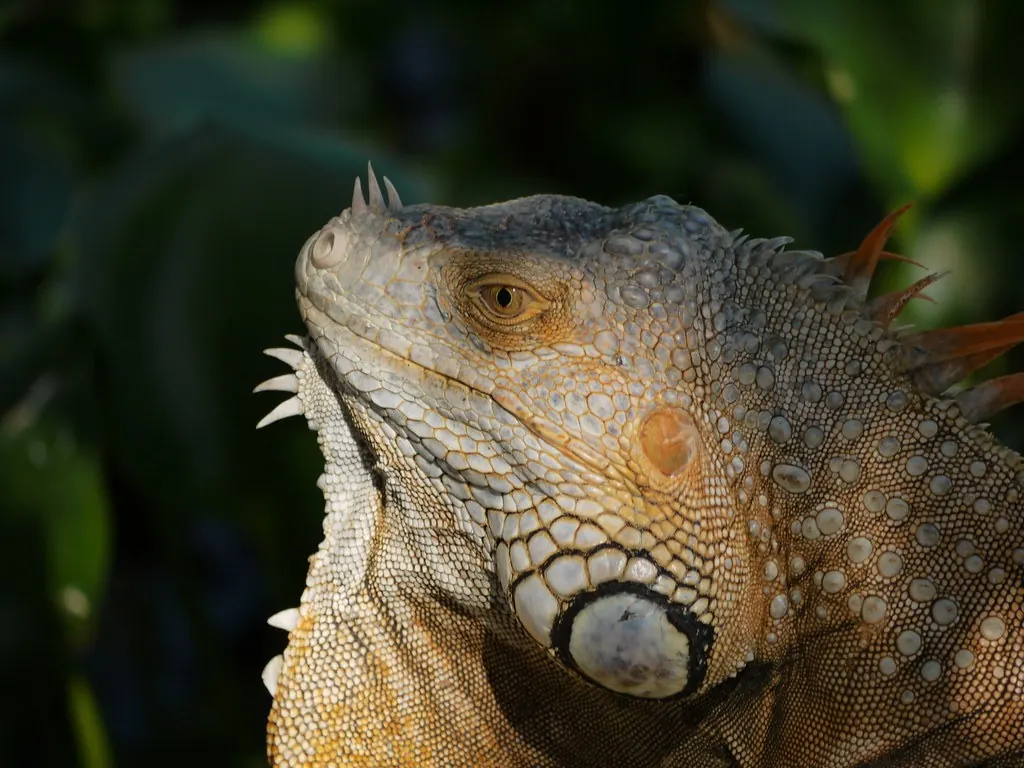
Look at the top of a green iguana's head, roughly in line with or just behind its eyes, and you will see a small, round, grayish or pale scale that looks different from those around it. That is the parietal eye. In some iguanas it is easy to spot; in others it is subtle. It is present in many lizards, as well as in the tuatara of New Zealand, where it is especially well developed in young animals.
What Is the Parietal Eye?
The parietal eye is a light-sensing organ connected to the brain's pineal complex, which helps control hormone rhythms. Beneath its transparent scale, it has a simple lens and a retina-like layer of light-sensitive cells. It is much simpler than the iguana's main eyes and cannot produce detailed images.
| Feature | Main eyes | Parietal eye |
|---|---|---|
| Location | Sides of the head | Top of the head |
| Forms images? | Yes, with color vision including ultraviolet | No |
| Detects | Shapes, colors, movement | Light intensity, light and dark, shadows |
| Can close? | Yes, with eyelids | No; covered by a scale |
What Does the Third Eye Do?
Spotting Predators from Above
Birds of prey are major predators of iguanas. The parietal eye can detect a sudden shadow passing overhead, which may help an iguana react quickly by fleeing or dropping into water. This is one reason iguanas often panic when a hand reaches toward them from above. See how to tame an iguana.
Daily and Seasonal Rhythms
By sensing light levels and day length, the parietal eye is thought to help regulate the iguana's internal clock, influencing sleep and activity cycles, hormone release and seasonal behaviors such as breeding.
Basking and Temperature
Researchers believe the parietal eye plays a role in how lizards manage sun exposure and basking, helping them judge how much light they are receiving. Studies in lizards have found changes in basking behavior when the parietal eye is covered, though the details vary between species.
What the Third Eye Means for Pet Iguanas
- Approach from the side or front, not from above, to avoid triggering a fear response.
- Keep a consistent day-night cycle of about 12 hours of light and complete darkness at night. See iguana lighting.
- Avoid colored night lights, which iguanas can still detect.
- Place overhead lamps thoughtfully, since iguanas expect light and heat from above, like the sun.
- Do not cover or press on the parietal eye, and have a vet look at any injury to the top of the head.
Frequently Asked Questions
Do Iguanas Really Have Three Eyes?
They have two true eyes plus a parietal eye on top of the head. The parietal eye senses light and shadows but cannot see images.
Can Iguanas See with Their Third Eye?
Not in the usual sense. It detects light intensity and shadows, helping iguanas notice movement overhead and track day and night.
Do Other Animals Have a Third Eye?
Yes. Many lizards, the tuatara and some frogs and fish have a parietal or pineal light-sensing organ.
What Does the Iguana Third Eye Look Like?
A small, round, pale or grayish scale on the top of the head, between and slightly behind the main eyes.
Sources: BBC Wildlife (Discover Wildlife), Why Do Iguanas Have Three Eyes?; Melissa Kaplan, The Parietal Eye.