Quick Answer
- Scientific name: Cyclura lewisi, the Grand Cayman blue iguana.
- Where: found only on Grand Cayman in the Cayman Islands.
- Size: one of the largest lizards in the Western Hemisphere, reaching over 5 feet (1.5 m) from nose to tail tip.
- Lifespan: very long-lived; one captive blue iguana lived to about 69 years.
- Status: nearly extinct in the wild in the early 2000s; a recovery program led the IUCN to move it from Critically Endangered to Endangered in 2012.
What Is the Blue Iguana?
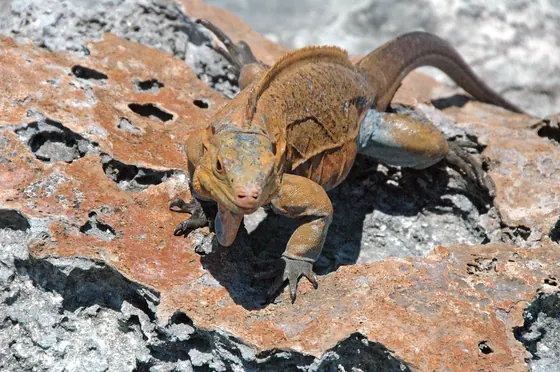
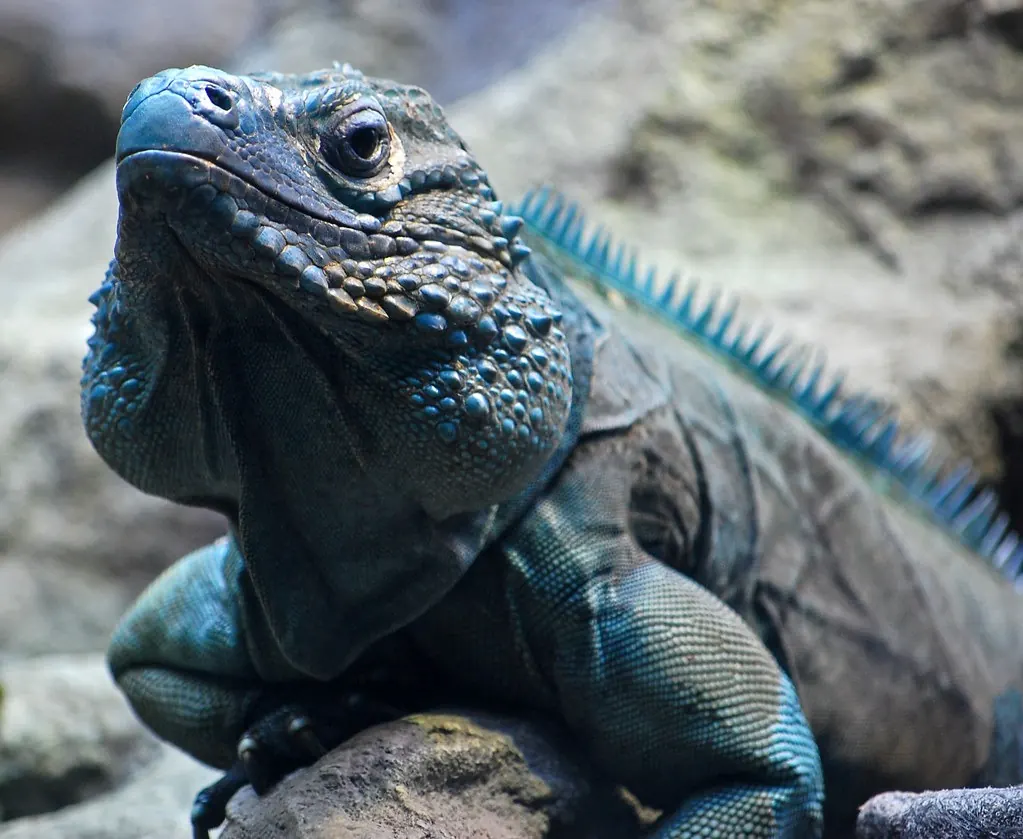
The Grand Cayman blue iguana is a large rock iguana in the genus Cyclura. It lives only on Grand Cayman, the largest of the three Cayman Islands in the Caribbean. It is known for its color: adults, especially males, can turn a striking turquoise or powder blue, particularly in the breeding season. When cool or resting, the same animal may look gray.
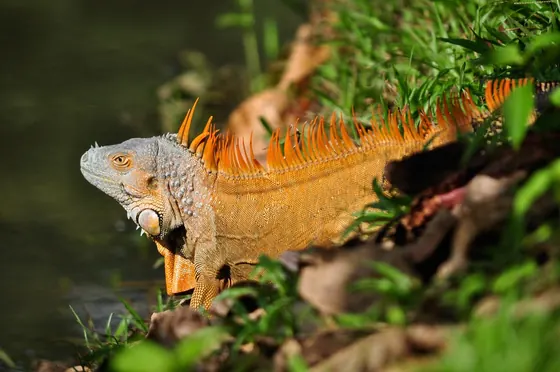
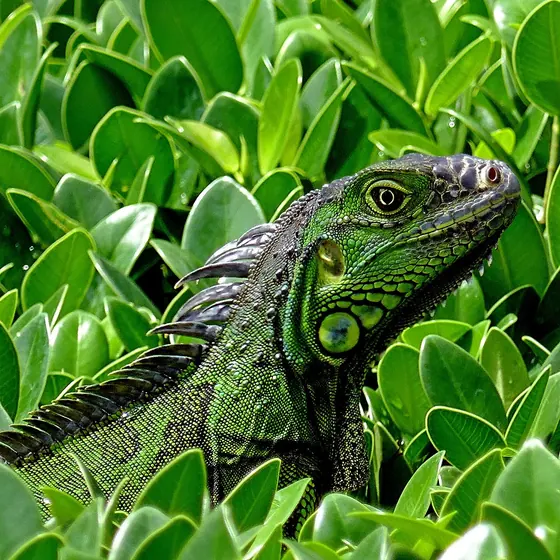
The name "blue iguana" is also used for blue color morphs of the green iguana sold in the pet trade, such as "blue axanthic" iguanas. Those are a different species. This page covers the true Grand Cayman blue iguana. See our iguana colors guide for color morphs.
Blue Iguana at a Glance
| Trait | Details |
|---|---|
| Scientific name | Cyclura lewisi |
| Native range | Grand Cayman only |
| Length | Over 5 ft (1.5 m) nose to tail tip in large adults |
| Weight | Large males can exceed 20 lb (9 kg) |
| Diet | Mainly plants: leaves, flowers, fruit and seeds |
| Eggs | Roughly 1–22 per clutch, laid once a year |
| Lifespan | Often 20–40 years in the wild; one captive individual reached about 69 years |
| IUCN status | Endangered (downlisted from Critically Endangered in 2012) |
Appearance
Blue iguanas are heavy-bodied, ground-dwelling lizards with thick legs, a short crest of spines along the back and a powerful tail. Their color ranges from gray to vivid blue. Males are larger, with bigger heads and spines, and become most intensely blue when displaying. Their eyes have a distinctive red or golden iris.
Habitat and Behavior
Blue iguanas live in dry, rocky shrubland and forest on the eastern side of Grand Cayman, using rock holes, tree cavities and crevices as retreats. Unlike the tree-dwelling green iguana, they spend most of their time on the ground, though they can climb. Adults are territorial and defend areas with displays, including head bobs.
Diet
Blue iguanas are mainly herbivorous, eating leaves, flowers, fruit, stems and seeds of many native plants. Like other rock iguanas, they occasionally eat other food, such as insects or fungi, but plants make up most of their diet.
Breeding
Blue iguanas breed once a year. After mating, females dig nests in soil and lay a clutch of roughly 1 to 22 eggs, often in early summer. Eggs incubate for a few months, and hatchlings emerge later in the year. Hatchlings and juveniles are vulnerable to predators, including introduced cats, dogs and rats.
Near Extinction and Recovery
Blue iguanas were once common on Grand Cayman, but development, habitat loss, roads, and predators such as feral cats and dogs drove them to the brink. By the early 2000s, only a tiny wild population remained, and the species was among the most endangered lizards in the world.
The Blue Iguana Recovery Programme, run by the National Trust for the Cayman Islands with partners including the International Reptile Conservation Foundation, began captive breeding and "head-starting": raising young iguanas in safety until they are large enough to avoid most predators, then releasing them into protected areas such as the Salina Reserve and the Queen Elizabeth II Botanic Park. Hundreds of iguanas were released, and in 2012 the IUCN downlisted the species from Critically Endangered to Endangered.
The species is still at risk. Ongoing threats include roads, free-roaming dogs and cats, habitat loss and competition from invasive green iguanas, which are now abundant on Grand Cayman.
Can You Keep a Blue Iguana as a Pet?
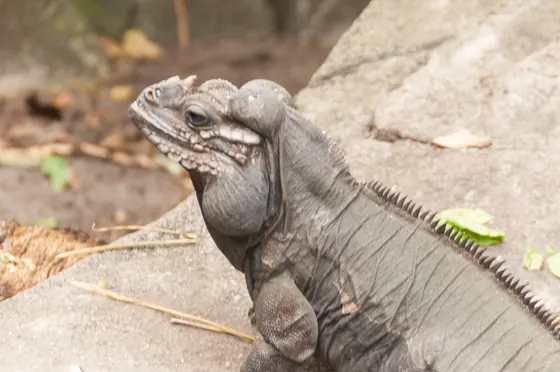
Grand Cayman blue iguanas are rarely available. Like all Cyclura species, they are listed on CITES Appendix I, which strictly limits international trade, and most captive animals are part of managed zoo breeding programs. Ads for "blue iguanas for sale" usually refer to blue color morphs of the green iguana, not this species. If you are interested in rock iguanas as pets, the rhinoceros iguana is the species more often bred in captivity.
Blue Iguana vs. Green Iguana
| Feature | Blue iguana | Green iguana |
|---|---|---|
| Genus | Cyclura (rock iguanas) | Iguana |
| Lifestyle | Ground-dwelling | Tree-dwelling |
| Range | Grand Cayman only | Mainland Americas, Caribbean; invasive elsewhere |
| Status | Endangered | Least Concern |
| Lifespan | Decades; up to about 69 years recorded | Up to about 19+ years in captivity |
See other Caribbean species in our rock iguanas guide.
Frequently Asked Questions
Are Blue Iguanas Real?
Yes. The Grand Cayman blue iguana is a real, endangered species found only on Grand Cayman. Blue color morphs of green iguanas also exist in the pet trade.
How Big Do Blue Iguanas Get?
Large adults can exceed 5 feet from nose to tail tip, making them one of the largest lizards in the Western Hemisphere.
How Long Do Blue Iguanas Live?
They are very long-lived, often 20 to 40 years in the wild. A captive blue iguana lived to about 69 years.
Where Can I See a Blue Iguana?
On Grand Cayman, the Queen Elizabeth II Botanic Park is a well-known place to see them. Some zoos also keep blue iguanas as part of breeding programs.
Sources: Smithsonian's National Zoo, Grand Cayman Blue Iguana; International Reptile Conservation Foundation, Grand Cayman Blue Iguana.