Quick Answer
- Metabolic bone disease (MBD) is a group of bone problems caused mainly by too little calcium, too much phosphorus, too little vitamin D3 or a lack of UVB light.
- Early signs: swollen or firm limbs, a soft or swollen jaw, trembling or twitching, weakness, reluctance to climb and poor appetite.
- Advanced MBD can cause fractures, deformities, seizures and death.
- See a reptile veterinarian promptly. Do not try to treat MBD at home with high-dose supplements.
- MBD is largely preventable with strong UVB lighting, correct heat and a calcium-rich plant diet.
What Is Metabolic Bone Disease?
Metabolic bone disease is not a single disease but a group of conditions that weaken an iguana's skeleton. In pet iguanas, the most common form is nutritional secondary hyperparathyroidism. When blood calcium runs low, the body releases a hormone that pulls calcium out of the bones to keep the heart, nerves and muscles working. Over time, the bones become thin, soft and replaced by fibrous tissue. That is why affected iguanas often develop swollen, rubbery limbs and jaws.
MBD is one of the most common health problems seen in pet iguanas and is almost always linked to husbandry, the way the iguana is housed and fed.
What Causes MBD in Iguanas?
| Cause | Why it matters |
|---|---|
| No UVB or weak UVB | Iguanas need UVB to make vitamin D3, which lets them absorb dietary calcium |
| UVB blocked by glass, plastic or mesh | The lamp looks bright but delivers little UVB |
| Old UVB bulbs | UVB output fades long before the bulb stops glowing |
| Low-calcium diet | Lettuce, fruit and many vegetables are low in calcium |
| High-phosphorus foods | Too much phosphorus relative to calcium worsens the imbalance |
| Temperatures too low | A cold iguana cannot digest and absorb nutrients properly |
| Kidney disease (in older iguanas) | Can upset calcium and phosphorus balance |
Young, fast-growing iguanas are at highest risk because they are building bone quickly. Egg-laying females also need large amounts of calcium.
Signs of Metabolic Bone Disease
Early Signs
- Firm, swollen back legs or forearms, sometimes described as "Popeye arms"
- A soft, rubbery or swollen lower jaw
- Trembling, twitching or muscle tremors, especially in the toes and legs
- Weakness, difficulty climbing or lifting the body off the ground
- Reduced appetite and lethargy
- Slow growth in a young iguana
Advanced Signs
- Bowed or bent limbs and a kinked spine or tail
- Fractures, sometimes from minor bumps or falls
- Inability to close the mouth properly or to eat
- Paralysis of the hind legs
- Seizures, caused by very low blood calcium
- Constipation or bloating
Tremors, seizures or a sudden inability to move can mean dangerously low blood calcium. Treat these as an emergency and contact a reptile veterinarian right away.
How Vets Diagnose MBD
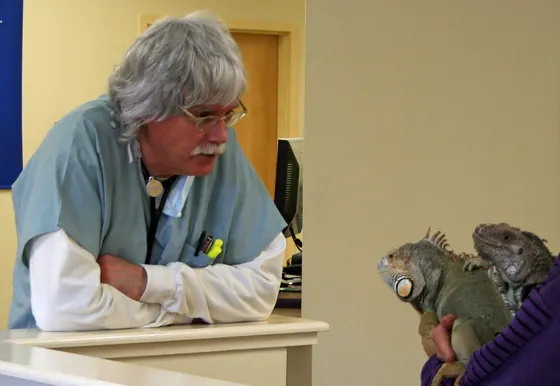
A reptile veterinarian will ask about lighting, temperatures and diet, then examine the iguana. Common tests include X-rays to assess bone density and look for fractures, and blood tests to check calcium, phosphorus and kidney function. These results guide treatment and help rule out other conditions.
How MBD Is Treated
Treatment depends on severity and must be directed by a veterinarian. It commonly includes:
- Calcium supplementation, by mouth or injection, at doses the vet calculates
- Vitamin D3, if appropriate, given under veterinary guidance, because too much can be toxic
- Fluids and nutritional support for weak or dehydrated iguanas
- Correcting husbandry: proper UVB, temperatures and a calcium-rich diet
- Supportive care for fractures, such as limiting climbing and, in some cases, splinting
Many iguanas with early MBD improve significantly once treatment and husbandry changes begin, often over weeks to months. Severe deformities may be permanent even after the disease is controlled.
Caring for an Iguana Recovering from MBD
- Lower climbing branches and add ramps so the iguana cannot fall far.
- Keep the basking area easy to reach.
- Offer finely chopped, calcium-rich greens and follow the vet's supplement plan exactly.
- Handle very gently, supporting the whole body, as bones may break easily.
- Attend follow-up visits so the vet can track progress with X-rays or blood work.
How to Prevent Metabolic Bone Disease
- Use a strong linear UVB lamp at the right distance, with no glass or plastic in between, and replace it on schedule. See our iguana lighting guide.
- Provide correct basking temperatures, about 95–100°F at the basking surface. See temperature and humidity.
- Feed calcium-rich leafy greens such as collard, turnip, mustard and dandelion greens. See what iguanas eat and the iguana food list.
- Limit fruit and low-nutrient foods such as iceberg lettuce.
- Use a calcium supplement on your vet's schedule.
- Book yearly vet checks, especially for young and egg-laying iguanas.
Frequently Asked Questions
Can Iguanas Recover from Metabolic Bone Disease?
Many iguanas with early MBD improve with veterinary treatment and better husbandry. Severe bone deformities may remain permanent.
What Are the First Signs of MBD in Iguanas?
Swollen or firm limbs, a soft or swollen jaw, trembling, weakness, difficulty climbing and reduced appetite.
Can I Treat MBD at Home?
No. Fixing UVB and diet is essential, but calcium and vitamin D3 doses must be set by a veterinarian, because incorrect doses can be harmful.
Is MBD Painful for Iguanas?
It can be. Swollen bones, fractures and muscle tremors are likely uncomfortable, which is another reason to seek prompt veterinary care.
Sources: Ron Hines DVM, Metabolic Bone Disease in Your Iguana; WikiVet, Lizard Metabolic Bone Disease; Exotic Pet Vet, Metabolic Bone Disease. This page is general information, not veterinary advice.