Quick Answer
- Feed often: collard greens, turnip greens, mustard greens, dandelion greens, escarole, endive, bok choy and squash.
- Feed sometimes: carrots, bell peppers, green beans, sweet potato, kale, broccoli and romaine.
- Treats only: fruits such as figs, papaya, mango, berries, apple and banana.
- Limit: spinach, Swiss chard, beet greens, cabbage and iceberg lettuce.
- Never feed: meat, insects, eggs, dog or cat food, avocado, rhubarb, onion, garlic and toxic plants.
How to Use This Iguana Food List
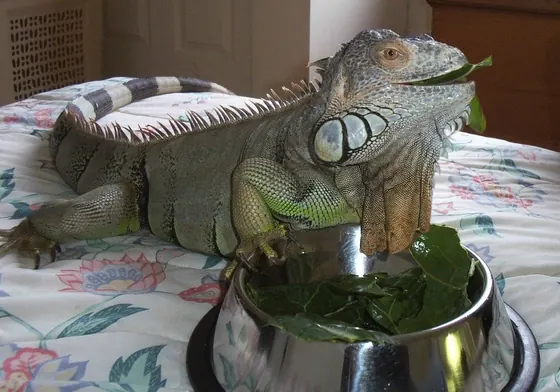
Green iguanas are herbivores that do best on a varied salad based on calcium-rich leafy greens. This list sorts common foods into four groups: staples to feed often, vegetables to rotate, fruits and flowers to use as treats, and foods to limit or avoid. Variety is the goal. Feeding the same two or three foods every day increases the risk of nutritional imbalances, even when each food is safe.
For diet proportions, feeding schedules and supplements, read our main guide on what iguanas eat. This page focuses on individual foods.
Staple Greens: Feed Often
These greens should make up the largest part of every meal. Most are good sources of calcium relative to phosphorus.
| Food | Notes |
|---|---|
| Collard greens | One of the best everyday staples |
| Turnip greens | Excellent staple, high in calcium |
| Mustard greens | Good staple; rotate with others as it is a brassica |
| Dandelion greens and flowers | Excellent; only from pesticide-free sources |
| Escarole and endive | Good staples that most iguanas accept |
| Bok choy | Good in rotation |
| Watercress | Good in rotation |
| Alfalfa (hay, leaves or pellets) | Useful fiber and calcium source; chop or soak hay |
| Hibiscus leaves | Readily eaten; pesticide-free only |
Vegetables: Feed Regularly in Rotation
Other vegetables add variety, color and nutrients. Grate or finely chop hard vegetables.
| Food | How to serve |
|---|---|
| Butternut, acorn and other winter squash | Grated raw; a favorite staple vegetable |
| Yellow squash and zucchini | Grated or thinly sliced |
| Green beans | Chopped small |
| Snap peas and snow peas | Chopped |
| Bell peppers (any color) | Finely diced |
| Sweet potato | Grated raw, in small amounts |
| Carrots and parsnips | Grated, in moderation |
| Okra | Sliced |
| Prickly pear cactus pads (nopales) | Spines removed, chopped |
| Asparagus | Chopped |
| Cucumber | Hydrating but low in nutrients; small amounts |
| Romaine lettuce | Fine in a mix, but not as the main green |
| Kale and broccoli | Nutritious, but brassicas; feed in moderation |
Fruits: Treats Only
Fruit should be a small part of the diet, used as a topping to encourage eating. Remove seeds and pits, and chop into small pieces.
| Fruit | Notes |
|---|---|
| Figs | One of the better fruits for calcium |
| Papaya and mango | Popular, sweet treats |
| Strawberries, raspberries and blueberries | Small amounts |
| Apple and pear | Seeds and core removed |
| Banana | Small pieces occasionally; high in sugar and phosphorus |
| Melon (cantaloupe, watermelon) | Watery; occasional |
| Grapes | Halved, occasional |
| Kiwi, peach, apricot, guava | Pits removed, occasional |
| Tomato | Occasional; leaves and stems are not safe |
Edible Flowers
Many iguanas eagerly eat flowers, and they add color and variety. Use only flowers grown without pesticides or chemical treatments.
- Hibiscus
- Dandelion
- Nasturtium
- Rose petals
- Geranium
- Carnation
Foods to Limit
| Food | Why limit it |
|---|---|
| Spinach, Swiss chard, beet greens, parsley | High in oxalates, which bind calcium; occasional only |
| Cabbage, kale, broccoli, cauliflower, Brussels sprouts | Goitrogens may affect the thyroid if fed in large amounts |
| Iceberg lettuce and celery | Mostly water with little nutrition |
| Citrus fruits | Acidic and sugary; many keepers avoid them |
| Banana and other sweet fruit | Sugary and low in calcium; treats only |
| Commercial iguana pellets | Can supplement a fresh diet but should not replace it |
Foods Iguanas Should Never Eat
Do not feed iguanas any of the following:
- Animal protein for adults: meat, insects, mealworms, mice, eggs and fish
- Dog food, cat food and other pet foods, which are far too high in protein and fat
- Avocado, including leaves and pits
- Rhubarb, including leaves
- Onion, garlic, leeks and chives
- Tomato and potato leaves or vines
- Dairy, bread, candy and processed human food
- Wild plants you cannot identify, and any plant treated with pesticides or fertilizer
- Toxic houseplants, such as dieffenbachia, philodendron and pothos, if your iguana roams the house
If your iguana eats something toxic or in large quantity, contact a reptile veterinarian.
Can Iguanas Eat It? Quick Answers
| Food | Answer |
|---|---|
| Bananas | Yes, as an occasional treat |
| Strawberries | Yes, in small amounts |
| Grapes | Yes, halved and occasional |
| Carrots | Yes, grated, in moderation |
| Cucumber | Yes, in small amounts |
| Spinach | Only occasionally |
| Kale | Yes, in moderation as part of a mix |
| Broccoli | Yes, in moderation |
| Celery | Small amounts only; low nutrition |
| Cilantro | Small amounts in a varied salad |
| Watermelon | Yes, occasionally, seeds removed |
| Apples | Yes, seeds and core removed |
| Avocado | No |
| Crickets or mealworms | No |
| Dog or cat food | No |
More Quick Answers: Can Iguanas Eat...?
| Food | Answer |
|---|---|
| Meat, chicken or fish | No; iguanas are herbivores |
| Insects, crickets, worms or bugs | No for pet adults; not a needed part of the diet |
| Eggs | No |
| Bread, rice or pasta | No; processed and low in useful nutrients |
| Cheese or milk | No; reptiles do not digest dairy |
| Tomatoes | Ripe fruit occasionally; never leaves or stems |
| Lettuce | Romaine in a mix; avoid iceberg as a staple |
| Cabbage | Occasionally, in small amounts |
| Corn | Rarely; low in calcium |
| Peas | Yes, occasionally, chopped |
| Sweet potato | Yes, grated raw, in moderation |
| Zucchini and squash | Yes; good staples, grated |
| Mango and papaya | Yes, as treats |
| Oranges and other citrus | Best avoided or very rarely |
| Pineapple | Occasionally, in small pieces |
| Raspberries and blueberries | Yes, occasionally |
| Hibiscus flowers and leaves | Yes, pesticide-free |
| Dandelions | Yes; an excellent staple, pesticide-free |
| Grass | Not a useful food; offer leafy greens instead |
| Onions and garlic | No |
Sample Daily Salad
A simple, balanced bowl for an adult green iguana might look like this:
- A large handful of chopped collard, turnip or dandelion greens (the base)
- A smaller handful of escarole or bok choy
- A spoonful of grated butternut squash and diced bell pepper
- A few chopped green beans
- A sprinkle of chopped fig or berries on top
Rotate the greens and vegetables through the week. Add calcium on the days your vet recommends, and pair a good diet with proper UVB lighting to help prevent metabolic bone disease.
How to Introduce New Foods
Iguanas can be picky, especially if they were fed mostly lettuce or fruit before coming to you. To shift an iguana onto a healthier diet:
- Mix new greens into familiar foods. Start with a small amount of the new food chopped finely through the salad it already eats.
- Increase gradually. Over one to two weeks, raise the share of the new food and reduce the old one.
- Use color. Iguanas are attracted to bright colors. A few pieces of grated squash, bell pepper or flower petals on top can encourage tasting.
- Chop finely and mix well so the iguana cannot pick out only its favorites.
- Keep conditions right. An iguana that is too cool will not eat well, whatever is in the bowl.
If an iguana refuses all food for more than about a week, or is losing weight, the problem may be health-related rather than taste. Talk to a reptile veterinarian.
Buying and Storing Iguana Food
- Where to buy: supermarkets, Asian and Latin grocery stores (often good for bok choy, nopales and a range of greens), farmers' markets and your own garden.
- Grow your own: collards, dandelion, hibiscus, nasturtiums and squash are easy to grow without pesticides.
- Prep in batches: wash, dry and chop greens and vegetables for two or three days at a time, then store them in airtight containers in the refrigerator.
- Serve at room temperature: take the day's portion out of the fridge a little before feeding.
- Freezing: some keepers freeze chopped vegetables for convenience. Fresh is generally preferred, so use frozen food as a backup rather than the main diet.
- Wild-picked plants: only use plants you can identify with certainty, from areas free of pesticides, fertilizers and roadside pollution.
Signs the Diet Is Working (or Not)
| Good signs | Warning signs |
|---|---|
| Steady growth in juveniles and stable weight in adults | Weight loss or visible hip bones and a thin tail base |
| Bright eyes and good activity levels | Lethargy or weakness |
| Firm, well-formed droppings | Very runny or very dry droppings, or none for an extended time |
| Strong limbs and a firm jaw | Swollen legs, soft jaw or trembling, which can signal metabolic bone disease |
| Normal, regular shedding | Poor sheds alongside other symptoms |
A yearly check with a reptile vet is the best way to confirm that the diet, supplements and lighting are working together.
Frequently Asked Questions
What Vegetables Can Iguanas Eat Every Day?
Collard greens, turnip greens, mustard greens, dandelion greens, escarole, endive and bok choy are good daily staples, along with grated squash.
What Fruits Are Safe for Iguanas?
Figs, papaya, mango, berries, apple, pear, melon and banana are safe in small amounts as treats. Remove seeds and pits.
What Is Poisonous to Iguanas?
Avoid avocado, rhubarb, onion, garlic, tomato and potato leaves, toxic houseplants and any plant treated with pesticides. Animal protein and pet foods are also unhealthy for iguanas.
Can Iguanas Eat Spinach?
Only occasionally. Spinach is high in oxalates, which bind calcium and can contribute to calcium deficiency if fed often.
Sources: VCA Animal Hospitals, Iguanas: Feeding; Lizards101, Iguana Food List.