Quick Answer
- Yes, iguanas have teeth, usually not visible when the mouth is closed.
- An adult green iguana commonly has around 80 to 120 small teeth, though the number changes as teeth are lost and replaced.
- The teeth are small, flat and leaf-shaped with serrated edges, built for shredding plants.
- Iguanas replace their teeth throughout life.
- Their teeth cut skin easily, which is why an adult iguana bite can cause deep cuts.
Do Iguanas Have Teeth?
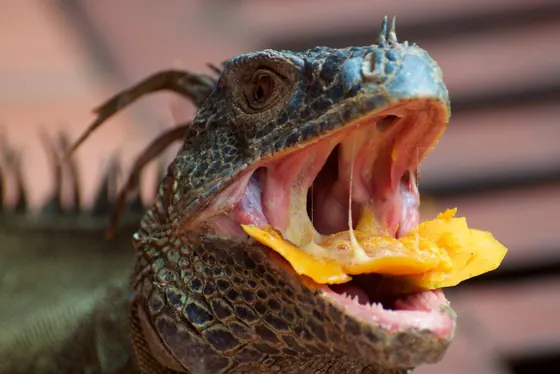
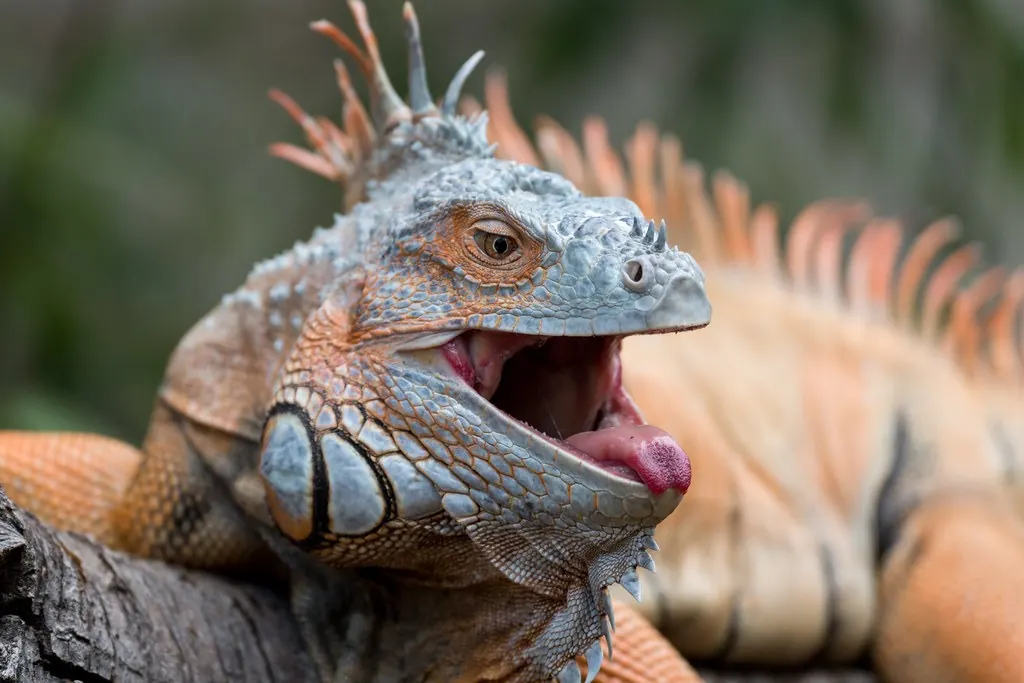
Many people are surprised to learn that iguanas have teeth, because they are hidden behind the lips and gums. Open an iguana's mouth, or watch one eat, and you can see rows of small teeth along the jaws. These teeth are designed to tear and slice tough leaves, flowers and fruit, which the iguana then swallows mostly whole.
How Many Teeth Do Iguanas Have?
Pet care sources commonly report that green iguanas have roughly 80 to 120 teeth, spread across the upper and lower jaws. The number is not fixed. Because teeth are continually shed and replaced, an iguana may have more or fewer teeth at any given time, and young iguanas have fewer, smaller teeth than adults.
What Do Iguana Teeth Look Like?
| Feature | Description |
|---|---|
| Shape | Small, flattened and leaf-shaped |
| Edges | Serrated, like a tiny saw or steak knife |
| Attachment | Fused to the inner side of the jawbone (pleurodont teeth) |
| Color | Often pale or slightly translucent |
| Arrangement | Rows along the upper and lower jaws |
Iguana teeth are pleurodont, meaning they are attached to the inner side of the jawbone rather than sitting in deep sockets as human teeth do. This arrangement is common in lizards and makes it easy for old teeth to be replaced.
Iguanas Replace Their Teeth
Like most reptiles, iguanas are polyphyodont: they replace their teeth continuously throughout life. New teeth develop beside the old ones and take their place as the old teeth wear out or break. Research on young green iguanas has documented regular tooth replacement waves along the jaw. Finding a tiny tooth in your iguana's food bowl or enclosure is normal.
Iguana Teeth vs. Human Teeth
| Feature | Iguana | Human |
|---|---|---|
| Number | Commonly about 80–120 | 32 in adults |
| Replacement | Continuous, throughout life | Once (baby teeth to adult teeth) |
| Attachment | Fused to the inner side of the jaw | Set in sockets |
| Shape | All similar, leaf-shaped and serrated | Different types for cutting, tearing and grinding |
| Chewing | Tear and swallow food in chunks | Chew thoroughly |
Do Iguanas Chew Their Food?
Not much. Iguanas use their teeth to bite off and shred pieces of leaves, flowers and fruit, then swallow them with little chewing. The real "processing" happens in the gut, where microbes ferment the fibrous plant material. That is why warm temperatures matter so much for digestion. See iguana temperature and humidity.
Why Iguana Teeth Matter for Owners
Bites
Because the teeth are sharp and serrated, an adult iguana bite can slice skin and cause bleeding. Bites usually happen only when an iguana feels threatened, is handled roughly or mistakes a finger for food. See do iguanas bite? for prevention and first aid.
Feeding
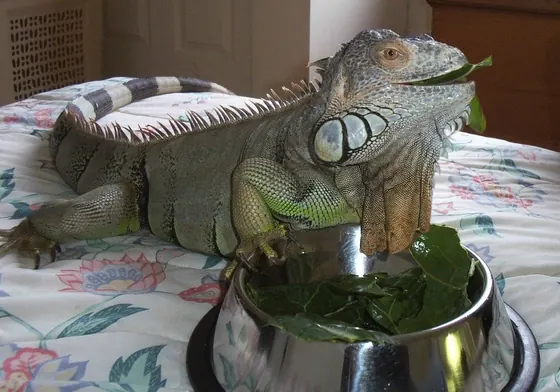
Iguanas tear food rather than chewing it thoroughly, so food should be chopped into pieces smaller than the iguana's head. This is especially important for young iguanas. See what iguanas eat.
Mouth Health
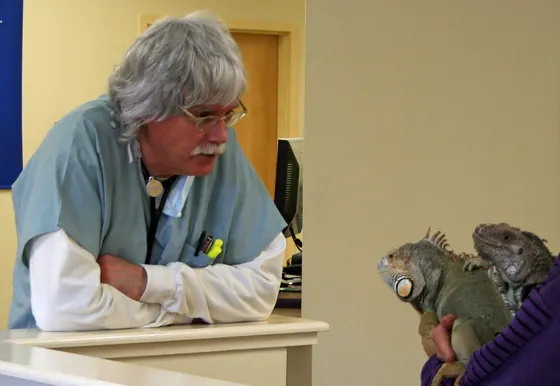
Healthy gums are pale pink. Red, swollen gums, pus, cheesy material, bad smell or reluctance to eat can signal mouth rot (infectious stomatitis), which needs veterinary treatment. A soft, swollen jaw can indicate metabolic bone disease. See signs of a sick iguana and metabolic bone disease.
The Iguana Tongue
An iguana's tongue is thick, fleshy and usually pinkish-red with a slightly notched tip. Iguanas use it to move food, drink and gather scent information. When an iguana flicks its tongue or licks surfaces, it is sampling chemical cues and passing them to an organ in the roof of the mouth that helps it "smell." See iguana body language.
Teeth of Other Iguanas
Iguana species have teeth suited to their diets. Most iguanas, including green, rock and Galápagos land iguanas, have serrated teeth for plants. Spiny-tailed iguanas, which eat more animal food, have teeth that change with age as their diet shifts from insects to more plants. Marine iguanas use short, blunt snouts and small teeth to scrape algae from rocks. See types of iguanas.
Frequently Asked Questions
Do Iguanas Have Sharp Teeth?
Yes. Their teeth are small but sharp and serrated, designed to shred plants, and they can cut skin.
Do Iguana Teeth Grow Back?
Yes. Iguanas replace their teeth throughout life, so lost or broken teeth are replaced.
How Many Teeth Does a Green Iguana Have?
Commonly around 80 to 120, though the number changes as teeth are shed and replaced.
Do Baby Iguanas Have Teeth?
Yes. Hatchlings have small teeth that are replaced and enlarged as they grow.
Sources: PangoVet, Do Iguanas Have Teeth?; A-Z Animals, Do Iguanas Have Teeth?; published research on tooth replacement and growth in the young green iguana.