Quick Answer
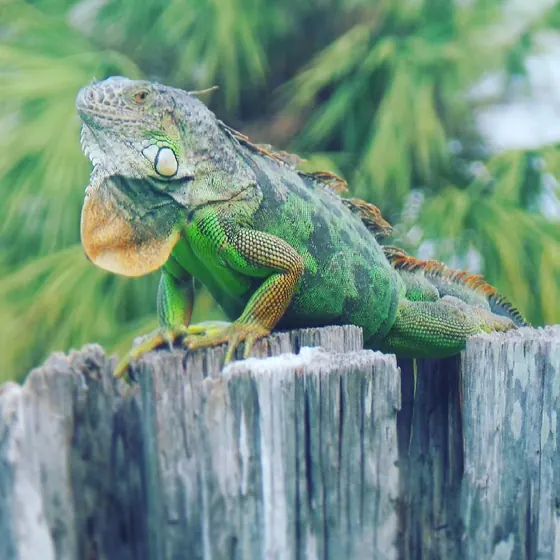
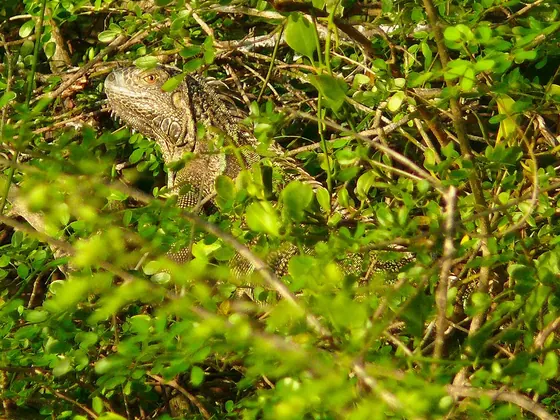
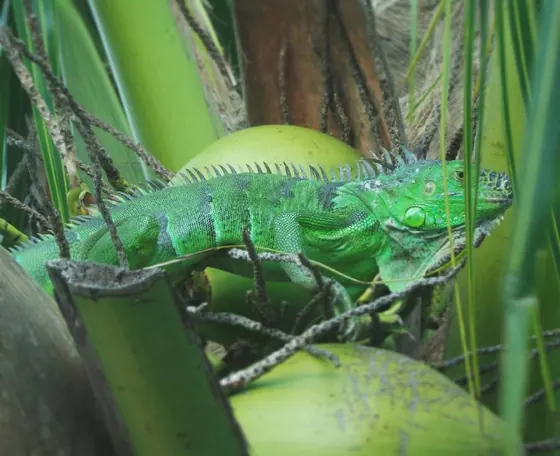
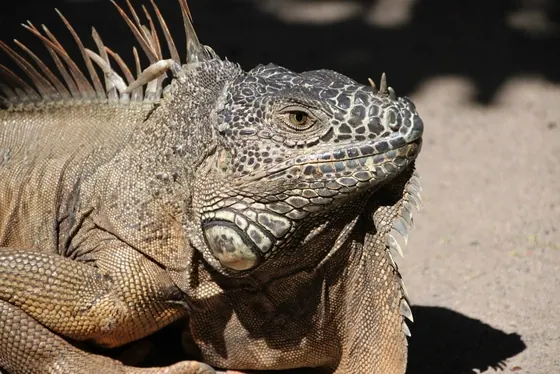
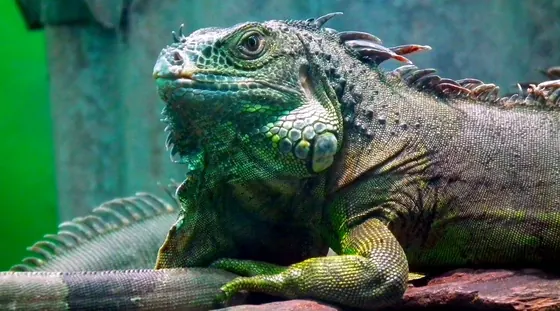
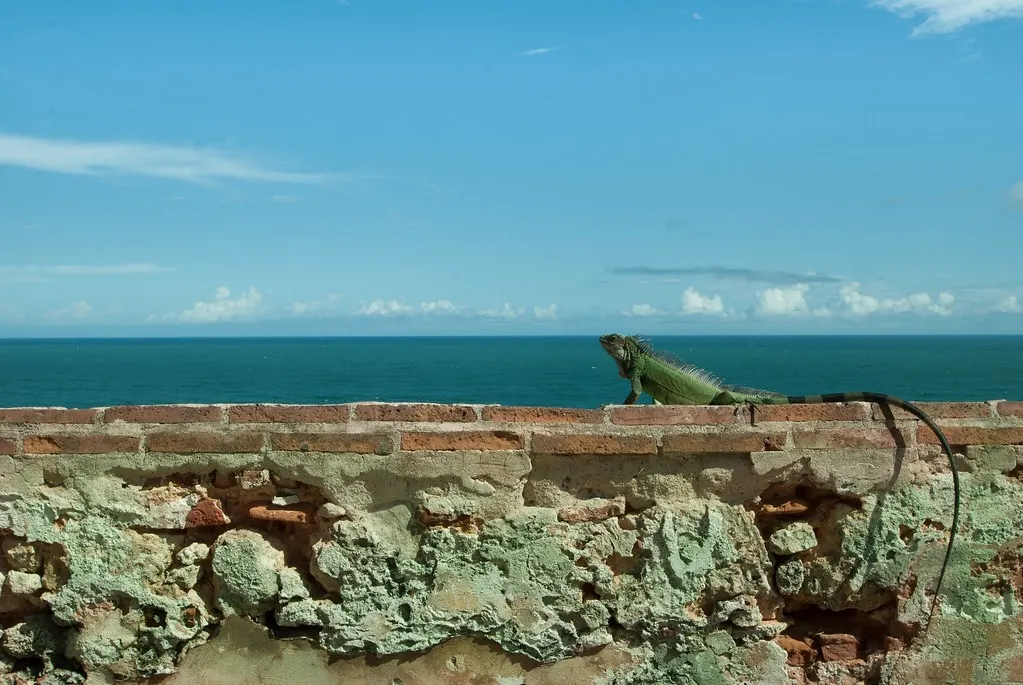
- The common iguanas seen across Puerto Rico are invasive green iguanas, known locally as gallina de palo ("chicken of the tree").
- They likely descend from released or escaped pets and are now widespread, especially in lowland and coastal areas.
- Population estimates vary widely and are not based on systematic counts; one widely cited estimate puts them at 10 to 14 million.
- They damage crops, burrow into infrastructure and have disrupted airport runways.
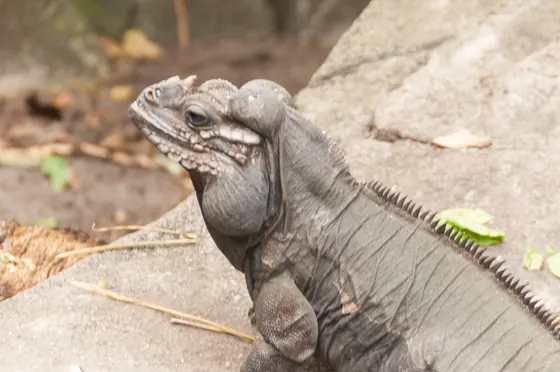
- Puerto Rico's native iguana is the Mona Island iguana, a rock iguana found only on Mona Island.
Are Iguanas Native to Puerto Rico?
The green iguana is not native to Puerto Rico. It is native to Central America, tropical South America and some Caribbean islands, but not Puerto Rico's main island. Like Florida's iguanas, Puerto Rico's population most likely started with pets that were released or escaped. With a warm climate year-round, plenty of food and few predators, they spread widely.
Puerto Rico does have a native iguana: the Mona Island iguana, a rock iguana related to the rhinoceros iguana, found only on Mona Island, a nature reserve off Puerto Rico's west coast. It is protected and listed as threatened under the US Endangered Species Act. A feral population of Cuban rock iguanas also lives on Isla Magueyes off the southwest coast. See rock iguanas.
How Many Iguanas Are in Puerto Rico?
Nobody knows precisely. Outdoor Life, in an article first published in 2016, reported that experts estimated 10 to 14 million green iguanas on the island, but it did not name the source, and no systematic island-wide count has been published that we could verify. What is clear is that green iguanas are abundant and widespread, from coastal mangroves and river valleys to suburbs and farmland.
Problems Iguanas Cause in Puerto Rico
| Problem | Details |
|---|---|
| Crop damage | Iguanas eat fruit, vegetables and crops; farmers report significant losses |
| Infrastructure | Nest burrows have been blamed for cracked sidewalks, eroded banks and damaged roads |
| Airports | Iguanas on runways at San Juan's international airport have forced temporary closures so they can be cleared |
| Native wildlife | Competition with and disturbance of native species and habitats |
| Health | Droppings in pools and on patios can carry Salmonella |
What Is Being Done?
Efforts to control green iguanas in Puerto Rico have included hunting, trapping, promoting iguana meat and exporting iguanas or meat. Outdoor Life described volunteer groups invited by landowners to remove iguanas with air rifles, which it reported can be used year-round, while firearm rules are restrictive. National Geographic reported on chefs and entrepreneurs exploring iguana meat as a food, though it noted that selling iguana meat was not yet legal at the time. Rules can change, so check with Puerto Rico's Department of Natural and Environmental Resources (DRNA) for current regulations.
Gallina de Palo: Iguana as Food
In parts of the Caribbean and Latin America, iguana is a traditional food, and its nickname, gallina de palo, reflects its reputation for tasting like chicken. In Puerto Rico, interest in eating iguanas has grown as a way to use animals removed in control efforts. Iguanas can carry Salmonella, so meat must be handled carefully and cooked thoroughly. See can you eat iguana?
Puerto Rico vs. Florida
| Factor | Puerto Rico | South Florida |
|---|---|---|
| Native iguanas? | Mona Island iguana (on Mona Island only) | None |
| Cold limits | Essentially none; warm year-round | Cold snaps stun and kill some iguanas |
| Main invasive species | Green iguana | Green iguana; black spiny-tailed iguana |
| Legal status | Regulated by DRNA | Prohibited species since 2021; humane killing allowed on private property |
See iguanas in Florida for the Florida situation.
Frequently Asked Questions
Why Are There So Many Iguanas in Puerto Rico?
Released and escaped pet green iguanas found a warm climate, abundant food and few predators, allowing their numbers to grow rapidly.
Can You Kill Iguanas in Puerto Rico?
Control of invasive green iguanas has been allowed, but weapon laws are restrictive. Check current rules with Puerto Rico's Department of Natural and Environmental Resources.
What Do Puerto Ricans Call Iguanas?
Green iguanas are commonly called gallina de palo, meaning "chicken of the tree."
Is There a Native Iguana in Puerto Rico?
Yes. The Mona Island iguana, a threatened rock iguana, lives only on Mona Island.
Sources: Outdoor Life, Invasive Iguanas in Puerto Rico (first published May 2016); National Geographic, What to Do With Puerto Rico's Invasive Iguanas? Eat Them.