Quick Answer
- Rock iguanas are the genus Cyclura, large ground-dwelling iguanas found only on islands of the West Indies.
- Species include the Cuban, Jamaican, rhinoceros, Grand Cayman blue, Anegada, Ricord's, Turks and Caicos, Northern Bahamian and San Salvador rock iguanas.
- Most are Endangered or Critically Endangered, and all are listed on CITES Appendix I.
- They are among the largest and longest-lived lizards in the Americas; a Grand Cayman blue iguana reached about 69 years.
What Are Rock Iguanas?
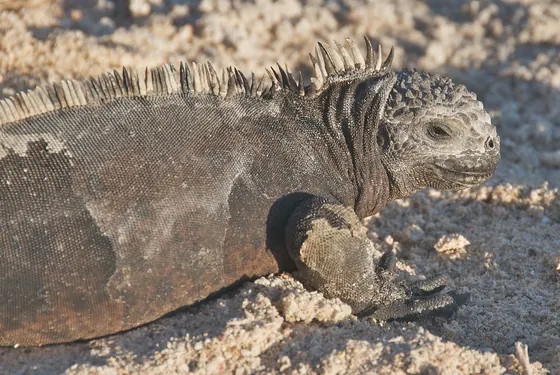
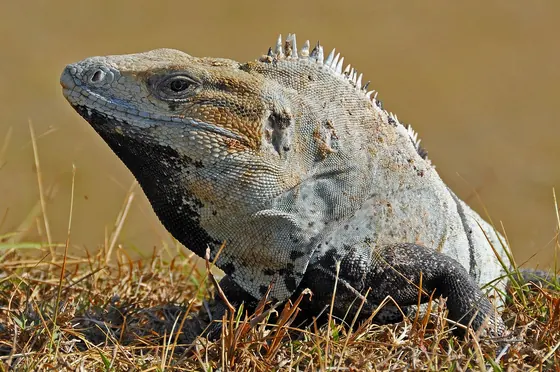
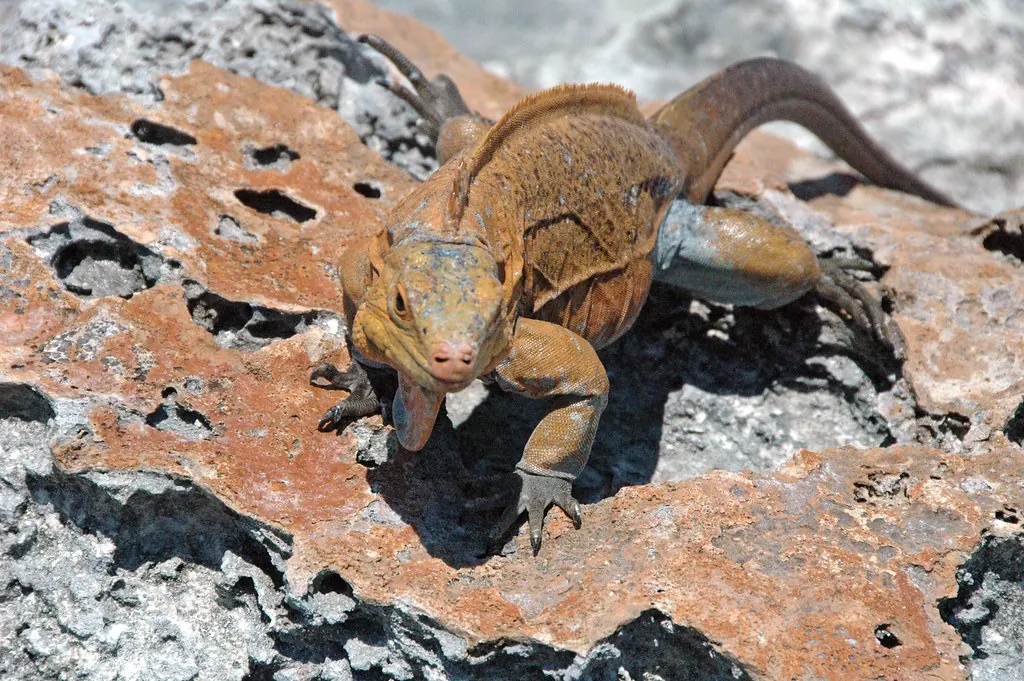
Rock iguanas are heavy-bodied, mostly terrestrial iguanas found on Caribbean islands, especially the Greater Antilles, the Bahamas and the Cayman Islands. They get their common name from their habit of living among rocks, limestone and dry scrub, sheltering in crevices, holes and burrows. Unlike the tree-dwelling green iguana, rock iguanas spend most of their time on the ground.
The International Iguana Foundation describes rock iguanas as among the most endangered lizards in the world. Many species have small populations limited to one or a few islands, making them vulnerable to habitat loss and introduced animals.
Rock Iguana Species
| Species | Where | Notes |
|---|---|---|
| Cuban rock iguana (C. nubila) | Cuba; also Cayman Brac and Little Cayman (Lesser Caymans iguana) | One of the largest; feral population on Isla Magueyes, Puerto Rico |
| Jamaican iguana (C. collei) | Hellshire Hills, Jamaica | Once thought extinct; rediscovered in 1990 |
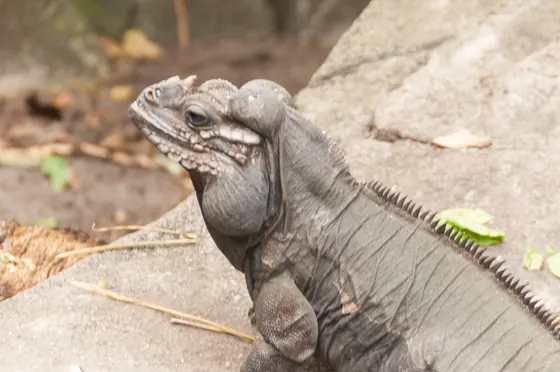
| Rhinoceros iguana (C. cornuta) | Hispaniola; Mona Island form in Puerto Rico | Horn-like snout scales in males |
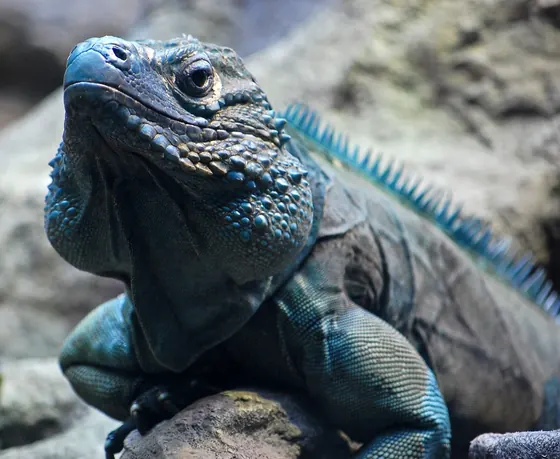
| Grand Cayman blue iguana (C. lewisi) | Grand Cayman | Brought back from near extinction |
| Ricord's iguana (C. ricordi) | Hispaniola | Critically endangered, very restricted range |
| Anegada iguana (C. pinguis) | Anegada, British Virgin Islands | Critically endangered |
| Turks and Caicos rock iguana (C. carinata) | Turks and Caicos | Smaller species; threatened by cats and dogs |
| Northern Bahamian rock iguana (C. cychlura) | Bahamas, including the Exumas and Andros | Includes the famous "swimming iguanas" visited by tourists |
| San Salvador rock iguana (C. rileyi) | Bahamas | Small species on a few islands |
Several species are divided into subspecies, and classification has changed over time.
The Cuban Rock Iguana
The Cuban rock iguana is one of the largest rock iguanas, with large individuals reported at about 1.5–1.6 meters (around 5 feet) from snout to tail tip. Its population in Cuba has been estimated at 40,000 to 60,000 individuals, with a protected population of an estimated 2,000 to 3,000 at the US Naval Base at Guantánamo Bay. A feral population of more than 1,000 lives on Isla Magueyes off Puerto Rico. Females lay clutches of roughly 3 to 30 eggs. Despite its relatively large population, it is classed as Vulnerable because of habitat loss and introduced predators.
The Jamaican Iguana
The Jamaican iguana was believed extinct for decades until it was rediscovered in 1990 in the dry forests of the Hellshire Hills. Conservation programs now collect eggs, raise hatchlings in safety and release them once they are large enough to survive introduced mongooses, cats and dogs. It remains critically endangered.
Bahamas Swimming Iguanas
Rock iguanas on some small cays in the Exumas and nearby islands have become a tourist attraction, approaching boats and visitors for food. These belong to the Northern Bahamian rock iguana. Conservation groups warn that feeding them unsuitable foods, such as grapes, can harm their health, and that close contact spreads disease. Visitors should follow local guidance and avoid feeding.
Why Rock Iguanas Are Endangered
- Habitat loss from development, agriculture and charcoal production
- Introduced predators such as cats, dogs, mongooses and rats that eat eggs and young
- Introduced grazers such as goats and pigs that destroy vegetation and nests
- Invasive green iguanas competing for food and space on some islands
- Hunting and illegal collection for food and the pet trade
- Small, isolated populations vulnerable to storms and disease
Head-starting programs, which raise young iguanas until they are big enough to avoid most predators, have helped several species, most famously the Grand Cayman blue iguana.
Rock Iguanas vs. Green Iguanas
| Feature | Rock iguanas | Green iguana |
|---|---|---|
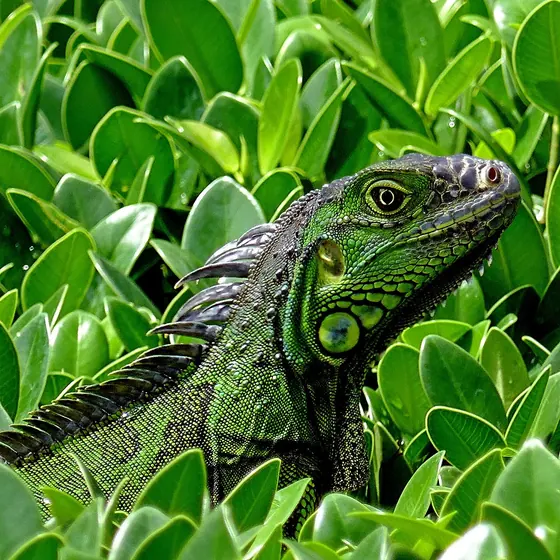
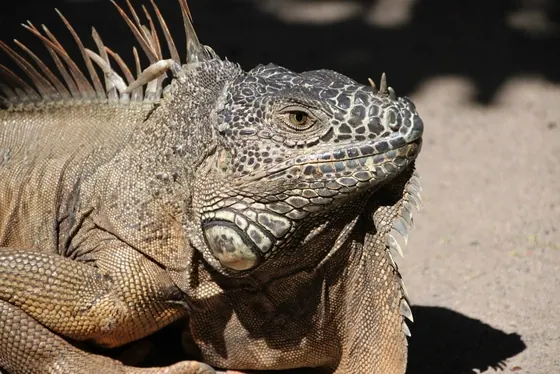
| Lifestyle | Ground-dwelling, rocky habitats | Tree-dwelling, near water |
| Build | Heavy, muscular | Slimmer, very long tail |
| Range | Caribbean islands only | Mainland Americas and Caribbean |
| Status | Mostly Endangered or Critically Endangered | Least Concern; invasive in some places |
| Lifespan | Decades | Up to about 19+ years in captivity |
Can You Keep a Rock Iguana?
Because all Cyclura are on CITES Appendix I, international commercial trade in wild-caught animals is prohibited. A few species, mainly the rhinoceros iguana and some Cuban iguanas, are bred in captivity and sold by specialist breeders, subject to local laws. They need very large, hot enclosures and experienced keepers. See our rhinoceros iguana guide.
Frequently Asked Questions
What Is a Rock Iguana?
A rock iguana is any iguana in the genus Cyclura, a group of large, ground-dwelling iguanas native to Caribbean islands.
Are Rock Iguanas Endangered?
Most are. Many species are Endangered or Critically Endangered, and all are listed on CITES Appendix I.
How Long Do Rock Iguanas Live?
They are very long-lived. Many live for decades, and a Grand Cayman blue iguana reached about 69 years.
Are There Rock Iguanas in Puerto Rico?
Yes. The Mona Island iguana lives on Mona Island, and a feral population of Cuban iguanas lives on Isla Magueyes. Puerto Rico's common iguanas are invasive green iguanas.
Sources: International Iguana Foundation, Rock Iguanas; Wikipedia, Cyclura and Cuban Iguana (for population estimates and their cited studies).