Quick Answer
- The Galápagos has three land iguana species in the genus Conolophus.
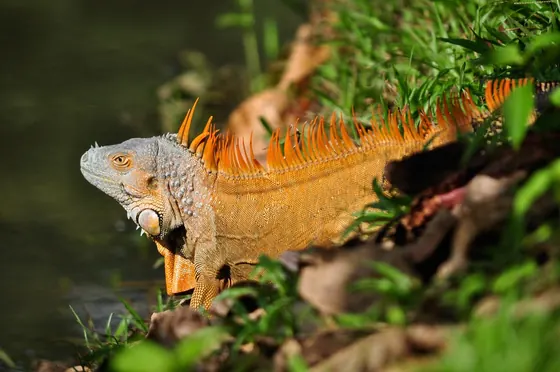
- The Galápagos land iguana (C. subcristatus) is yellow to brown and eats prickly pear cactus.
- The Santa Fe land iguana (C. pallidus) lives only on Santa Fe Island.
- The pink iguana (C. marthae) lives only on Wolf Volcano on Isabela Island. It is critically endangered, with estimates of just several hundred remaining.
The Land Iguanas of the Galápagos
Alongside the famous marine iguana, the Galápagos Islands are home to land iguanas: large, heavy-bodied lizards that live in the dry lowlands. Their ancestors likely reached the islands from South America millions of years ago, and land and marine iguanas share a common ancestor. On South Plaza Island, the two have occasionally interbred, producing rare hybrids.
The Three Species
| Species | Where | Appearance |
|---|---|---|
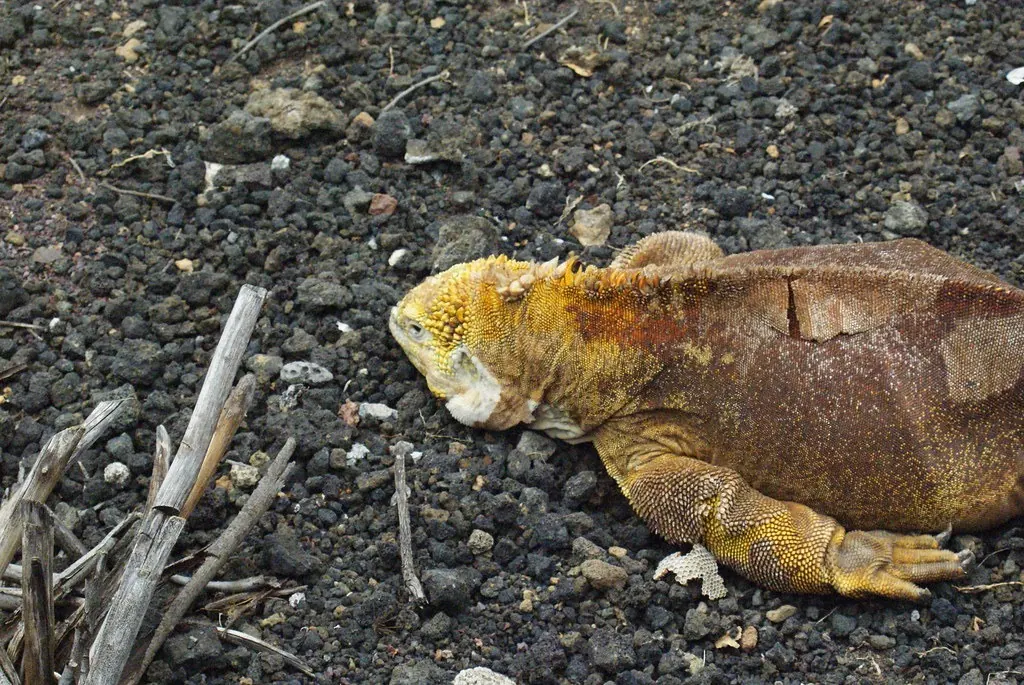
| Galápagos land iguana (Conolophus subcristatus) | Several islands, including Isabela, Fernandina, Santa Cruz, North Seymour, South Plaza and Baltra | Yellow to orange-brown head and body |
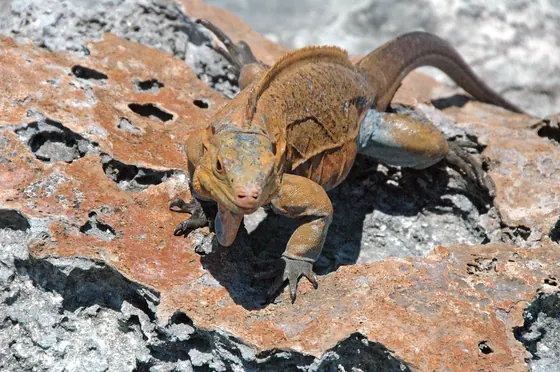
| Santa Fe land iguana (Conolophus pallidus) | Santa Fe Island only | Paler, more yellowish, with a more pointed snout |
| Pink iguana (Conolophus marthae) | Wolf Volcano, northern Isabela Island only | Pinkish skin with dark bands |
What Do Land Iguanas Eat?
Land iguanas are mainly herbivores. Prickly pear cactus (Opuntia) is a key food: they eat the pads, flowers and fruit, often spines and all. Cactus also supplies much of their water in the dry season. They also eat other plants, and occasionally insects or carrion. Land iguanas have been seen waiting beneath cactus trees for fruit and pads to fall.
Appearance and Size
Galápagos land iguanas are stocky, with a short crest of spines along the neck and back, thick limbs and a blunt head. Adults are commonly around 3 to 4 feet long including the tail, and males are larger than females. Their yellow coloring is brightest on the head and front of the body.
The Pink Iguana
The pink iguana is one of the rarest lizards on Earth. Galápagos National Park rangers first noticed pink iguanas on Wolf Volcano in 1986, but it took scientists until 2009 to describe it as a separate species. Charles Darwin never saw it; he did not visit northern Isabela.
The species lives only on the slopes of Wolf Volcano, and estimates suggest just several hundred remain. It is listed as Critically Endangered. For years, researchers saw only adults. In December 2022, the Galápagos National Park announced that it had documented pink iguana hatchlings and juveniles for the first time, a sign that some young are surviving. Introduced rats and cats are major threats to eggs and young. The park reports the species can reach lengths of up to about 18.5 inches (47 cm).
Threats and Conservation
- Introduced animals: rats, cats, dogs, pigs and goats have eaten eggs and young or destroyed vegetation.
- Past losses: land iguanas disappeared from Santiago Island and declined on others.
- Restricted ranges: the Santa Fe and pink iguanas each live in a single small area.
Conservation work by the Galápagos National Park and the Charles Darwin Foundation has included captive breeding, eradicating introduced animals and returning land iguanas to islands where they had vanished. Land iguanas moved to North Seymour Island in the 1930s later helped restock nearby Baltra.
Seeing Land Iguanas
Visitors to the Galápagos can see land iguanas on islands such as South Plaza, North Seymour, Santa Fe and Santa Cruz, including at the Charles Darwin Research Station. Park rules require visitors to keep their distance and stay on marked trails. The pink iguana's habitat on Wolf Volcano is closed to tourism.
Frequently Asked Questions
Are Pink Iguanas Real?
Yes. The pink iguana, Conolophus marthae, lives only on Wolf Volcano in the Galápagos and was described as a distinct species in 2009.
How Many Pink Iguanas Are Left?
Estimates suggest only several hundred remain, and the species is listed as Critically Endangered.
What Is the Difference Between Land and Marine Iguanas?
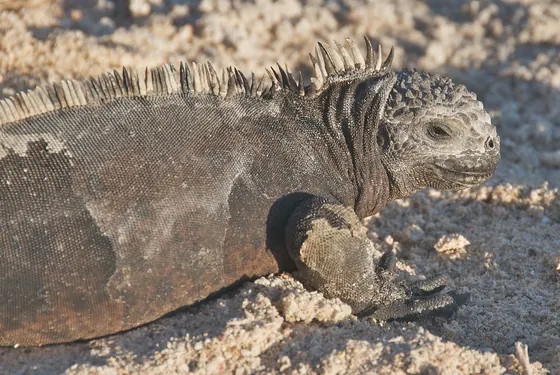
Land iguanas are yellow to brown, live inland and eat cactus and plants. Marine iguanas are dark, live on rocky shores and feed on algae in the sea.
Do Land Iguanas Eat Cactus Spines?
Yes. They often swallow prickly pear pads and fruit with the spines still attached.
Sources: National Geographic, The Pink Galápagos Iguana That Darwin Never Saw; Tuoi Tre News (Reuters), Pink Iguana Hatchlings Seen for First Time (December 2022); Galápagos Islands, New Iguana Species Discovered.