Quick Answer
- Fiji iguanas belong to the genus Brachylophus and are the only iguanas native outside the Americas and the Galápagos.
- Species include the Lau banded iguana, the central Fiji banded iguana, the Gau iguana and the Fiji crested iguana.
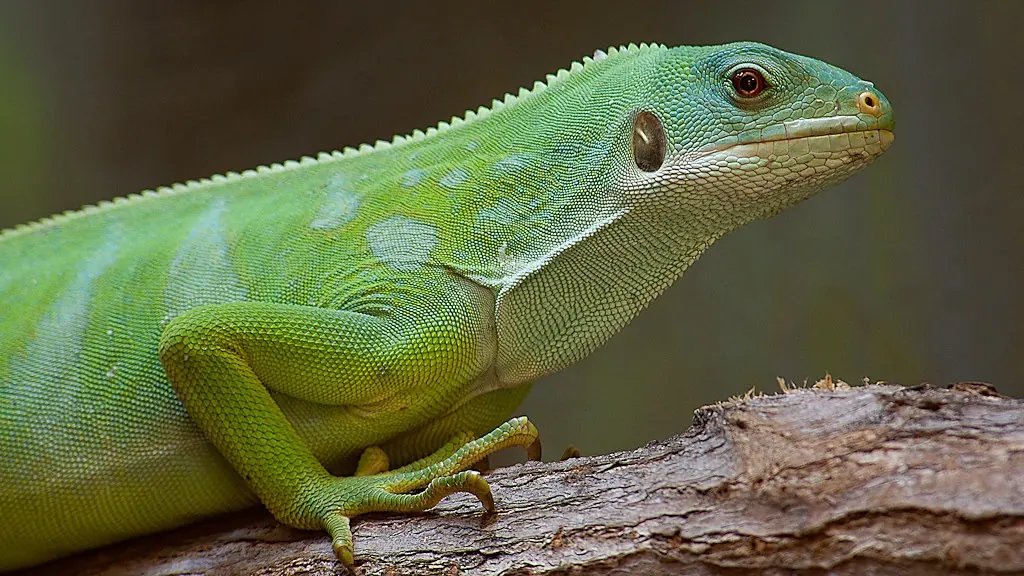
- They are slender, bright green tree-dwellers about 2 feet (60 cm) long including the tail. Males of the banded species have pale or bluish bands.
- All are threatened, with the crested iguana considered Critically Endangered.
Iguanas in the South Pacific
It surprises many people that iguanas live in Fiji, thousands of miles from the Americas. Scientists have long debated how they got there. One leading idea is that their ancestors rafted across the Pacific on floating vegetation millions of years ago, an extraordinary journey. Today Fiji's iguanas are a distinct genus, Brachylophus, found in Fiji and, for one species, Tonga.
Fiji Iguana Species
| Species | Where | Notes |
|---|---|---|
| Lau banded iguana (Brachylophus fasciatus) | Lau Islands of Fiji; Tonga | Males bright green with pale bands |
| Central Fiji banded iguana (Brachylophus bulabula) | Central Fiji islands | Described in 2008; Endangered |
| Gau iguana (Brachylophus gau) | Gau Island | Described in 2017 |
| Fiji crested iguana (Brachylophus vitiensis) | Yadua Taba and a few other western islands | Taller crest; Critically Endangered |
Appearance
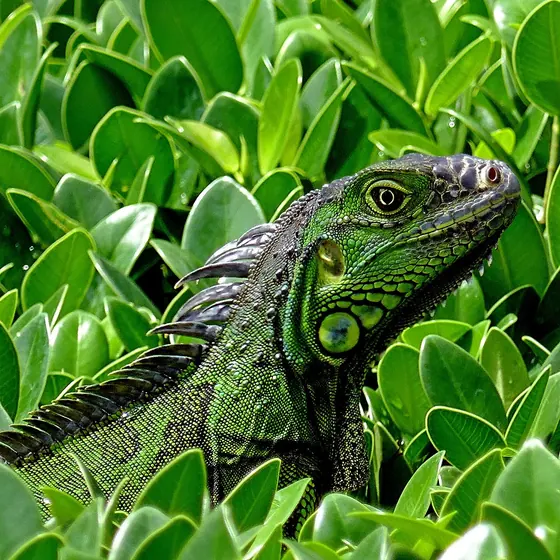
Fiji banded iguanas are slim and mostly bright green, which helps them blend into leaves. Adult males usually have wide pale, bluish or white bands across the body, while females are typically plain green or have fainter markings. They have reddish-orange eyes, a low crest and a long tail that makes up much of their total length of about 60 cm (2 feet). Like other iguanas, they can darken when stressed or cold.
Behavior and Diet
Fiji iguanas live in tropical forest trees and are mostly arboreal. They are herbivores, eating leaves, flowers and fruit, and are most active by day. Males display to rivals and females by head bobbing and changing color.
Breeding
Fiji iguanas lay small clutches of about 3 to 6 eggs in a burrow. Their eggs have one of the longest incubation periods of any lizard, roughly 4 to 7 months (about 125 to 210 days). Females of the crested species are known to guard their nests. Zoo records show Fiji iguanas living up to about 25 years, and lifespans in the wild are estimated at around 10 to 15 years.
Threats and Conservation
- Habitat loss from clearing forest for agriculture and development
- Introduced predators such as cats, rats and mongooses
- Invasive green iguanas, introduced to parts of Fiji, which compete with native iguanas and damage crops
- Goats and fire, which degrade the dry forest habitat of the crested iguana
The island of Yadua Taba, a protected sanctuary, holds most of the world's Fiji crested iguanas, and local and international organizations, including NatureFiji-MareqetiViti and several zoos, run breeding and protection programs. All Brachylophus species are listed on CITES Appendix I.
Can You Keep a Fiji Iguana as a Pet?
Fiji iguanas are rarely available privately. Because they are protected and listed on CITES Appendix I, most captive Fiji iguanas are in zoo breeding programs. Ads for Fiji iguanas should be treated with caution; check legal documentation and local laws carefully.
Frequently Asked Questions
Are There Iguanas in Fiji?
Yes. Fiji has its own native iguanas in the genus Brachylophus, including banded and crested species. Invasive green iguanas have also been introduced to parts of Fiji.
How Big Do Fiji Banded Iguanas Get?
About 2 feet (60 cm) including the tail, making them smaller and slimmer than green iguanas.
Are Fiji Iguanas Endangered?
Yes. All Fiji iguana species are threatened, and the Fiji crested iguana is considered Critically Endangered.
What Is the Difference Between Fiji Banded and Crested Iguanas?
Crested iguanas have a taller crest and narrower pale bands, and live mainly on Yadua Taba. Banded iguanas have a lower crest and wide bands in males.
Sources: NatureFiji-MareqetiViti, Fiji Banded Iguana; Smithsonian's National Zoo, Fiji Banded Iguana; The Animal Facts, Fijian Banded Iguana.