Quick Answer
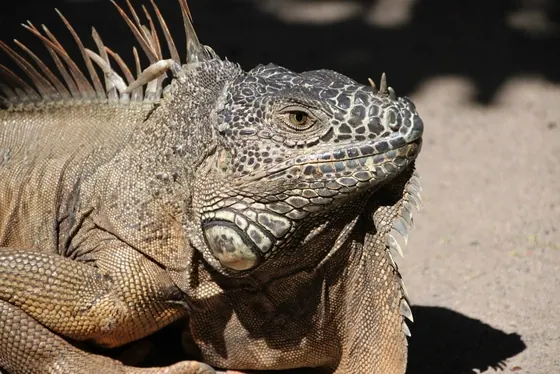
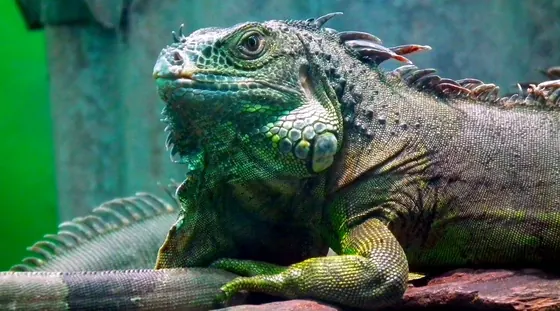
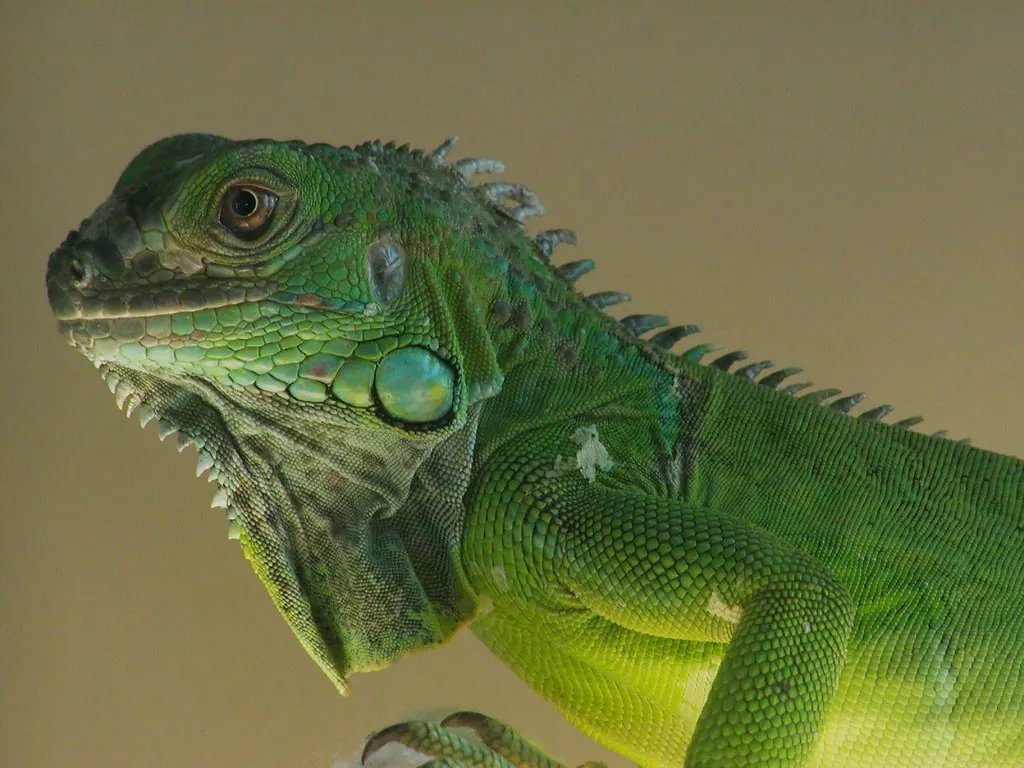
- The green iguana's scientific name is Iguana iguana, named by Carl Linnaeus in 1758.
- Iguanas are reptiles in the order Squamata (lizards and snakes), the group Iguania and the family Iguanidae.
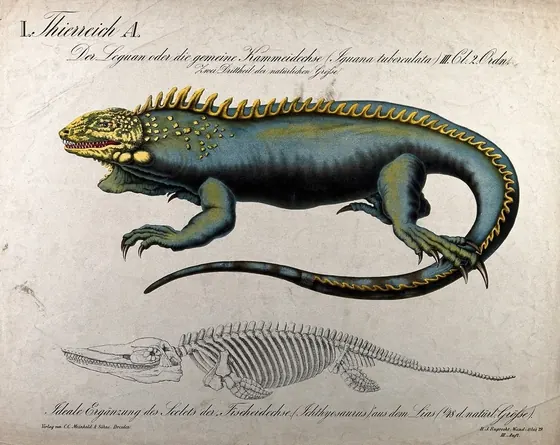
- Iguanas are not dinosaurs. Lizards and dinosaurs are both reptiles but belong to separate branches that split hundreds of millions of years ago. Birds, not lizards, are the living dinosaurs.
- One fun link: the dinosaur Iguanodon was named in 1825 because its fossil teeth resembled an iguana's.
What Is the Scientific Name of an Iguana?
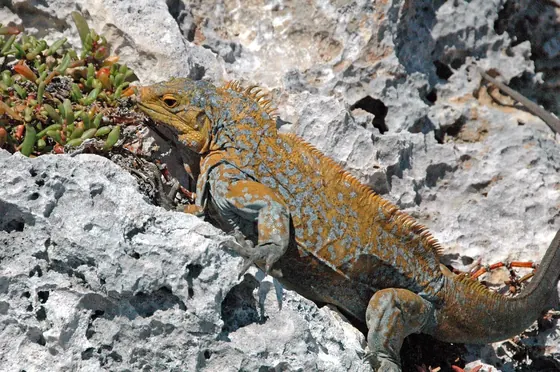
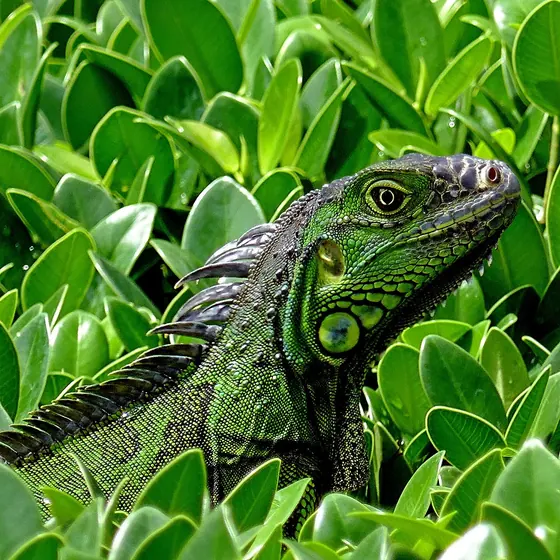
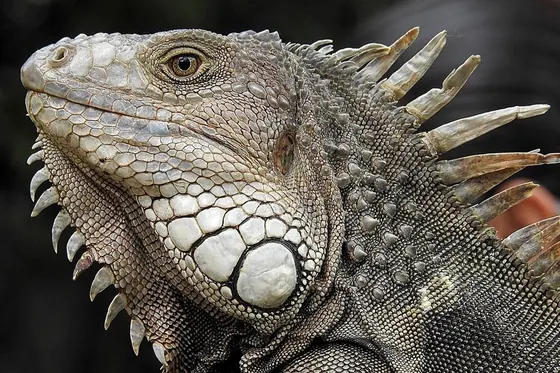
When people say "iguana," they usually mean the green iguana, Iguana iguana. The repeated name is not a typo: Iguana is the genus and iguana is the species. Swedish naturalist Carl Linnaeus described it in 1758. Other species have their own scientific names; for example, the marine iguana is Amblyrhynchus cristatus, and the Grand Cayman blue iguana is Cyclura lewisi.
Green Iguana Classification
| Rank | Name | What it means |
|---|---|---|
| Kingdom | Animalia | Animals |
| Phylum | Chordata | Animals with a backbone or notochord |
| Class | Reptilia | Reptiles |
| Order | Squamata | Lizards and snakes |
| Suborder or clade | Iguania | Iguanas, anoles, agamids and chameleons |
| Family | Iguanidae | True iguanas |
| Genus | Iguana | Green iguanas and close relatives |
| Species | Iguana iguana | The green iguana |
The Iguana Family Tree
The family Iguanidae contains several groups of large, mostly plant-eating lizards:
| Genus | Common name | Example |
|---|---|---|
| Iguana | Green iguanas | Green iguana, Lesser Antillean iguana |
| Cyclura | Rock iguanas | Blue iguana, rhinoceros iguana |
| Ctenosaura | Spiny-tailed iguanas | Black spiny-tailed iguana |
| Amblyrhynchus | Marine iguana | Marine iguana |
| Conolophus | Galápagos land iguanas | Land iguana, pink iguana |
| Brachylophus | Fiji iguanas | Fiji banded iguana |
| Dipsosaurus | Desert iguana | Desert iguana |
| Sauromalus | Chuckwallas | Common chuckwalla |
Scientists sometimes use "iguanid" more broadly for related lizard families, such as anoles and spiny lizards, which were once grouped with iguanas. Today these are usually placed in separate families within Iguania. See types of iguanas.
Is the Green Iguana One Species or Several?
For a long time the green iguana was treated as one widespread species. Genetic studies have revealed deep differences between populations, and some researchers have proposed recognizing certain Caribbean island forms as separate species or subspecies. Classification may continue to change. The closely related Lesser Antillean iguana, Iguana delicatissima, is already a separate species and is critically endangered.
Are Iguanas Dinosaurs?
No. Iguanas are lizards, and dinosaurs belong to a different branch of the reptile family tree:
| Branch | Includes |
|---|---|
| Lepidosaurs | Lizards (including iguanas), snakes and the tuatara |
| Archosaurs | Dinosaurs (including birds), crocodiles, alligators and the extinct pterosaurs |
These two lines split more than 250 million years ago. That means a crocodile, and even a chicken, is more closely related to Tyrannosaurus than an iguana is. Iguanas look "prehistoric" because of their scales, spines and crests, but those features evolved separately.
Did Iguanas Live with Dinosaurs?
Lizards were already around during the age of dinosaurs, and early relatives of today's iguanas and other lizards lived alongside them. Modern iguana species, however, evolved much later, long after the non-bird dinosaurs went extinct about 66 million years ago.
The Iguanodon Connection
In 1825, English geologist Gideon Mantell named one of the first known dinosaurs Iguanodon, meaning "iguana tooth," because its fossil teeth looked like large versions of iguana teeth. Despite the name, Iguanodon was a large plant-eating dinosaur, not an iguana. See iguana teeth.
How Iguanas Evolved and Spread
The iguana family is thought to have originated in the Americas. Over millions of years, iguanas spread to islands across the Caribbean and the Pacific, probably by rafting on floating vegetation and debris washed out by floods and storms. That is how scientists believe iguanas reached the Galápagos from South America, where they evolved into the sea-feeding marine iguana and the cactus-eating land iguanas. The ancestors of Fiji's iguanas made an even more remarkable journey, and how they got there is still debated. Isolation on islands then produced the distinct species we see today. See where iguanas live.
Iguanas and Their Closest Relatives
Within Iguania, iguanas are related to:
- Anoles, such as the green and brown anoles common in Florida
- Agamids, such as bearded dragons and water dragons (see iguana vs. bearded dragon)
- Chameleons (see iguana vs. chameleon)
- Collared, spiny and horned lizards of the Americas
Where the Name "Iguana" Comes From
The word "iguana" comes from the Spanish version of a name used by the Taíno people of the Caribbean, recorded as iwana. Spanish explorers adopted it in the 1500s, and it later became the scientific genus name. For the symbolism and cultural meaning of iguanas, see iguana meaning.
How Iguanas Compare with Their Ancient Relatives
| Feature | Iguanas | Dinosaurs |
|---|---|---|
| Reptile branch | Lepidosaurs | Archosaurs |
| Leg posture | Legs sprawl out to the sides | Legs held directly under the body |
| Skin | Overlapping scales, shed in pieces | Scales and, in many groups, feathers |
| Living descendants | Today's iguanas and other lizards | Birds |
The leg posture difference is one of the clearest ways scientists tell the two groups apart. A walking iguana swings its body from side to side with its legs splayed, while dinosaurs stood upright, much like birds do today.
Why Classification Matters for Conservation
Correctly identifying species matters because many iguanas are rare. If two populations are actually different species, each may need its own protection. For example, the Lesser Antillean iguana is threatened partly by interbreeding with introduced green iguanas, which blurs the line between the two species. Accurate classification helps conservation groups decide which populations to protect. See types of iguanas.
Frequently Asked Questions
What Is the Scientific Name for a Green Iguana?
Iguana iguana, described by Carl Linnaeus in 1758.
What Family Are Iguanas In?
The family Iguanidae, within the lizard group Iguania and the order Squamata.
Are Iguanas Related to Dinosaurs?
Only distantly, as fellow reptiles. Iguanas are lizards; dinosaurs belong to a separate branch that includes birds and crocodiles.
Is an Iguana a Lizard or a Reptile?
Both. Iguanas are lizards, and all lizards are reptiles.
Sources: Melissa Kaplan, The Genus Iguana; Wikipedia, Iguanidae and its cited references; Natural History Museum (London) on Gideon Mantell and Iguanodon.