Quick Answer
- The word "iguana" comes from the Spanish iguana, borrowed from iwana in the language of the Taíno people of the Caribbean.
- Iguanas have been eaten and depicted by peoples of the Americas for centuries, and appear in folk songs, art and cuisine.
- In modern spiritual and "animal totem" writing, iguanas are commonly linked with patience, adaptability, renewal and the sun.
- Dream and symbolism interpretations are cultural and personal beliefs, not facts about iguanas.
Where Does the Word "Iguana" Come From?
"Iguana" entered English from Spanish in the 1500s. Spanish speakers borrowed it from iwana, the name used by the Taíno, the Indigenous people the Spanish encountered in the Caribbean. It is one of several English words with Taíno roots, along with "hammock," "hurricane" and "barbecue." The scientific name of the green iguana, Iguana iguana, repeats the word for both genus and species.
Iguanas in History and Culture
- Food: iguanas and their eggs have been eaten across Central America, South America and the Caribbean for centuries, and still are in many places, where the iguana is nicknamed gallina de palo, "chicken of the tree." See can you eat iguana?
- Music: "La Iguana" is a traditional song of the son jarocho style from Veracruz, Mexico, often performed with playful iguana-themed dancing.
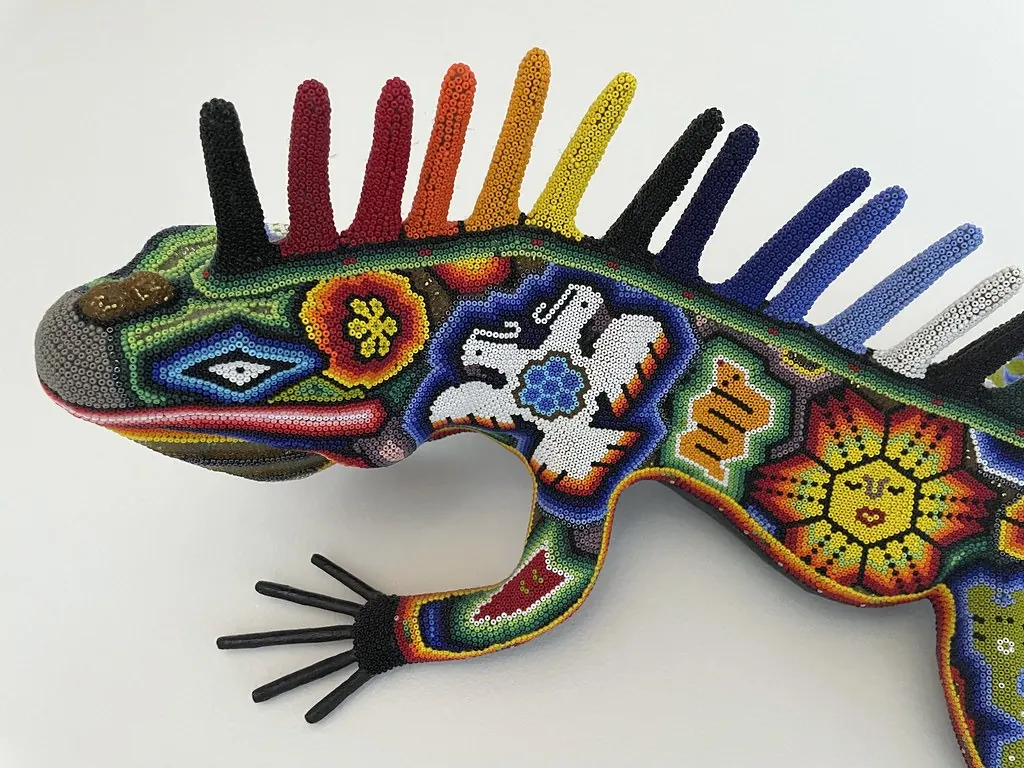
- Art and crafts: iguanas appear in pottery, carvings and folk art across Latin America and the Caribbean.
- Literature and film: Tennessee Williams's 1961 play The Night of the Iguana, later a 1964 film, uses a captive iguana as a central symbol of being trapped.
- Science: the iguanas of the Galápagos featured in Charles Darwin's observations, and the islands' marine iguana remains an icon of evolution. See marine iguana.
Common Iguana Symbolism
In modern spiritual, "spirit animal" and totem writing, iguanas are often given meanings drawn from their real behavior. These are interpretations, not established traditions shared across all cultures:
| Association | Linked behavior |
|---|---|
| Patience and calm | Iguanas spend long hours basking and moving slowly |
| Sun and warmth | Iguanas depend on the sun for energy. See temperature. |
| Renewal and regeneration | Shedding skin and regrowing tails. See tail regrowth. |
| Adaptability | Iguanas thrive in forests, deserts, islands and even cities |
| Intuition or awareness | The light-sensing "third eye." See iguana third eye. |
| Ancient wisdom | The iguana's "prehistoric" appearance |
What Does It Mean to Dream About an Iguana?
Dream interpretation is subjective, and there is no scientific basis for assigning fixed meanings to dream images. Popular dream guides often connect iguanas with themes such as needing patience, adapting to change, slowing down or something "cold-blooded" in a relationship. If an iguana dream feels meaningful, it is usually more useful to consider what iguanas mean to you personally, for example a pet, a trip or a backyard visitor.
Iguana Tattoos
People choose iguana tattoos for many reasons: a love of reptiles, Caribbean or Latin American heritage, a memorable trip, a pet, or the symbolism of patience and renewal. Designs range from realistic green iguanas and marine iguanas to tribal and folk-art styles.
Frequently Asked Questions
What Does the Word Iguana Mean?
It comes from iwana, the Taíno name for the lizard, borrowed into Spanish and then English. It simply names the animal.
What Does an Iguana Symbolize?
In modern spiritual writing, iguanas are often linked with patience, adaptability, renewal and the sun, based on their basking, shedding and tail regrowth.
Is Seeing an Iguana Good Luck?
There is no universal belief. Interpretations vary between people and cultures, and in Florida an iguana sighting usually just means they are common in the area.
What Is "La Iguana"?
A traditional son jarocho song from Veracruz, Mexico, often accompanied by a playful dance.
Sources: Merriam-Webster and Oxford etymologies of "iguana"; Tennessee Williams, The Night of the Iguana (1961). Spiritual and dream meanings described here reflect popular interpretations, not scientific findings.