Quick Answer
- Scientific name: Cyclura cornuta, often called the rhino iguana.
- Where: Hispaniola (Haiti and the Dominican Republic) and nearby islands; the Mona Island iguana is a related form.
- Name: adult males have horn-like scales on the snout.
- Size: around 4–4.5 ft (1.2–1.4 m) long, up to about 22 lb (10 kg).
- Status: Endangered in the wild; captive-bred rhino iguanas are kept by experienced reptile keepers.
What Is a Rhinoceros Iguana?
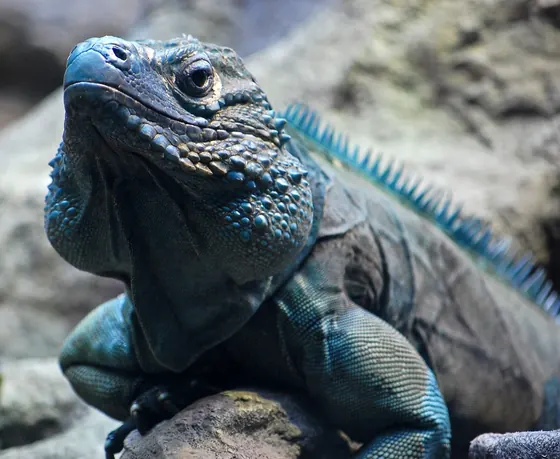
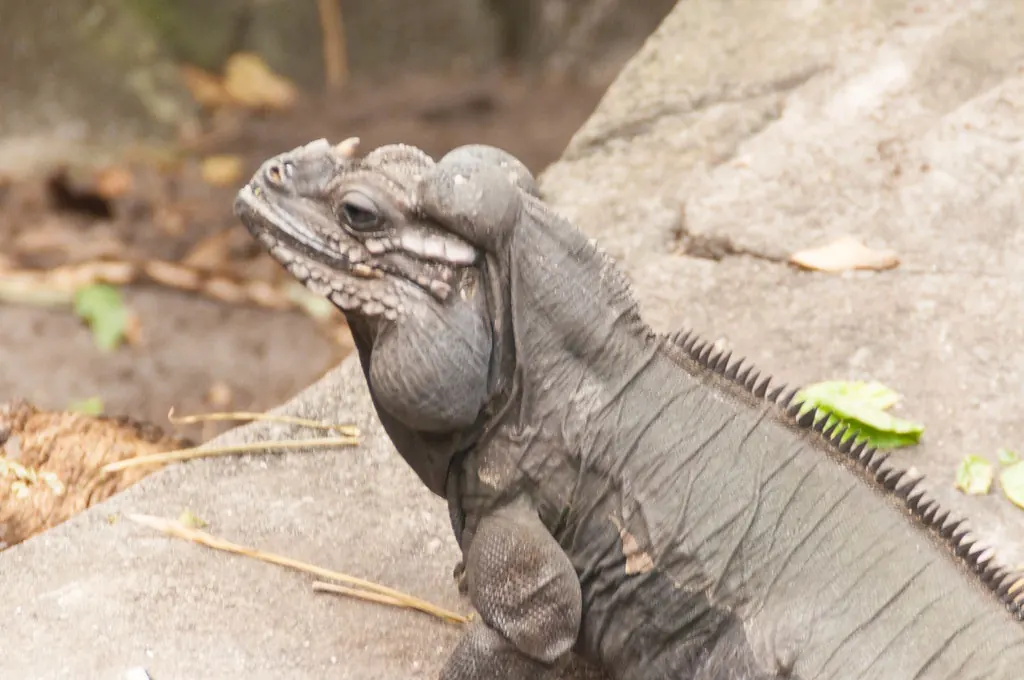
The rhinoceros iguana is a heavy-bodied rock iguana from the Caribbean island of Hispaniola. It gets its name from the bony, horn-like bumps on the snout of adult males, along with the large fatty pads on top of the head and big jowls. It belongs to the genus Cyclura, the West Indian rock iguanas, along with the Grand Cayman blue iguana and the Cuban and Jamaican iguanas. Learn more in our rock iguanas guide.
Rhinoceros Iguana at a Glance
| Trait | Details |
|---|---|
| Scientific name | Cyclura cornuta |
| Native range | Hispaniola and nearby islands |
| Length | About 4–4.5 ft (1.2–1.4 m) including tail |
| Weight | Up to about 22 lb (10 kg) |
| Diet | Mainly plants; occasionally insects or other small animals |
| Eggs | Up to about 20 per clutch |
| Maturity | About 2–3 years |
| Lifespan | Often reported as about 20 years, sometimes longer in captivity |
| Status | Endangered (IUCN); CITES Appendix I |
Appearance
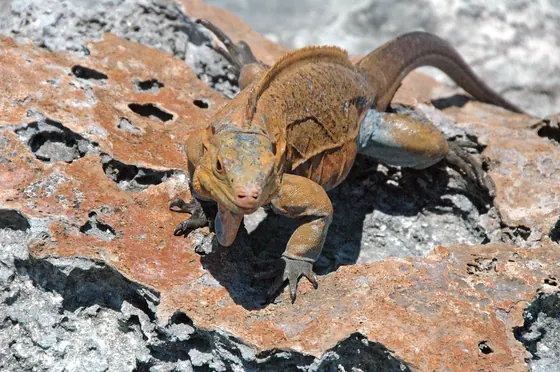
Rhinoceros iguanas are usually gray to olive or brownish, sturdy and muscular, with a short crest of spines down the back and a thick tail. Mature males are larger, with three or so horn-like scales on the snout, large jowls and a fatty hump on the head. Females are smaller and have much less developed horns.
Habitat and Behavior
In the wild, rhino iguanas live in dry forest, scrub and rocky, limestone areas, often with sparse vegetation. They are mainly ground-dwelling and shelter in rock crevices, holes and burrows. They are active by day and bask in strong sun. Males are territorial and use head bobbing and other displays to warn rivals.
Diet
Rhino iguanas are mostly herbivorous, eating leaves, flowers, fruit and seeds. Like many rock iguanas, they also eat insects, other invertebrates or carrion occasionally when available.
Reproduction
Females reach maturity at around two to three years. After mating, they dig nest burrows that can be up to about 5 feet long in sandy soil and lay clutches of up to about 20 eggs. Females may guard their nests for a time after laying.
Threats and Conservation
The rhinoceros iguana is listed as Endangered by the IUCN. Its main threats are habitat loss and degradation, introduced predators and competitors such as dogs, cats, mongooses, pigs and goats, and hunting. Like all Cyclura, it is listed on CITES Appendix I, which strictly controls international commercial trade in wild animals. The animals in the pet trade are captive-bred.
Rhinoceros Iguanas as Pets
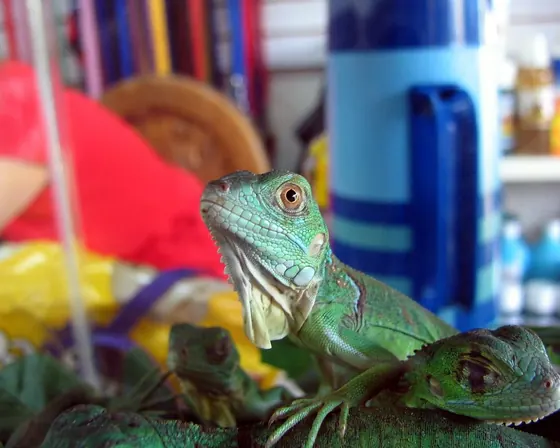
Captive-bred rhino iguanas are kept by experienced reptile keepers. They are often described as more terrestrial and, with consistent handling, sometimes calmer than green iguanas, but they are large, powerful lizards that can bite hard. Their care differs from green iguana care in important ways:
| Need | Rhinoceros iguana | Green iguana |
|---|---|---|
| Enclosure shape | Large floor area; care guides cite at least about 8 ft long × 4 ft wide × 4 ft tall for an adult | Tall, with lots of climbing height |
| Basking | Very hot basking spot; one care guide cites around 106°F, with ambient air about 80–85°F | About 95–100°F basking surface |
| Humidity | Moderate, often cited around 60–70% | About 70% or higher |
| Diet | Mainly leafy greens and vegetables, little fruit | Mainly leafy greens and vegetables, little fruit |
| UVB | Strong UVB required | Strong UVB required |
Rhino iguanas are also much more expensive than green iguanas. One US breeder's 2026 availability list showed individuals at about $475 to $695. Our iguana cost guide covers setup costs, which are similar to or higher than for a green iguana. Check local laws before buying, and only buy from breeders who can document captive breeding.
Rhino Iguana Care Basics
For experienced keepers considering a rhino iguana, these are the main points care guides emphasize:
- Space: juveniles can start in a smaller enclosure, but adults need a large, sturdy enclosure or room area with lots of floor space, hides and low rocks or logs to climb on.
- Heat: a very hot basking area with a clear gradient to cooler areas, controlled by thermostats and checked with an infrared temperature gun. Nights can be cooler, with care guides citing drops to around 75°F.
- UVB: strong, wide UVB coverage over the basking area, as for green iguanas. See our lighting guide.
- Diet: a varied salad based on calcium-rich leafy greens with other vegetables, edible flowers and only a small amount of fruit. Care guides suggest keeping fruit to around 10 percent or less.
- Handling: regular, calm handling from a young age helps, but adults are powerful and can bite hard, especially males during the breeding season.
- Vet care: find a veterinarian experienced with large lizards before you buy.
Captive rhino iguanas are commonly reported to live around 15 to 20 years, and sometimes longer with excellent care, so they are a long-term commitment.
The Mona Island Iguana
The Mona Island iguana is a rock iguana from Mona Island, a small, uninhabited nature reserve between Puerto Rico and Hispaniola. It is traditionally treated as a subspecies of the rhinoceros iguana (Cyclura cornuta stejnegeri) and is listed as threatened under the US Endangered Species Act. Feral pigs, goats and cats introduced to the island have threatened its eggs and young, and head-start programs have raised and released young iguanas to help the population.
Rhino Iguana vs. Green Iguana
- Rhino iguanas live on the ground; green iguanas live in trees.
- Rhino iguanas prefer drier, hotter conditions.
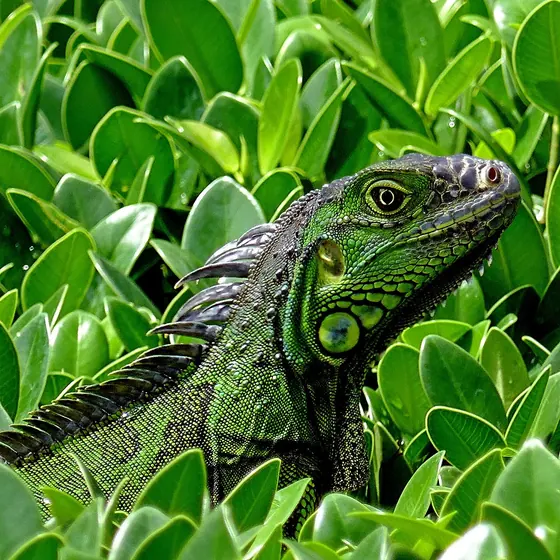
- Males have horn-like snout scales; green iguanas have a round cheek scale (subtympanic shield).
- Rhino iguanas are endangered in the wild; green iguanas are widespread and invasive in some places.
Frequently Asked Questions
Why Is It Called a Rhinoceros Iguana?
Adult males have bony, horn-like scales on the snout that resemble a rhinoceros horn.
How Big Do Rhino Iguanas Get?
About 4 to 4.5 feet long including the tail, and up to roughly 22 pounds.
Are Rhinoceros Iguanas Endangered?
Yes. They are listed as Endangered by the IUCN and on CITES Appendix I, mainly because of habitat loss, introduced animals and hunting.
Are Rhino Iguanas Good Pets?
Captive-bred rhino iguanas can do well with experienced keepers who can provide a very large, hot enclosure. They are not beginner reptiles.
Sources: SeaWorld, Rhinoceros Iguana; The Animal Facts, Rhinoceros Iguana; Reptile Direct, Rhinoceros Iguana Care.