
Types of Iguanas (2026): A Guide to the Main Species
The iguana family is bigger than the green iguana. Here are the species people ask about most.
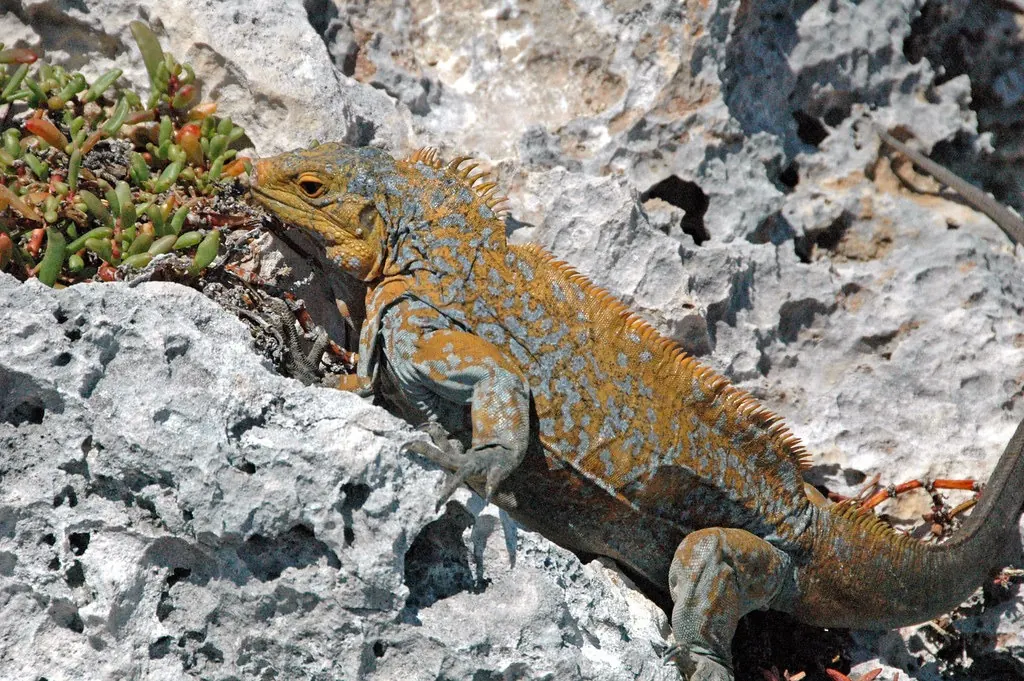
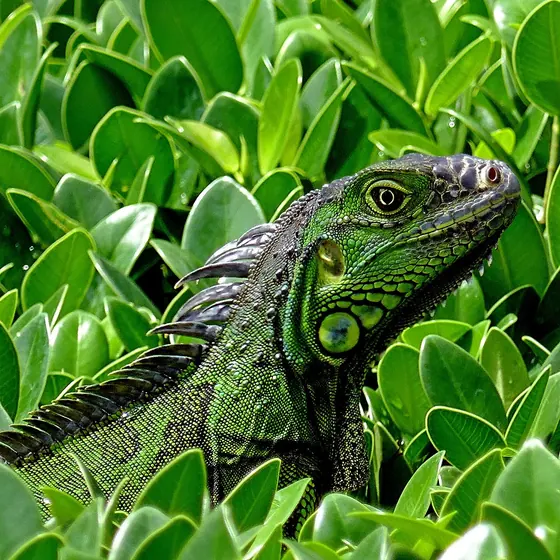
Green Iguana
The best-known iguana: size, lifespan, diet, habitat, behavior and why it is both a popular pet and an invasive species.
Read Guide →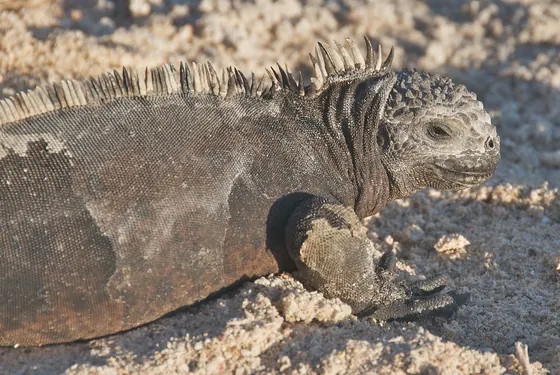
Marine Iguana
The only lizard that feeds in the ocean: diving, salt-sneezing, shrinking bones and life in the Galápagos.
Read Guide →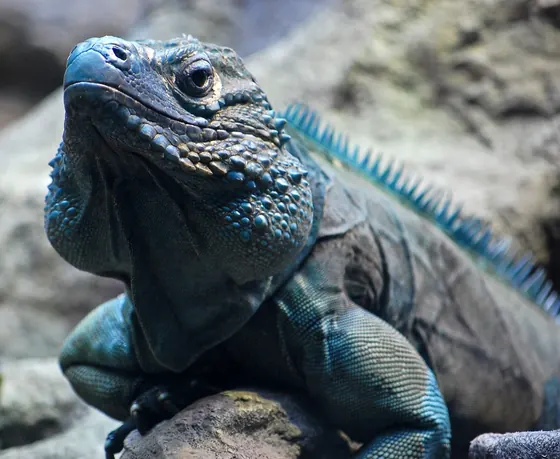
Blue Iguana
Grand Cayman's endangered rock iguana: appearance, size, lifespan and the recovery program that saved it.
Read Guide →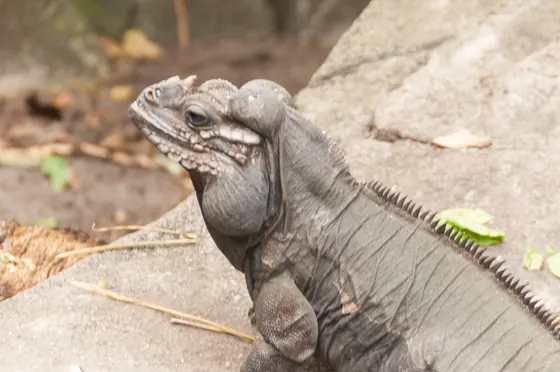
Rhinoceros Iguana
Horn-nosed rock iguana from Hispaniola: appearance, size, lifespan, wild status and captive care.
Read Guide →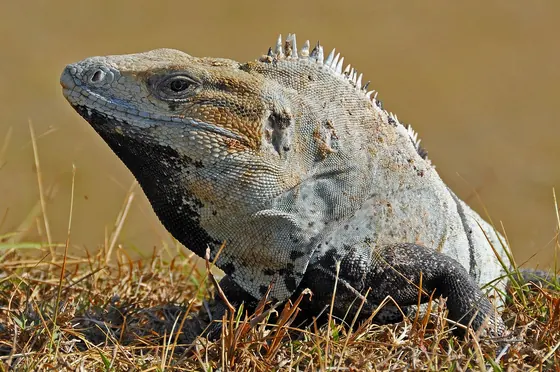
Spiny-Tailed Iguana
The Ctenosaura iguanas: black spiny-tailed iguanas, their speed, diet, range and spread in Florida.
Read Guide →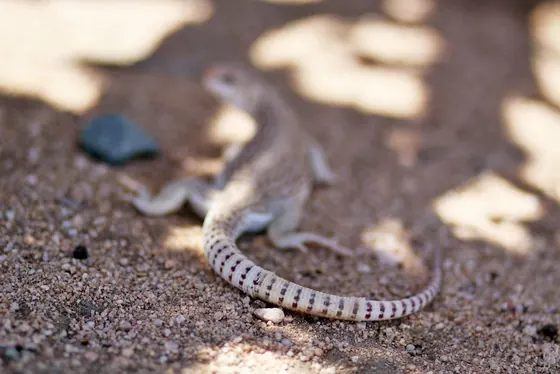
Desert Iguana
A small, pale iguana built for extreme heat: range, diet, behavior and captive care basics.
Read Guide →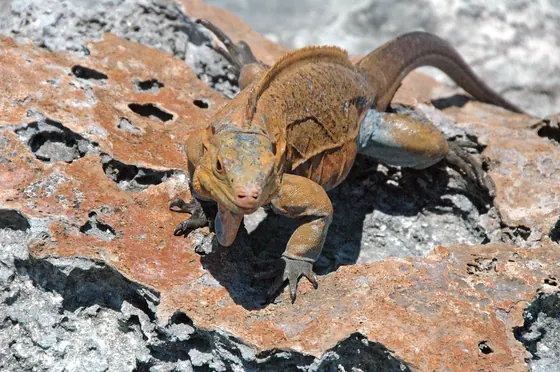
Rock Iguanas
The Cyclura iguanas of the Caribbean: species, size, lifespan and why most are endangered.
Read Guide →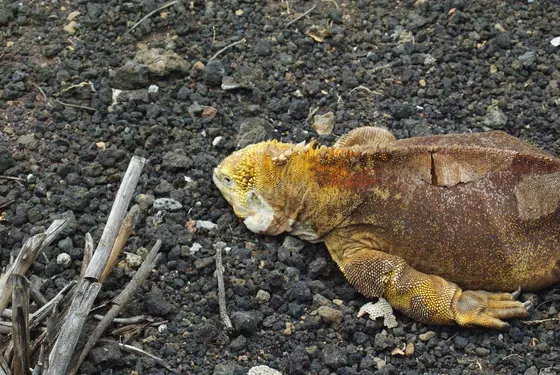
Galápagos Land Iguana
The three land iguana species of the Galápagos, including the critically endangered pink iguana.
Read Guide →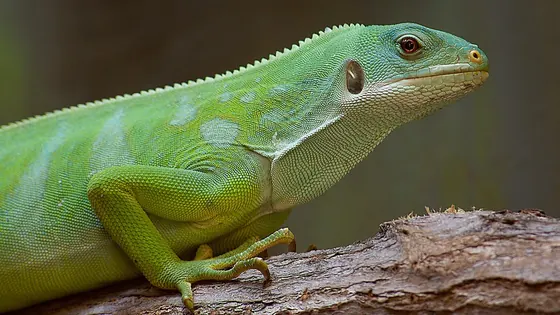
Fiji Banded Iguana
The Brachylophus iguanas of Fiji and Tonga: banded and crested species, diet, breeding and threats.
Read Guide →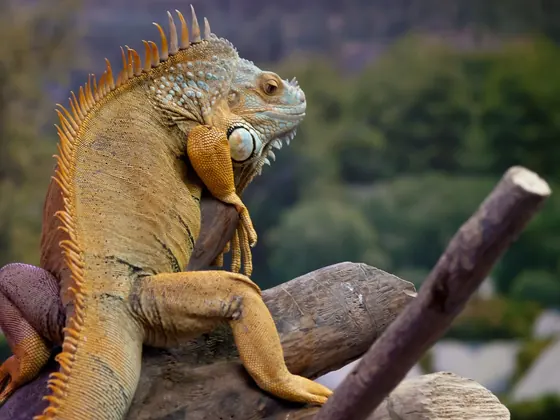
Iguana Morphs
The color morphs of the green iguana, how they are bred and what owners should know before buying one.
Read Guide →Quick Answer
- "Iguana" usually means the green iguana, but the iguana family (Iguanidae) includes several groups of species.
- The main types are green iguanas, rock iguanas, spiny-tailed iguanas, Galápagos marine and land iguanas, Fiji iguanas, the desert iguana and chuckwallas.
- Many island species are endangered, while the green iguana is widespread and even invasive in some places.
- The green iguana is the most common pet; rhinoceros iguanas and a few others are kept by specialists.
How Many Types of Iguanas Are There?
The iguana family, Iguanidae, contains several dozen species grouped into about eight genera. Exact numbers change as scientists describe new species and reclassify old ones. For example, the pink iguana of the Galápagos was described in 2009, and new Fiji iguana species were named in 2008 and 2017. The table below covers the main groups.
The Main Types of Iguanas
| Group (genus) | Examples | Where they live | Lifestyle |
|---|---|---|---|
| Green iguanas (Iguana) | Green iguana, Lesser Antillean iguana | Mexico to South America, Caribbean | Tree-dwelling, near water |
| Rock iguanas (Cyclura) | Blue iguana, rhinoceros iguana, Cuban and Jamaican iguanas | Caribbean islands | Ground-dwelling, rocky scrub |
| Spiny-tailed iguanas (Ctenosaura) | Black spiny-tailed iguana, Mexican spiny-tailed iguana | Mexico and Central America | Ground and rocks; fast runners |
| Marine iguana (Amblyrhynchus) | Marine iguana | Galápagos | Rocky coasts; feeds in the sea |
| Galápagos land iguanas (Conolophus) | Land iguana, Santa Fe land iguana, pink iguana | Galápagos | Dry lowlands; eats cactus |
| Fiji iguanas (Brachylophus) | Fiji banded and crested iguanas | Fiji and Tonga | Tree-dwelling |
| Desert iguana (Dipsosaurus) | Desert iguana | US Southwest, northwest Mexico | Sandy desert |
| Chuckwallas (Sauromalus) | Common chuckwalla | US Southwest, Mexico | Rocky desert |
Green Iguanas
The green iguana is the best-known iguana: a large, tree-dwelling lizard that commonly reaches 4 to 6 feet. It is the species sold as a pet and the one that has become invasive in South Florida, Puerto Rico and other warm places. Its close relative, the Lesser Antillean iguana, is endangered, partly because invasive green iguanas interbreed with it. Despite the name, green iguanas also come in gray, brown, orange and captive-bred morphs such as red, blue and albino. See green iguana facts and iguana colors.
Rock Iguanas
Rock iguanas are heavy, ground-dwelling iguanas of the Caribbean and among the most endangered lizards in the world. They include the Grand Cayman blue iguana, which was brought back from near extinction; the horned rhinoceros iguana of Hispaniola; and the Cuban, Jamaican, Anegada and Bahamian rock iguanas. Many live for decades. See our rock iguanas guide.
Spiny-Tailed Iguanas
Spiny-tailed iguanas have rings of sharp scales around their tails. The black spiny-tailed iguana, often called the black iguana, is frequently cited as the fastest-running lizard and is invasive in parts of Florida. Unlike green iguanas, spiny-tailed iguanas eat animals as well as plants. See spiny-tailed iguanas.
Galápagos Iguanas
The Galápagos Islands have two very different kinds of iguana. The marine iguana is the only lizard that feeds in the sea, diving for algae and sneezing out salt. The land iguanas are yellow, cactus-eating lizards, including the critically endangered pink iguana found only on Wolf Volcano.
Fiji Iguanas
Fiji's iguanas are the only iguanas native far outside the Americas. These slim, bright green lizards, including banded and crested species, likely descend from ancestors that rafted across the Pacific. All are threatened. See Fiji banded iguana.
Desert Iguanas and Chuckwallas
The desert iguana is a small, pale iguana of the US Southwest, adapted to extreme heat and closely tied to creosote bush. Chuckwallas are flat-bodied relatives that live among desert rocks and wedge themselves into crevices by puffing up their bodies when threatened.
Iguana Species Profiles
Here is a closer look at the iguanas people ask about most, with the key facts for each.
Green Iguana (Iguana iguana)
The classic iguana: a slender, tree-dwelling herbivore with a long banded tail, a crest of spines and a large round cheek scale. Adults commonly reach 4 to 6 feet. Native from Mexico to tropical South America, it is now invasive in Florida, Puerto Rico, Hawaii and elsewhere. IUCN status: Least Concern. Full profile.
Lesser Antillean Iguana (Iguana delicatissima)
A close relative of the green iguana from a handful of eastern Caribbean islands. It lacks the green iguana's large cheek scale and banded tail and is often grayish. It is critically endangered, and interbreeding with invasive green iguanas is one of its biggest threats.
Marine Iguana (Amblyrhynchus cristatus)
A dark, blunt-snouted iguana found only on Galápagos shores, where it dives for algae and sneezes out excess salt. Size varies greatly between islands. IUCN status: Vulnerable. Full profile.
Galápagos Land Iguana (Conolophus subcristatus)
A stocky yellow-to-brown iguana of the dry Galápagos lowlands that eats prickly pear cactus. Its relatives include the Santa Fe land iguana and the critically endangered pink iguana. Full profile.
Grand Cayman Blue Iguana (Cyclura lewisi)
A heavy rock iguana that can turn vivid turquoise. It nearly vanished from the wild in the early 2000s before a recovery program helped it rebound. Large adults exceed 5 feet. IUCN status: Endangered. Full profile.
Rhinoceros Iguana (Cyclura cornuta)
A ground-dwelling rock iguana from Hispaniola named for the horn-like scales on males' snouts. It reaches about 4 to 4.5 feet and up to about 22 pounds, and captive-bred animals are kept by specialists. IUCN status: Endangered. Full profile.
Cuban Rock Iguana (Cyclura nubila)
One of the largest rock iguanas, reaching about 5 feet. It is relatively numerous in Cuba but still classed as Vulnerable, and a feral population lives on Isla Magueyes off Puerto Rico. Rock iguanas.
Jamaican Iguana (Cyclura collei)
Thought extinct for decades, this rock iguana was rediscovered in 1990 in Jamaica's Hellshire Hills. Head-starting programs now help young iguanas survive introduced predators. Critically endangered.
Black Spiny-Tailed Iguana (Ctenosaura similis)
A fast, omnivorous iguana with a spiky tail, native to Mexico and Central America and invasive in Florida. Often called the fastest-running lizard. Full profile.
Utila Spiny-Tailed Iguana (Ctenosaura bakeri)
A small spiny-tailed iguana found only in the mangroves of Utila Island, Honduras. It is critically endangered because of habitat loss and hunting.
Fiji Iguanas (Brachylophus)
Slim, bright green iguanas of Fiji and Tonga, about 2 feet long, with banded males. All are threatened, and the Fiji crested iguana is critically endangered. Full profile.
Desert Iguana (Dipsosaurus dorsalis)
A small, pale, heat-loving iguana of the US Southwest and northwest Mexico, typically 10 to 16 inches long. Full profile.
Common Chuckwalla (Sauromalus ater)
A flat, heavy-bodied desert iguana that hides in rock crevices and inflates its body to wedge itself in when threatened. Native to the US Southwest and Mexico.
Lizards Often Mistaken for Iguanas
Several lizards look like iguanas but belong to other families. These are some of the most common mix-ups:
| Lizard | Why it's confused with an iguana | How to tell |
|---|---|---|
| Chinese water dragon | Green, crested and tree-dwelling | An Asian agamid; smaller, no round cheek scale, triangular head |
| Basilisk | Crested, often green, lives near water | Tall head crest or sail in males; famous for running on water |
| Brown and green anoles | Small lizards with dewlaps, common in Florida | Much smaller, usually under 8 inches |
| Curly-tailed lizard | Common in South Florida yards | Small, curls its tail over its back |
| Bearded dragon | Popular pet lizard with spines | Australian agamid; flat body, spiny "beard"; see iguana vs. bearded dragon |
| Tegus and monitor lizards | Large lizards in warm places, including Florida | Long forked tongues, no dorsal crest, carnivorous |
How Iguanas Spread Across the World
The iguana family is thought to have originated in the Americas. Over millions of years, iguanas reached remote islands, probably by rafting on floating vegetation during storms and floods. That is how scientists believe iguanas colonized the Galápagos from South America and, in one of the most remarkable journeys in reptile history, possibly reached Fiji across the Pacific. Isolation on islands then produced the distinct species seen today, from the sea-feeding marine iguana to the pink iguana of a single Galápagos volcano.
In recent decades, people have spread green iguanas much faster through the pet trade, creating invasive populations in Florida, Puerto Rico, Hawaii, Fiji and parts of Asia. See where iguanas live.
Types of Iguanas Kept as Pets
| Type | Availability | Notes |
|---|---|---|
| Green iguana and color morphs | Common | Large and demanding; prohibited in Florida |
| Rhinoceros iguana | Specialist breeders | Captive-bred only; very large, hot enclosure |
| Spiny-tailed iguanas | Occasional | Often defensive |
| Desert iguana and chuckwallas | Occasional | Need hot, dry setups; wild collection restricted in many places |
| Blue, Fiji, Galápagos and other rare species | Essentially not available privately | Protected; mostly in zoo breeding programs |
Before choosing any iguana, read are iguanas good pets? and our iguana care guide.
Endangered Iguanas
While the green iguana is widespread, many iguana species are threatened. Critically endangered examples include the pink iguana of the Galápagos, the Fiji crested iguana, the Jamaican iguana, the Anegada iguana and Ricord's iguana. The main threats are habitat loss, introduced predators such as cats, dogs, rats and mongooses, introduced grazers, and invasive green iguanas. Conservation programs that protect habitat and raise young iguanas until they can survive predators have helped species such as the Grand Cayman blue iguana recover.
How to Identify Common Iguanas
| Feature | Likely type |
|---|---|
| Large round scale below the ear, long banded tail, in trees near water | Green iguana |
| Rings of spiky scales on the tail, gray or black, on the ground | Spiny-tailed iguana |
| Heavy body, horn-like bumps on the snout | Rhinoceros iguana |
| Black, salt-crusted, on Galápagos shores | Marine iguana |
| Yellow, eating cactus in the Galápagos | Galápagos land iguana |
| Small, pale, spotted, in US deserts | Desert iguana |
Frequently Asked Questions
What Are the Different Types of Iguanas?
The main types are green iguanas, rock iguanas, spiny-tailed iguanas, marine iguanas, Galápagos land iguanas, Fiji iguanas, the desert iguana and chuckwallas.
What Is the Most Common Type of Iguana?
The green iguana. It has the widest range and is the species most often kept as a pet.
What Is the Rarest Iguana?
Several are extremely rare, including the pink iguana of the Galápagos, with estimates of only several hundred left, and critically endangered rock iguanas such as the Jamaican and Anegada iguanas.
What Is the Biggest Type of Iguana?
Green iguanas are among the longest because of their long tails, while heavy rock iguanas and Galápagos land iguanas are among the bulkiest. See how big iguanas get.
Sources: International Iguana Foundation, Rock Iguanas; Florida Fish and Wildlife Conservation Commission, Green Iguana; National Geographic, The Pink Galápagos Iguana.