Quick Answer
- Make your yard less attractive: remove favorite food plants, fallen fruit, rock and debris piles and easy basking spots.
- Block access: fill burrows after confirming they are empty, add sheet-metal collars to trees and protect docks, seawalls and screen enclosures.
- Use deterrents with realistic expectations: water sprays, noise and hanging reflective objects can help briefly; most repellents have limited evidence.
- In Florida, removal is legal: green iguanas may be humanely killed on private property with the landowner's permission, but they cannot be relocated and released.
- For large or persistent problems, hire a licensed nuisance wildlife trapper.
Why Iguanas Are in Your Yard
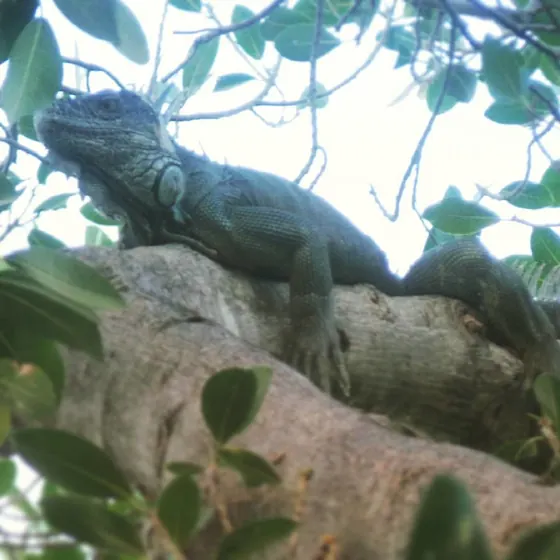
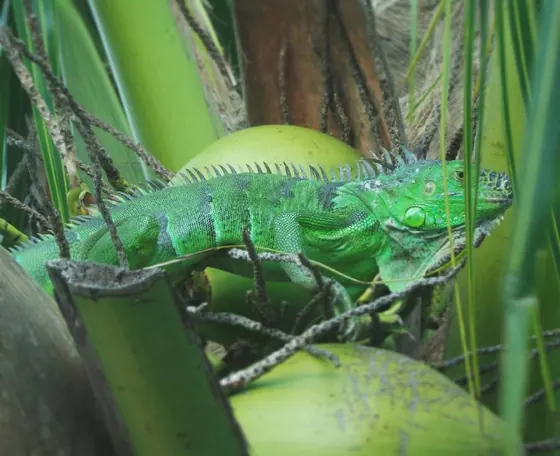
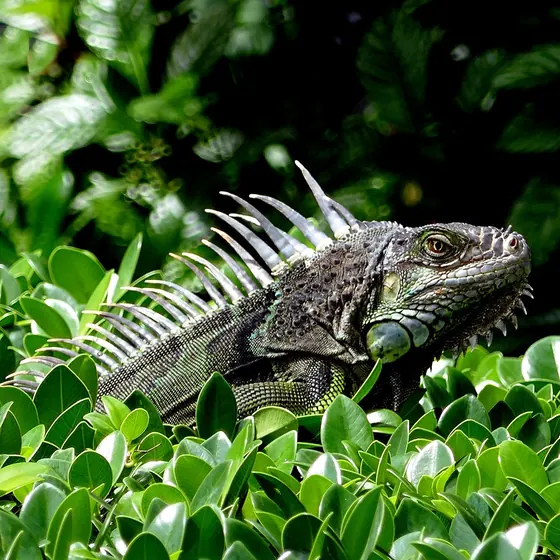
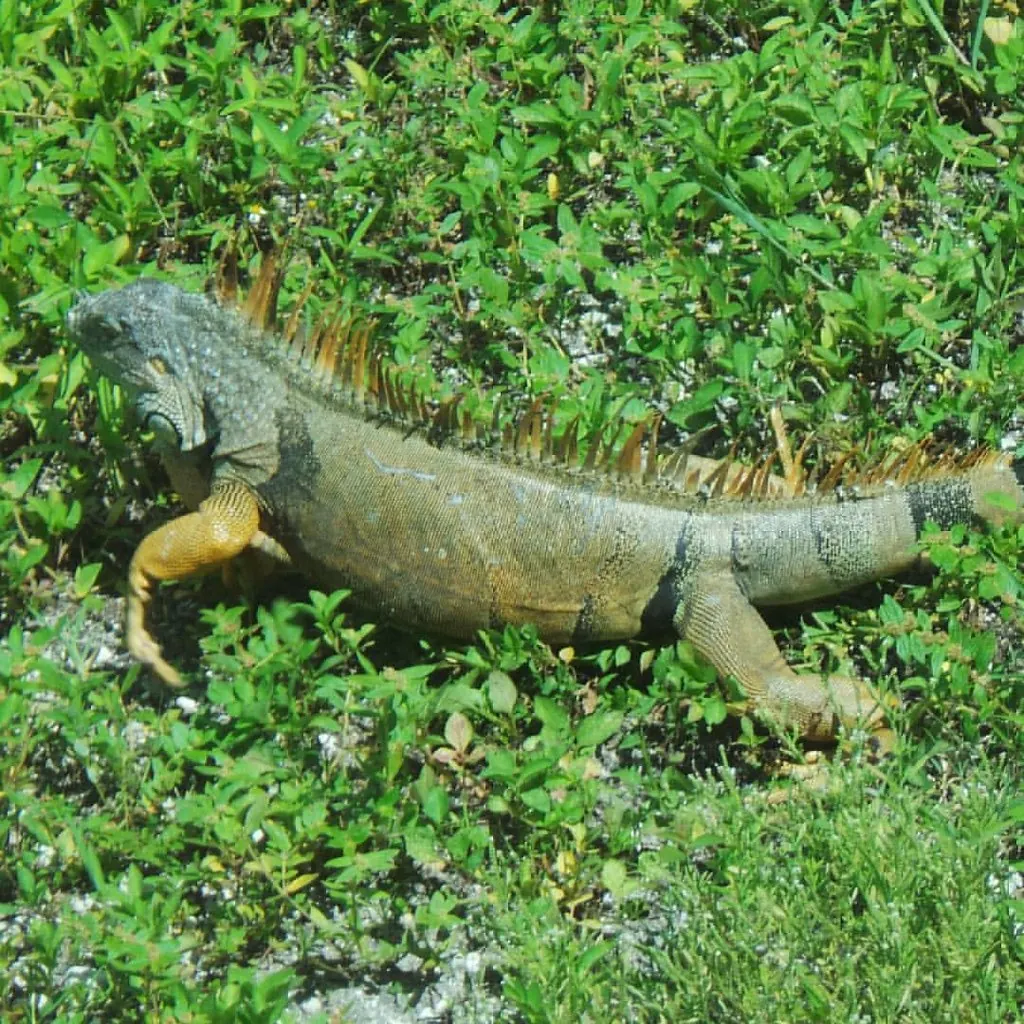
Green iguanas are invasive in South Florida and other warm places, including Puerto Rico. They come to yards for three reasons: food, warmth and shelter. Flowering and fruiting plants, vegetable gardens and fallen fruit attract them. Pool decks, seawalls and driveways give them places to bask. Canal banks, rock piles, culverts and the soil under sidewalks and slabs give them places to dig burrows.
According to the Florida Fish and Wildlife Conservation Commission (FWC), iguanas damage landscape plants, leave droppings on docks, boats, decks and pool areas, and dig burrows that can erode and collapse sidewalks, foundations, seawalls, berms and canal banks. Their droppings can also carry Salmonella. See our guide to iguanas and Salmonella.
Step 1: Remove What Attracts Them
- Pick up fallen fruit and harvest ripe fruit promptly.
- Protect gardens with cages or netting over vegetables and favorite flowers.
- Swap favorite plants: iguanas eat many ornamentals, including hibiscus, roses, orchids and nickerbean. They tend to avoid citrus and plants with tough or strongly scented leaves, though hungry iguanas may eat almost anything.
- Do not feed iguanas, and keep pet food indoors.
- Clear rock piles, brush and debris where they shelter.
- Trim branches that overhang roofs, pools and docks.
Step 2: Block Access and Burrows
| Problem area | What to do |
|---|---|
| Burrows | Wait until the iguana is out (daytime basking), confirm the burrow is empty, then fill it with soil and pack it; repeat if they dig again |
| Trees | Wrap smooth sheet-metal collars around trunks so iguanas cannot climb, and trim branches touching other trees or roofs |
| Seawalls and canal banks | Have a marine contractor repair gaps and erosion; persistent burrowing may need professional removal |
| Screen enclosures | Repair tears, add kick plates and close gaps at the base |
| Docks and boats | Remove basking spots where practical and clean droppings promptly |
| Under slabs and sidewalks | Seal openings and backfill burrows before erosion gets worse |
Exclusion takes effort but tends to last longer than any repellent, because it removes the reason iguanas are there.
Step 3: Deterrents (and Their Limits)
- Water sprays: spraying iguanas with a hose or using motion-activated sprinklers can startle them and discourage basking.
- Noise and activity: regular human activity makes some iguanas move on.
- Hanging CDs or reflective objects: sometimes suggested; results are mixed.
- Commercial and homemade repellents: sprays based on garlic, pepper or other strong scents are widely sold and recommended online, but there is little independent evidence that they solve an established iguana problem. Never use poisons. No pesticide is registered for iguanas, and poisons can harm pets and native wildlife.
Deterrents work best combined with removing food and shelter. On their own, they usually only move iguanas to a different corner of the yard.
Step 4: Removal: What Florida Law Allows
In Florida, green iguanas are a nonnative, invasive species and were added to the state's prohibited species list effective April 29, 2021. The FWC states that:
- Green iguanas are protected only by anti-cruelty law.
- They can be humanely killed year-round on private property with the landowner's permission.
- On 32 public lands in South Florida, people may capture and humanely kill them year-round without a permit or hunting license.
- A permit is required to possess live captured iguanas, and captured iguanas cannot be relocated and released elsewhere in Florida.
- The FWC encourages landowners to remove iguanas and recommends a professional nuisance wildlife trapper if you cannot do it safely.
"Humane" matters. If you plan to hunt iguanas yourself, read our Florida iguana hunting guide first. Animal cruelty is illegal, and the FWC has investigated people for abusing iguanas. Local laws on discharging firearms or air guns also apply. Check your city and county rules before using any lethal method, and when in doubt, hire a professional.
Does Florida Pay for Iguanas?
There is no statewide bounty program that pays residents per iguana, although local officials have floated the idea. Removal is usually paid for by whoever wants iguanas gone: property owners, homeowners' associations and local governments hire professional removal companies. During the February 2026 cold snap, the FWC temporarily allowed the public to bring live cold-stunned iguanas to drop-off sites, without payment. See falling iguanas for details.
When to Call a Professional
Consider a licensed nuisance wildlife trapper or iguana removal company if:
- Iguanas are burrowing under your seawall, foundation or pool deck
- You have many iguanas or they keep coming back
- You are not comfortable or able to remove them safely and humanely
- Your HOA or neighborhood wants a coordinated removal program
Ask how they capture and dispatch iguanas, whether they are insured, and whether they also offer exclusion and burrow repair. Prices vary by company, property size and the number of iguanas.
What Not to Do
- Do not use poisons or glue traps.
- Do not relocate and release live iguanas; it is illegal in Florida and just moves the problem.
- Do not handle large iguanas without protection. They bite, scratch and tail-whip.
- Do not bring cold-stunned iguanas indoors.
Other Iguanas in Florida Yards
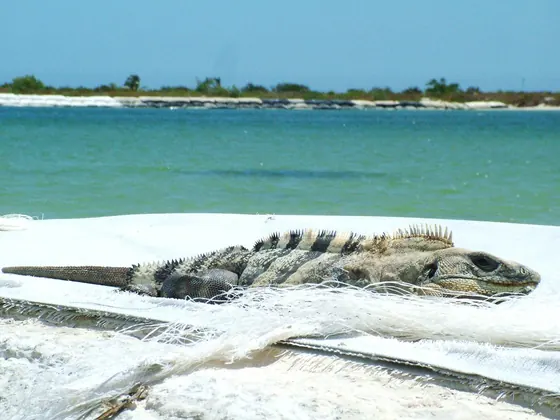
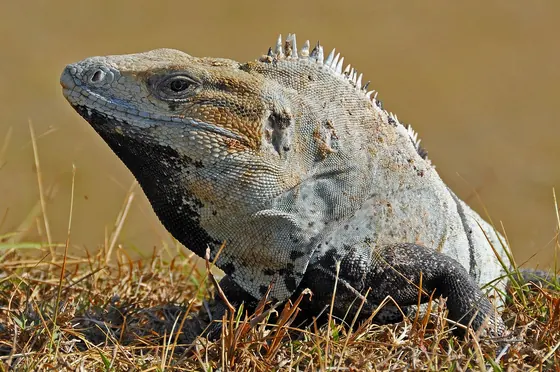
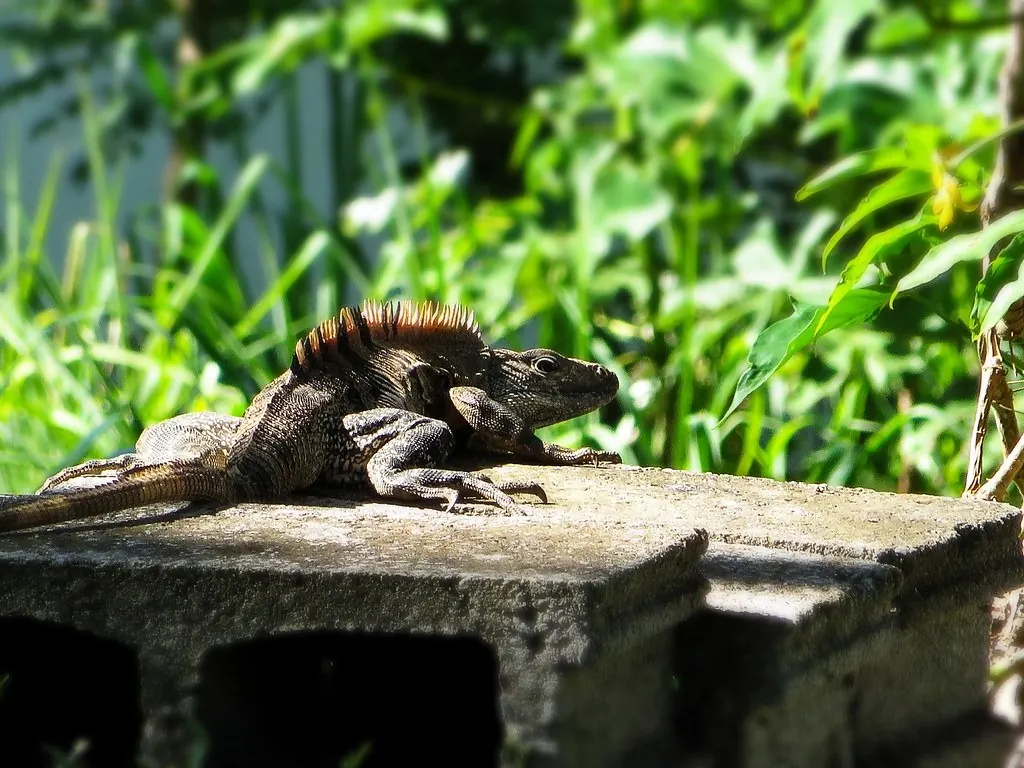
Not every big lizard in Florida is a green iguana. Black spiny-tailed iguanas are also invasive in parts of South Florida and the Gulf coast, are more aggressive and eat a wider diet, including other animals. The same exclusion steps help with both. See our spiny-tailed iguana guide to tell them apart.
Frequently Asked Questions
What Is the Best Way to Get Rid of Iguanas?
Combine removing food and shelter, blocking burrows and climbing routes, and humane removal by a licensed professional. Repellents alone rarely solve the problem.
Can You Kill Iguanas in Florida?
Yes. The FWC allows green iguanas to be humanely killed year-round on private property with the landowner's permission. Anti-cruelty laws and local firearm rules still apply.
What Smell Do Iguanas Hate?
Garlic, hot pepper and other strong-scented sprays are often suggested, but evidence that they keep iguanas away long term is limited. Exclusion works better.
Can I Relocate an Iguana I Catch?
Not in Florida. Captured iguanas cannot be released elsewhere, and keeping a live one requires a permit.
Sources: Florida Fish and Wildlife Conservation Commission, Green Iguana; Gardening Know How, Iguana Control; Bob Vila, How to Get Rid of Iguanas.