Quick Answer
- Green iguanas: the Florida Fish and Wildlife Conservation Commission (FWC) cites up to about 10 years in the wild and 19 years in captivity. Many care sources report 15–20 years or more for well-kept pets.
- Rock iguanas such as the Grand Cayman blue iguana live much longer; one blue iguana reached about 69 years.
- Most pet iguanas that die young do so because of husbandry problems such as poor UVB, wrong temperatures or an unsuitable diet.
- Good lighting, heat, a plant-based diet and regular vet checks are the biggest factors in a long life.
How Long Do Iguanas Live?
An iguana's lifespan depends on its species, whether it lives in the wild or in captivity, and, for pets, the quality of its care. Green iguanas, the species most people keep, can live for well over a decade with good care. Some larger rock iguanas can live for many decades.
Wild iguanas face predators, food shortages, disease and, in places like Florida, cold snaps, so few reach old age. In captivity, those dangers disappear, but new ones appear: inadequate lighting, poor diet and unsuitable enclosures are common reasons pet iguanas die young.
Iguana Lifespan by Species
| Species | Typical lifespan | Notes |
|---|---|---|
| Green iguana | Up to about 10 years wild; 19+ years captive | FWC figures; many pets reported at 15–20+ years |
| Grand Cayman blue iguana | Often 20–40 years wild | A captive individual reached about 69 years |
| Rhinoceros iguana | Often reported around 20 years | Sometimes longer in captivity |
| Other rock iguanas (Cyclura) | Decades | Among the longest-lived lizards |
| Marine iguana | Often about 5–12 years wild | Some individuals live longer |
| Fiji banded iguana | Around 10–15 years wild (estimated) | Up to about 25 years reported in zoos |
| Desert iguana | Around 10–12 years | A captive record of about 14.6 years |
Figures vary between sources, and record ages are exceptional individuals, not averages.
Wild vs. Captive Lifespan
Wild green iguanas face high mortality early in life. Many eggs never hatch, and most hatchlings are eaten by birds, snakes, mammals and other predators. Adults are threatened by hunting, habitat loss, cars, dogs and, at the edges of their range, cold weather.
Captive iguanas can live longer because they are protected from predators and have steady food. But this only holds when their needs are met. A pet iguana kept in a small tank without proper UVB may live only a few years.
What Shortens a Pet Iguana's Life?
- No or weak UVB lighting, leading to metabolic bone disease
- Wrong temperatures, which affect digestion and immunity
- Poor diet, such as too much fruit, lettuce or animal protein
- Dehydration and low humidity
- Egg-related problems in females, such as egg-binding (see iguana eggs)
- Injuries from falls, burns, other pets or free roaming
- Untreated illness because iguanas hide symptoms until late
How to Help Your Iguana Live Longer
- Provide strong UVB and replace bulbs on schedule. See our lighting guide.
- Keep the right temperatures and humidity. See temperature and humidity.
- Feed a varied, leafy plant diet with calcium supplements as your vet advises. See what iguanas eat.
- Give enough space to climb, bask and exercise. See our enclosure guide.
- Book yearly vet checks with a reptile veterinarian.
- Learn the warning signs of illness. See signs of a sick iguana.
Iguana Life Stages
| Stage | Approximate age (green iguana) | What to expect |
|---|---|---|
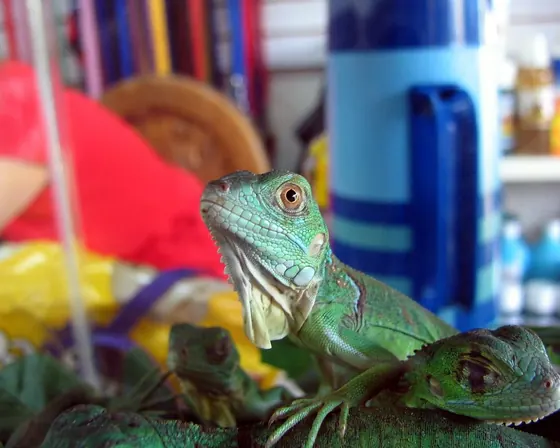
| Hatchling | 0–6 months | Small, bright green, nervous; eats daily |
| Juvenile | 6 months–2 years | Rapid growth; frequent shedding; enclosure upgrades |
| Subadult | About 2–4 years | Approaching maturity; females mature at about 2–4 years |
| Adult | About 4 years and older | Full size; yearly breeding behavior; possible egg-laying in females |
| Senior | Roughly 12–15 years and older | Slower activity, possible joint or kidney problems; more vet checks |
How to Tell an Iguana's Age
There is no precise way to tell an adult iguana's age from its appearance. Size gives a rough guide for young iguanas, but growth depends on diet and care. Features such as larger jowls and spines in males, duller color and thicker skin suggest maturity. A reptile veterinarian can give a general estimate.
Signs of an Aging Iguana
- Lower activity and more time basking
- Reduced appetite
- Stiff movement or reluctance to climb
- Duller skin and slower shedding
- Weight loss
Older iguanas benefit from easier access to basking spots, lower climbing routes and more frequent vet checks, since kidney disease and other problems become more common with age.
Lifespan Myths
- "Iguanas only live a few years." This belief comes from the many pet iguanas that died young in poor conditions. With proper care, green iguanas can live well over a decade.
- "Bigger enclosures shorten lives because iguanas get stressed." The opposite is usually true. Cramped enclosures limit exercise and temperature control.
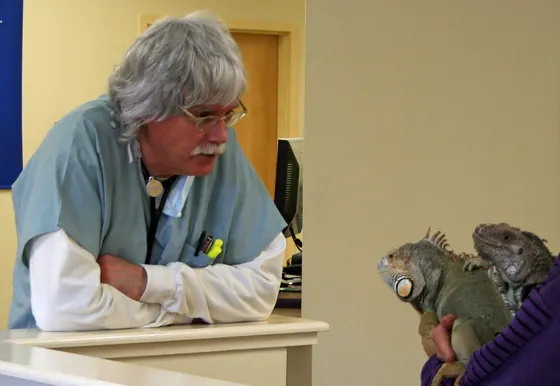
- "Iguanas don't need a vet unless they're sick." Iguanas hide illness, so yearly checks help catch problems early.
- "Fruit-heavy diets are fine because iguanas love fruit." Too much fruit and too little calcium contribute to health problems over time.
Males vs. Females
There is no strong evidence that one sex consistently lives longer, but females face extra risks. They can produce eggs even without a male, and problems such as egg-binding can be life-threatening without veterinary care. Males face injuries from fighting if housed together and can become aggressive during the breeding season. See male vs. female iguanas.
Frequently Asked Questions
How Long Do Pet Iguanas Live?
The FWC cites up to 19 years for green iguanas in captivity, and many care sources report 15 to 20 years or more for well-kept pets.
How Long Do Iguanas Live in the Wild?
Green iguanas live up to about 10 years in the wild, according to the FWC, though most die young from predators and other dangers.
What Is the Longest-Living Iguana?
Rock iguanas are the longest-lived. A Grand Cayman blue iguana reached about 69 years, one of the oldest recorded lizards.
Why Did My Iguana Die Young?
Common causes include inadequate UVB, wrong temperatures, poor diet, dehydration and egg-binding in females. A vet necropsy can help find the cause.
Sources: Florida Fish and Wildlife Conservation Commission, Green Iguana; A-Z Animals, Iguana Lifespan; Smithsonian's National Zoo, Grand Cayman Blue Iguana.