Quick Answer
- The most reliable clue in mature green iguanas is the femoral pores on the inner thighs: large and waxy in males, small in females.
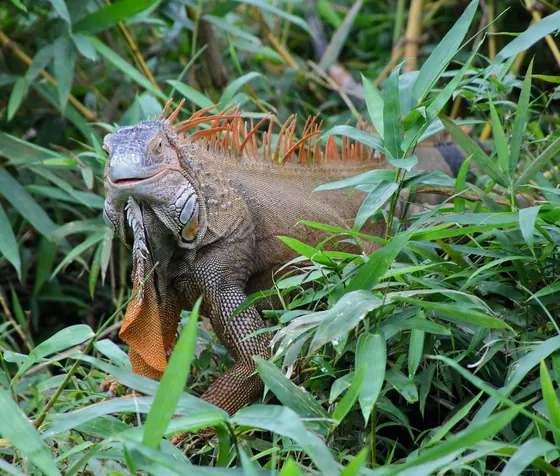
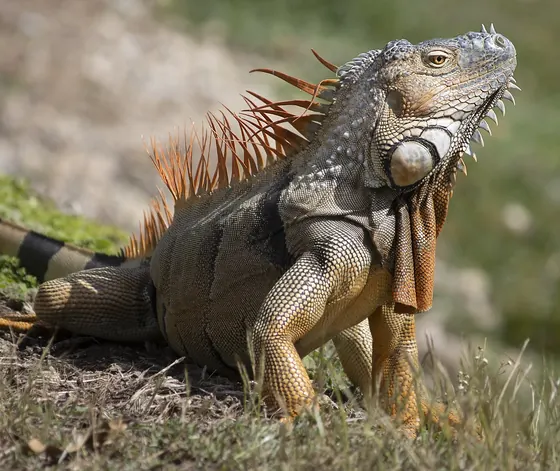
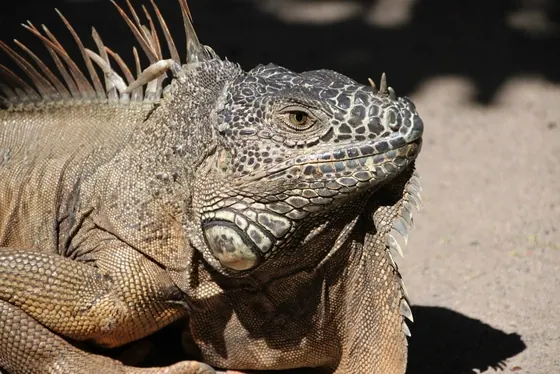
- Males usually have bigger jowls, larger dewlaps, taller dorsal spines, bigger heads and a heavier build.
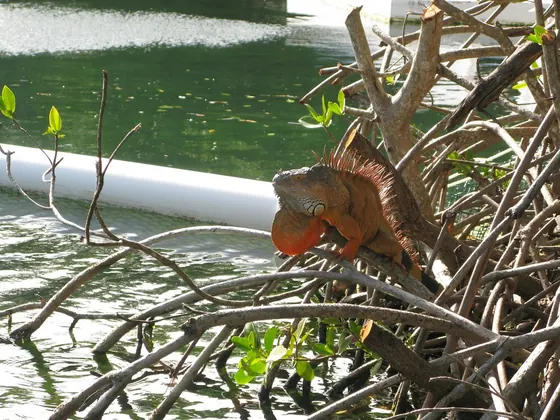
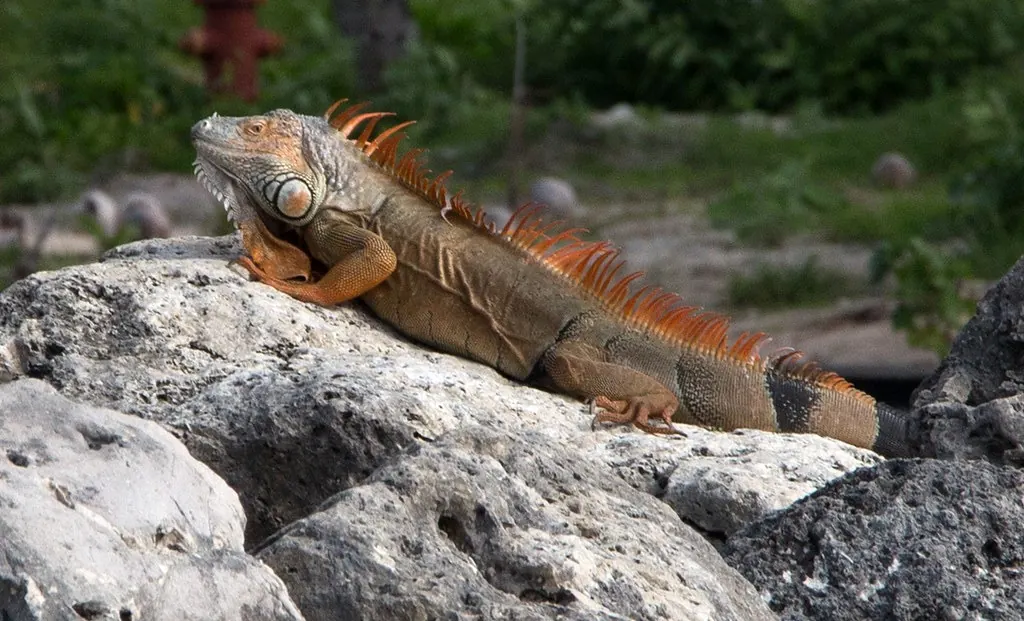
- Males often show bulges at the base of the tail and turn orange in breeding season.
- It is hard to sex hatchlings and young juveniles. Differences usually become clearer from about one to two years old; a reptile vet can help.
Why Knowing Your Iguana's Sex Matters
An iguana's sex affects what you can expect as it matures. Females can lay eggs even without a male, which brings risks such as egg-binding. Males often become aggressive during the breeding season. Knowing which you have helps you prepare, from setting up a nest box to planning safe handling. See iguana eggs and iguana breeding season.
Male vs. Female Iguana Comparison
| Feature | Male | Female |
|---|---|---|
| Femoral pores | Large, prominent, often with waxy plugs | Small and less noticeable |
| Jowls | Large, rounded jowls | Smaller jowls |
| Dewlap | Larger | Smaller |
| Dorsal spines | Taller, especially on the neck | Shorter |
| Head | Larger and broader | Smaller and narrower |
| Size and weight | Larger; up to about 17 lb in Florida per FWC | Can reach similar length but usually up to about 7 lb |
| Tail base | Often two bulges from the hemipenes | Usually flatter and narrower |
| Breeding color | Often bright orange | Less intense color change |
| Breeding behavior | Territorial, more bobbing, possible aggression | Restlessness, digging, egg production |
How to Check Femoral Pores
Gently turn the iguana or hold it so you can see the underside of its back legs. Along the inner thigh is a row of pores. In mature males they are large, raised and often filled with a waxy secretion that can stick out like small spikes, especially in breeding season. In females the pores are small and flat. Compare with photos or ask an experienced keeper or vet if you are unsure.
Other Clues
Jowls and Head
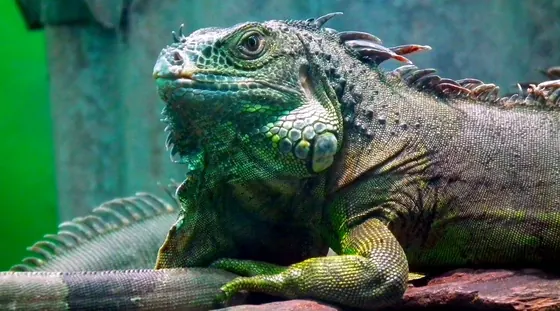
Adult males develop large jowls, the rounded cheeks below the large circular cheek scale, giving the head a broad, heavy look. Females have smaller heads and jowls.
Spines and Dewlap
Males typically have taller spines along the neck and back and a bigger dewlap that they display more often.
Tail Base
Male lizards have paired reproductive organs called hemipenes, stored in the base of the tail. In many adult males this creates two slight bulges just behind the vent.
When Can You Tell an Iguana's Sex?
Hatchlings and young juveniles look very similar. Many keepers find that differences such as femoral pore size become noticeable from around one to two years of age, and clearer as the iguana nears maturity at two to four years. A reptile veterinarian can sex younger iguanas more reliably, using careful probing or imaging, but this should only be done by an experienced professional.
Behavior Differences
Individual temperament varies more than sex, but there are trends. Males tend to be more territorial and, during the breeding season, may become aggressive toward people and other animals. Females may be calmer for much of the year but can become restless and less tolerant while developing eggs. Neither sex is automatically friendlier; consistent handling matters most. See how to tame an iguana.
Health Differences
| Males | Females |
|---|---|
| Injuries from fighting if housed with other males | Egg-binding and follicular stasis |
| Breeding-season weight loss from reduced eating | High calcium demand during egg production |
| Femoral pore swelling or infection | Risk of metabolic bone disease if calcium is low |
Sexing Mistakes to Avoid
- Judging by color alone. Both sexes can turn orange, and colors vary widely.
- Judging young iguanas by size. Growth depends on diet and care, so a bigger juvenile is not necessarily male.
- Relying on one feature. Look at femoral pores, jowls, spines, dewlap and tail base together.
- Probing at home. Sexing probes can injure an iguana; leave this to a veterinarian.
- Assuming a "male" will never lay eggs. Many owners discover their iguana is female only when eggs appear.
Does Sex Affect Size and Care?
Both sexes need the same enclosure, lighting, heat, humidity and diet. Because males usually grow heavier, they may need sturdier branches and larger basking shelves. Females need extra calcium and a nest box as they mature. See iguana care guide and how big iguanas get.
Can You Keep a Male and Female Together?
It is not recommended for most owners. They may breed, producing large clutches, and males can injure females during mating. Two males should not be housed together because of fighting. Iguanas generally do best alone.
Frequently Asked Questions
How Can You Tell If an Iguana Is a Boy or a Girl?
Check the femoral pores on the inner thighs. Males have large, waxy pores; females have small ones. Males also have bigger jowls, dewlaps and spines.
Are Male or Female Iguanas Bigger?
Males are usually larger and much heavier. Florida wildlife officials report males up to 17 pounds and females usually up to about 7 pounds.
At What Age Can You Tell an Iguana's Gender?
Differences often become noticeable from about one to two years old and clearer near maturity at two to four years.
Do Female Iguanas Lay Eggs Without a Male?
Yes. Mature females can lay infertile eggs each year without mating.
Sources: Florida Fish and Wildlife Conservation Commission, Green Iguana; PetKeen, Male vs. Female Iguanas; PetPlace, Sexing Your Herp.