Quick Answer
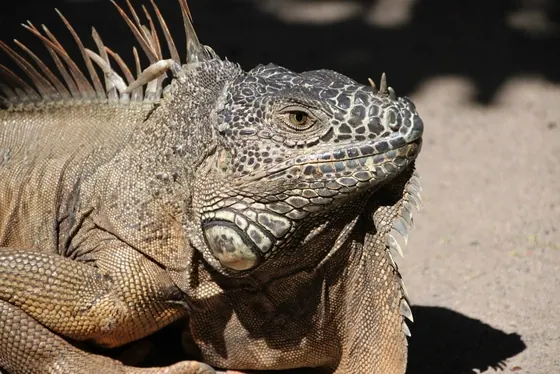
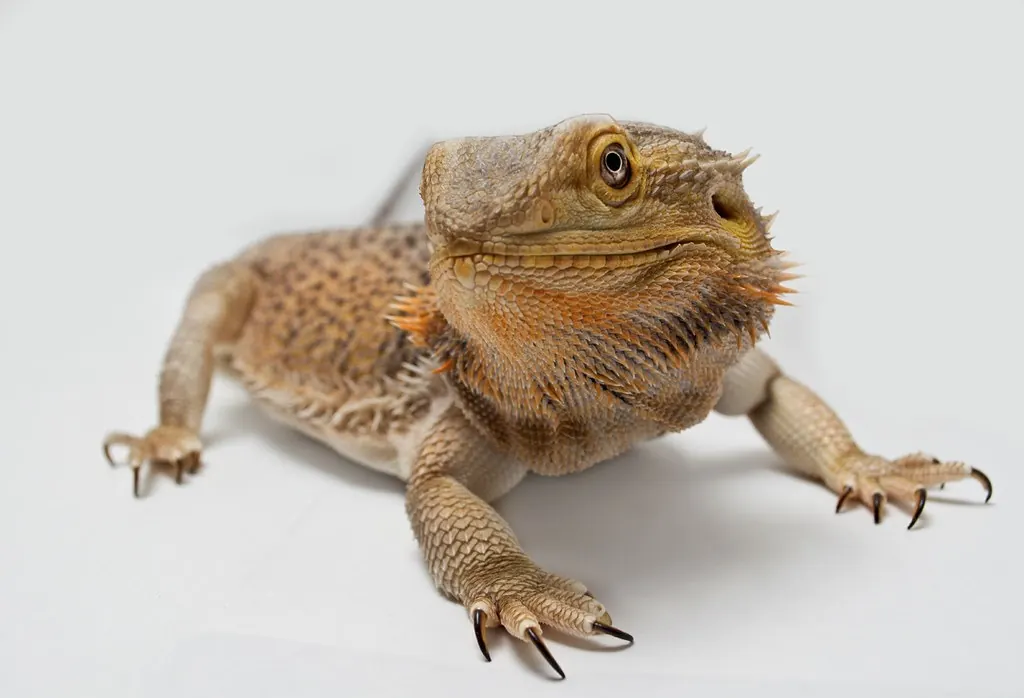
- Bearded dragons are smaller (about 16–24 inches), easier to house and generally a better choice for first-time reptile owners.
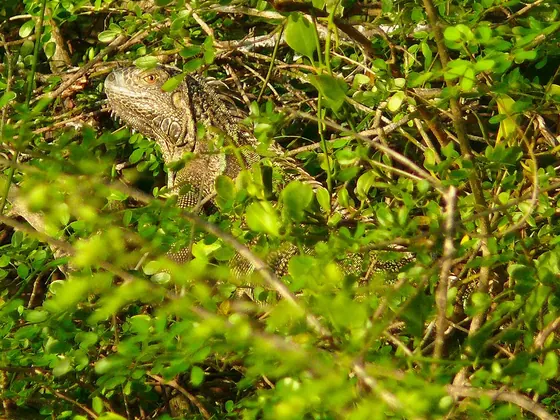
- Green iguanas grow to 4–6 feet, need a room-sized enclosure and are better suited to experienced keepers.
- Iguanas are herbivores; bearded dragons are omnivores that eat insects plus greens.
- Iguanas need high humidity; bearded dragons need dry, desert-like conditions.
- Both need strong UVB lighting, heat and regular vet care.
Iguana vs. Bearded Dragon at a Glance
| Feature | Green iguana | Bearded dragon |
|---|---|---|
| Native range | Central and South America, Caribbean | Australia |
| Adult length | About 4–6 ft including tail | About 16–24 in |
| Lifespan | Up to about 19+ years in captivity | Often around 8–12 years, some longer |
| Diet | Herbivore: leafy greens, vegetables, a little fruit | Omnivore: insects and greens; juveniles eat more insects |
| Habitat needs | Tall, humid, tropical enclosure (often room-sized) | Long, dry desert enclosure (commonly about 4 × 2 × 2 ft for an adult) |
| Humidity | High, about 70% or more | Low, commonly around 30–40% |
| Temperament | Often wary; adults can be defensive | Usually calm and tolerant of handling |
| Beginner-friendly | Generally no | Generally yes |
Size and Space
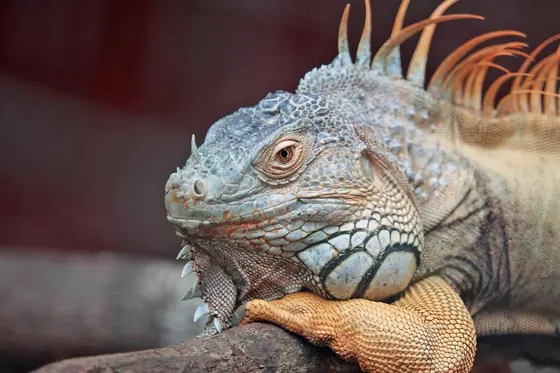
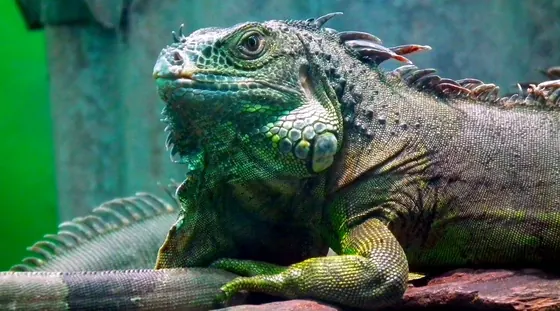
This is the biggest difference. A bearded dragon stays under about 2 feet, and an adult can live in an enclosure around 4 feet long, 2 feet deep and 2 feet tall. A green iguana commonly reaches 4 to 6 feet and needs an enclosure roughly 6 to 12 feet long and at least 6 feet tall, often a converted room. See how big iguanas get and our iguana enclosure guide.
Lifespan
Both are long-term commitments. Bearded dragons commonly live around 8 to 12 years, with some living longer. Green iguanas can live up to about 19 years or more in captivity with good care. See iguana lifespan.
Diet and Feeding
Iguanas are strict herbivores that need a fresh, chopped salad of leafy greens and vegetables every day or every other day. Bearded dragons are omnivores. Young dragons eat mostly live insects such as crickets and roaches, while adults eat more greens and vegetables with fewer insects. If you do not want to keep and feed live insects, an iguana's diet may suit you better, but its size may not. See what iguanas eat.
Heat, Light and Humidity
| Need | Iguana | Bearded dragon |
|---|---|---|
| Basking | About 95–100°F basking surface | Hot basking spot, commonly around 95–110°F depending on age and source |
| UVB | Strong linear UVB | Strong linear UVB |
| Humidity | High (about 70%+) | Low (about 30–40%) |
| Climate style | Tropical forest | Arid scrub and desert |
Both need a temperature gradient, a 12-hour day-night cycle and UVB replaced on the manufacturer's schedule. See our iguana lighting guide.
Temperament and Handling
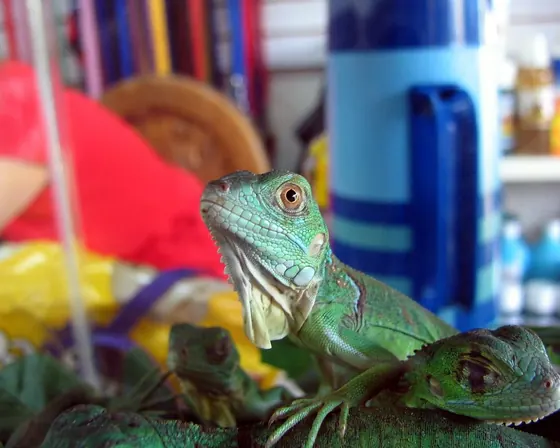
Bearded dragons are known for being calm and tolerant of handling, which is a big part of their popularity. Iguanas vary more. Many become tame with patient, consistent handling, but young iguanas are often nervous, and adult males can be aggressive during the breeding season. An adult iguana's bite, claws and tail can hurt. See how to tame an iguana and do iguanas bite?
Cost
Both are inexpensive to buy compared with their setups, but iguanas usually cost much more to house properly because of their adult enclosure, larger lighting needs and higher heating costs. One 2026 cost guide put an adult-ready iguana habitat at roughly $800 to $3,500 or more. A bearded dragon's adult setup is far smaller. See our iguana cost guide.
Health Risks to People
Like all reptiles, both iguanas and bearded dragons can carry Salmonella. Bearded dragons have been linked to multistate Salmonella outbreaks in the US, according to the CDC. The CDC advises that children under 5 should not handle reptiles. Wash hands after handling either pet or anything in its enclosure. See iguanas and Salmonella.
Daily Care Compared
| Task | Iguana | Bearded dragon |
|---|---|---|
| Feeding | Chopped fresh salad daily or every other day | Live insects plus a salad; juveniles fed insects more often |
| Supplements | Calcium and multivitamin on a vet's schedule | Calcium and multivitamin dusted on insects on a vet's schedule |
| Cleaning | Large enclosure; more droppings to clean | Smaller enclosure; easier to clean |
| Humidity | Daily misting or a humidifier; soaking tub | Keep dry; occasional baths |
| Handling | Daily taming sessions, especially when young | Usually easy to handle |
Common Health Problems
Both species can develop metabolic bone disease if UVB or calcium is inadequate, and both can suffer burns from unsafe heat sources. Iguanas are also prone to problems linked to low humidity, such as stuck shed and dehydration, and female iguanas can have egg-laying problems. Bearded dragons commonly face impaction from unsuitable substrate or oversized insects, obesity from overfeeding, and parasites. Either pet should have a yearly check with a reptile veterinarian. See signs of a sick iguana.
Legal Considerations
Laws differ by place. In Florida, green iguanas became a prohibited species in 2021 and can no longer be newly acquired as pets, while bearded dragons remain widely legal. Some other states, cities and landlords restrict certain reptiles, so check local rules and your lease before choosing either. See our Florida iguana guide.
Which Should You Choose?
| Choose a bearded dragon if you... | Choose an iguana if you... |
|---|---|
| Are new to reptiles | Have reptile experience |
| Have limited space | Can dedicate a room or very large enclosure |
| Want a pet that is usually easy to handle | Are patient with taming and defensive behavior |
| Are comfortable feeding live insects | Prefer an all-plant diet |
| Want lower setup costs | Can budget for a large setup and higher running costs |
For an honest look at iguanas as pets, read are iguanas good pets?
Frequently Asked Questions
Is an Iguana or a Bearded Dragon Easier to Care For?
A bearded dragon. It is smaller, needs a much smaller enclosure and is usually easier to handle.
Which Lives Longer?
Green iguanas generally live longer, up to about 19 years or more in captivity, compared with around 8 to 12 years for many bearded dragons.
Can Iguanas and Bearded Dragons Live Together?
No. They need very different humidity, temperatures and diets, and different reptile species should never share an enclosure.
Are Iguanas Friendlier Than Bearded Dragons?
Bearded dragons are generally more tolerant of handling. Some iguanas become very tame, but many remain wary, especially adult males.
Sources: Hepper, Iguana vs. Bearded Dragon; Reptile Guide, Bearded Dragon vs. Iguana as Pets; CDC guidance on reptiles and Salmonella.