Quick Answer
- Morphs are captive-bred color varieties of the green iguana. They are the same species and grow just as large.
- Common morphs include albino, blue (axanthic), red, hypomelanistic (hypo) and combinations such as "snow."
- Some morphs are inherited simple recessive traits, so two carriers ("hets") can produce them; others, such as red, are developed through selective breeding.
- Morphs need the same care as any green iguana; albinos may be more sensitive to bright light.
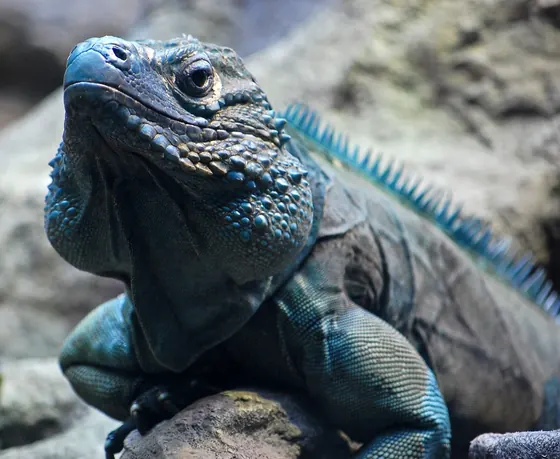
- A "blue iguana" sold as a pet is almost always an axanthic green iguana, not the endangered Grand Cayman blue iguana.
What Is an Iguana Morph?
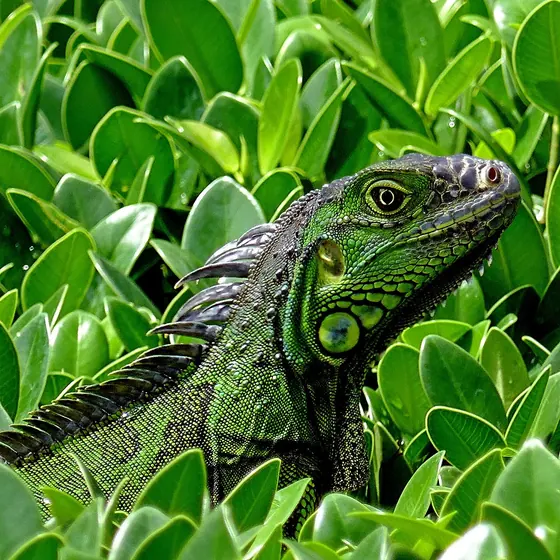
In the reptile hobby, a "morph" is an animal with a distinctive color or pattern that differs from the wild type, usually bred deliberately in captivity. Green iguana morphs became more common as breeders established captive-bred lines. Reptiles Magazine has noted that new color variants have helped renew interest in green iguanas, while cautioning that their large size and care needs make them better suited to experienced keepers.
Common Iguana Morphs
| Morph | Appearance | How it is inherited |
|---|---|---|
| Albino (often T-negative) | No dark (melanin) pigment; white, cream, yellow or orange with pink or red eyes | Generally described as recessive |
| Axanthic ("blue") | Lacks yellow pigment, so green appears blue, turquoise or gray-blue | Generally described as recessive |
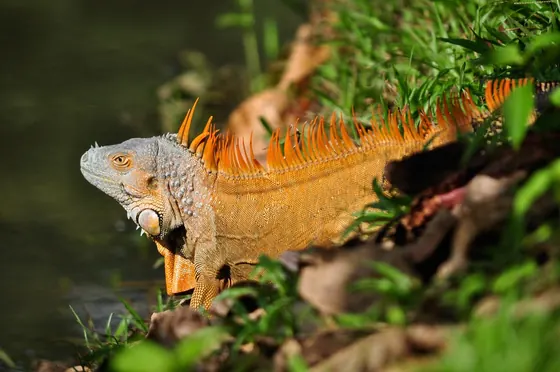
| Red | Red to orange-red coloring that often intensifies with age | Developed by selective breeding of naturally reddish lines |
| Hypomelanistic ("hypo") | Reduced dark pigment, giving lighter, brighter colors | Generally described as recessive |
| Snow | Very pale, nearly white | Combination of albino and axanthic traits |
| Combinations | For example red axanthic or hypo red | Combining two or more traits |
Morph names and genetics are defined by breeders, and terms are not always used consistently. Ask sellers for clear information on an animal's genetics and parents.
What Does "Het" Mean?
"Het" is short for heterozygous. A het iguana carries one copy of a recessive gene, such as albino, without showing it. When two hets for the same trait are bred, on average about one in four offspring will show the trait. Breeders often advertise iguanas as "het for albino" or "triple het" for several traits.
Albino Iguanas
Albino iguanas lack melanin, the dark pigment, so they appear in pale yellows, whites and oranges with pinkish or red eyes. Because melanin helps protect the eyes, albino reptiles are often considered more sensitive to bright light. Make sure an albino iguana has plenty of shade and hides in addition to its normal UVB and basking setup. It still needs UVB for vitamin D3. See iguana lighting.
Blue Axanthic Iguanas
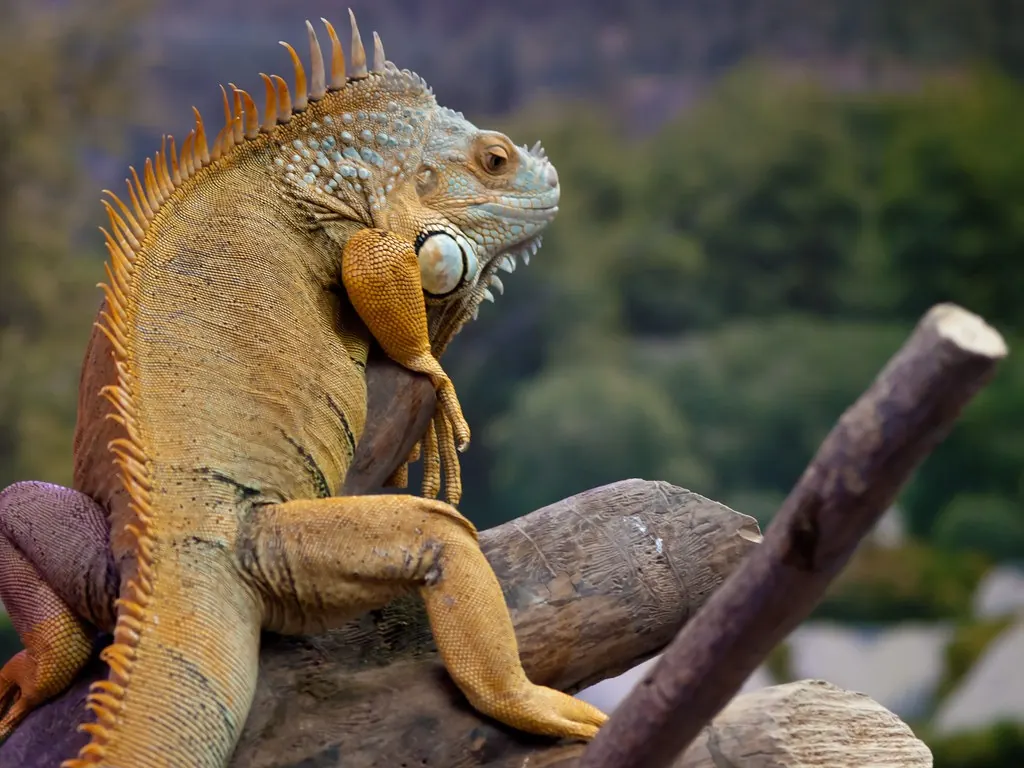
Green coloring in iguanas comes from a combination of yellow pigment and structural blue. An axanthic iguana lacks the yellow, so it looks blue or blue-gray, often most vivid when young. These are color morphs of the green iguana. The Grand Cayman blue iguana is a different, endangered species that is rarely available privately.
Red Iguanas
Some wild green iguana populations, particularly in parts of Central America, show orange or reddish tones. Breeders have selectively bred such lines to produce "red iguanas," which may grow more intensely colored with age. Breeding-season males of any color can also turn orange. See iguana colors.
Caring for a Morph Iguana
A morph is still a green iguana. It grows to around 4 to 6 feet, needs a very large enclosure, strong UVB, high heat and humidity, a plant-based diet and regular vet care. Morphs typically cost more than standard green iguanas, but the setup is still the biggest expense. See our iguana care guide and iguana cost guide.
Buying a Morph Iguana
- Buy from breeders who can document captive breeding and parentage.
- Ask for photos of the animal as it is now and, ideally, its parents.
- Check health signs: alert eyes, rounded body, straight limbs and clean vent. See baby iguana care.
- Check local laws; in Florida, green iguanas, including morphs, are a prohibited species.
Frequently Asked Questions
Are Albino Iguanas Real?
Yes. Albino green iguanas are bred in captivity. They lack dark pigment and have pale coloring with pink or red eyes.
Is a Blue Iguana a Green Iguana?
Pet "blue iguanas" are usually axanthic green iguanas. The Grand Cayman blue iguana is a separate, endangered species.
What Is the Rarest Iguana Color?
Rarity changes as breeders produce new lines, but complex combinations such as snow and multi-trait morphs are generally less common than single-trait morphs.
Do Morph Iguanas Need Different Care?
No. They need the same care as standard green iguanas, though albinos may need extra shade because of light sensitivity.
Sources: Reptiles Magazine, Herp Queries: Green Iguana Morphs; Lizards101, Green Iguana Morphs: Red Iguana; MorphMarket community iguana trait categories.