Quick Answer
- Iguana poop is usually a dark, log-shaped dropping with a white or cream-colored part (urates), often similar in size to dog droppings from a large iguana.
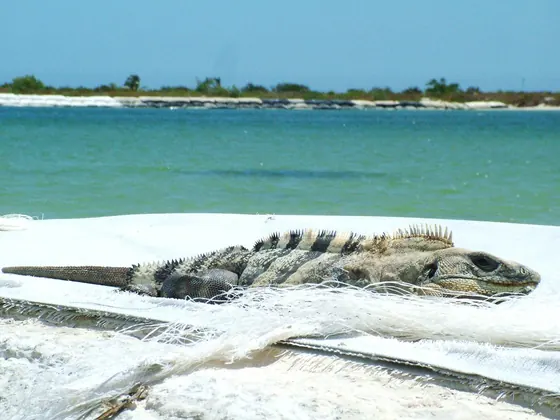
- Wild iguanas often leave droppings on docks, seawalls, patios, boats and in swimming pools.
- Iguana droppings can carry Salmonella, so clean up with gloves and wash your hands afterward.
- In pets, runny, bloody, very smelly or absent droppings can signal a health problem.
What Does Iguana Poop Look Like?
Iguana droppings have two parts. The feces are dark brown to greenish-brown and usually log- or cylinder-shaped, often with visible plant fibers because iguanas eat leaves. The urates, the reptile equivalent of urine, are white or cream-colored and may be chalky or soft. Some liquid urine may also be present.
| Feature | Typical iguana dropping |
|---|---|
| Color | Dark brown to greenish-brown, with a white or cream urate |
| Shape | Elongated, often in one or a few pieces |
| Size | Varies with the iguana; large adults can leave droppings similar in size to a small or medium dog's |
| Texture | Formed, often fibrous |
| Location | Basking spots, docks, seawalls, pool decks, inside pools |
Iguana Poop vs. Other Animal Droppings
| Animal | How it differs |
|---|---|
| Iguana | Larger, with a white urate; often near water or basking spots |
| Small lizards (anoles, geckos) | Tiny pellets with a white tip |
| Birds | Mostly white and liquid, with little solid material |
| Rats | Small, dark, pellet-shaped, no white part |
| Raccoons and dogs | Larger, no separate white urate, often with hair or food remains |
Why Iguanas Poop in Pools
Iguanas often defecate in water. Warm water stimulates bowel movements, which is why pet iguanas commonly poop during baths. Wild iguanas in Florida and Puerto Rico that swim in or bask beside pools frequently leave droppings in the water. See can iguanas swim?
How to Clean Iguana Poop Safely
On Patios, Docks and Decks
- Put on disposable gloves.
- Pick up droppings with paper towels, a scoop or a bag.
- Seal and dispose of them in household trash.
- Scrub the area with soap and water, then apply a household disinfectant following the label directions.
- Wash your hands thoroughly, even after wearing gloves.
In Swimming Pools
- Keep swimmers out of the pool.
- Remove droppings with a net or scoop, and discard them.
- Follow your local health department's or pool professional's guidance on disinfecting the water before swimming.
- Clean and disinfect the net or scoop.
Avoid power-washing fresh droppings without removing them first, which can spray contaminated material around. Keep children and pets away during cleanup. See iguanas and Salmonella for more on the health risk.
Preventing Iguana Droppings Around Your Home
- Remove or block favorite basking spots near pools, docks and patios.
- Trim branches overhanging pools and decks.
- Remove fallen fruit and protect gardens.
- Use exclusion and, where needed, professional removal. See how to get rid of iguanas.
Removing Stains from Docks, Boats and Seawalls
Iguana droppings can stain light-colored surfaces such as concrete, pavers, boat covers and fiberglass. Remove solid material first, then scrub with a cleaner suitable for the surface, followed by a disinfectant. For boats and docks, use products made for marine surfaces, and avoid letting cleaners run into the water. Regular cleaning prevents stains from setting and reduces odors that can attract more iguanas to the same basking spots.
Pet Iguana Poop: What's Normal?
For pet owners, droppings are a useful window into health.
| What you see | What it may mean |
|---|---|
| Formed dark feces with white urates | Normal |
| Very runny or watery droppings | Diet change, too much fruit, parasites or infection |
| Blood or mucus | Possible infection, parasites or injury; see a vet |
| Undigested food | Temperatures too low or digestive problems |
| Hard, dry or yellow urates | Possible dehydration |
| No droppings for an extended period | Constipation or impaction; check temperatures and hydration and see a vet if it continues |
| Unusually strong smell | Can signal infection or parasites |
How often an iguana poops depends on age, diet, temperature and hydration. Many healthy iguanas poop daily or every few days. Warm soaks often encourage regular bowel movements. See signs of a sick iguana.
Frequently Asked Questions
Is Iguana Poop Dangerous?
It can carry Salmonella and other germs. Clean it up with gloves, disinfect the area and wash your hands.
What Does Iguana Poop Look Like?
A dark, log-shaped dropping with a white or cream-colored urate, often containing plant fibers.
Why Is There Iguana Poop in My Pool?
Iguanas swim and often defecate in water. Reduce basking spots and overhanging branches near the pool to discourage them.
How Often Do Iguanas Poop?
Many healthy pet iguanas poop daily or every few days, depending on age, diet, temperature and hydration.
Sources: A-Z Animals, Iguana Poop; Critter Control, What Do Iguana Droppings Look Like?; Melissa Kaplan, Iguana Feces; CDC guidance on reptiles and Salmonella.